
中文指南
•
7 min read
•
By Mouha Travel Team
摩洛哥私人旅行 · 当地专家定制 (Morocco Private Travel Chinese Guide)
In This Article
摩洛哥当地人运营的私人定制旅行指南:从马拉喀什、阿特拉斯山脉到撒哈拉沙漠和皇城,深度体验真正摩洛哥。
摩洛哥私人定制旅行
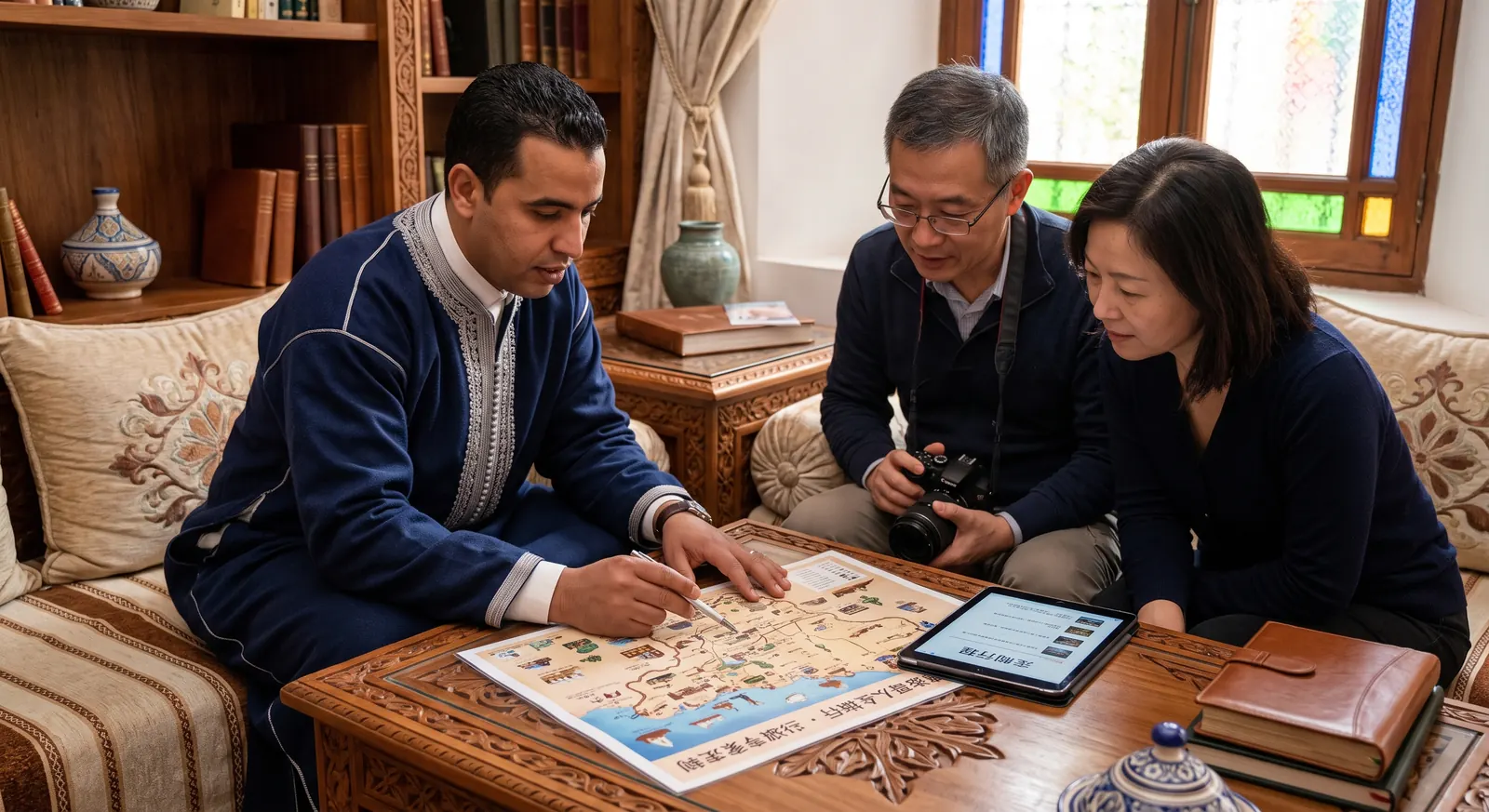
从马拉喀什的皇宫与古老麦地那,到阿特拉斯山脉、撒哈拉沙漠和大西洋海岸,跟随当地人的脚步,以舒适、灵活而深入的方式探索真正的摩洛哥。
Mouha Travel 是一家由当地人运营的摩洛哥旅行公司,专注于为情侣、家庭、朋友和小型团体设计私人定制旅行。
我们不希望您只是“参观”摩洛哥,而是希望您真正体验这里的文化、风景、美食和生活方式。
为什么选择 Mouha Travel?
摩洛哥是一个适合慢慢探索的国家。
从马拉喀什到阿特拉斯山脉,再到阿伊特本哈杜、达德斯峡谷和撒哈拉沙漠,每一段路都有不同的风景和文化。
如果选择固定的大型团队旅行,行程通常受到时间表限制。
私人旅行则不同。
您可以按照自己的节奏旅行,在喜欢的地方多停留一会儿,也可以根据天气、体力和兴趣灵活调整行程。
在 Mouha Travel,我们与经验丰富的私人司机、专业城市导游、当地合作伙伴、精选住宿和撒哈拉沙漠营地合作,为您安排一个舒适、顺畅并且真正符合您需求的旅程。
从机场接送到酒店、交通、导游和活动,我们会提前为您安排好主要细节。
您只需要抵达摩洛哥,剩下的交给我们。
我们的经典摩洛哥路线
马拉喀什 · 阿特拉斯山脉 · 撒哈拉
这是第一次来到摩洛哥旅客非常喜欢的路线。
从马拉喀什出发,穿越高阿特拉斯山脉,经过柏柏尔村庄和壮丽山谷,探访著名的阿伊特本哈杜古城,然后前往达德斯峡谷、托德拉峡谷和撒哈拉沙漠。
在梅尔祖卡,您可以骑骆驼穿越沙丘,在沙漠中欣赏日落,并入住舒适的私人或豪华沙漠营地。
摩洛哥皇城 · 撒哈拉沙漠
如果您有10天或更长时间,可以将摩洛哥著名的皇城与撒哈拉沙漠结合起来。
行程可以包括:
• 马拉喀什
• 阿伊特本哈杜
• 达德斯峡谷
• 撒哈拉沙漠
• 菲斯
• 拉巴特
• 梅克内斯
• 舍夫沙万
途中还可以探索中阿特拉斯山脉、绿洲、峡谷、古老村庄以及当地市场。
深度摩洛哥 · 两周私人旅行
如果您有大约两周时间,我们建议放慢旅行节奏。
除了马拉喀什、皇城和撒哈拉沙漠,还可以加入舍夫沙万、大西洋海岸、索维拉以及摩洛哥南部一些游客较少的地区。
这类行程特别适合希望深入了解摩洛哥,而不是每天赶路打卡的旅客。
不只是观光 · 真正体验摩洛哥
摩洛哥最值得记住的,往往不是景点本身,而是旅途中遇到的人、食物和故事。
根据您的兴趣,我们可以安排:
• 马拉喀什私人文化导览
• 菲斯麦地那私人导览
• 传统市场与购物体验
• 摩洛哥烹饪课程
• 当地美食体验
• 阿特拉斯山脉徒步
• 柏柏尔 / Amazigh 村庄体验
• 撒哈拉骆驼骑行
• 沙漠4×4探险
• 沙漠营地住宿
• Agafay 沙漠体验
• 四轮摩托和沙丘车
• 传统 Hammam 与 Spa
• 索维拉海岸体验
我们也可以根据您的兴趣设计完全不同的旅行方式。
喜欢历史?我们可以深入文化与建筑。
喜欢自然?我们可以加入山脉、峡谷和沙漠。
喜欢美食?我们可以把当地市场、烹饪和餐厅体验加入行程。
喜欢冒险?可以加入徒步、四驱车、骆驼和沙漠活动。
适合情侣、家庭和私人小团体
私人旅行最大的优势,就是行程可以围绕您,而不是围绕团队。
对于家庭,我们可以根据孩子的年龄和家庭节奏调整每天的活动。
对于年长旅客,我们可以减少长时间徒步和连续长途驾驶,并选择更加舒适的住宿。
对于情侣,我们可以安排更加浪漫和私密的体验。
对于朋友和小型团体,则可以根据大家共同的兴趣打造更加自由的路线。
在确认旅行之前,我们会与您讨论:
• 每天的车程
• 住宿标准
• 车辆类型
• 导游服务
• 活动安排
• 沙漠住宿
• 用餐需求
• 旅行节奏
让您在出发前清楚了解整个旅程。
为什么选择当地团队?
Mouha Travel 由摩洛哥当地人运营。
我们熟悉这个国家的城市、山脉、沙漠和道路,也了解游客第一次来到摩洛哥时可能遇到的问题。
我们的目标不是简单地销售一个旅游套餐。
我们希望成为您在摩洛哥值得信赖的当地联系人。
从您抵达机场开始,到最后一天离开摩洛哥,我们都会帮助您把旅程安排得更加轻松。
当地团队 · 私人旅行 · 灵活行程 · 真正体验
开始规划您的摩洛哥之旅
告诉我们:
旅行日期、人数、预计天数、抵达和离开城市,以及您最想体验的地方。
如果您还没有确定完整路线,也没关系。
告诉我们您喜欢什么,我们会根据您的时间、兴趣和预算,为您建议最合适的路线。
您不需要选择一个固定套餐。
您的旅行,可以从您的想法开始。
联系 Mouha Travel,定制您的摩洛哥私人旅行
WhatsApp:+212 708-255862
Email:mouhatravel@gmail.com
Website:mouhatravel.com
常见问题
摩洛哥私人旅行需要多少天?
如果时间有限,7天可以重点体验马拉喀什、阿特拉斯山脉和摩洛哥南部。
10天左右,可以更加完整地结合马拉喀什、撒哈拉沙漠和皇城。
如果有14天或更长时间,则可以加入舍夫沙万、索维拉、大西洋海岸或更多当地体验,并让每天的节奏更加轻松。
可以完全定制行程吗?
可以。
路线、住宿、车辆、活动、导游和旅行节奏都可以根据您的需求进行调整。
我们也可以从零开始为您设计整个摩洛哥旅行。
可以安排中文导游吗?
中文导游服务需要根据旅行日期和目的地提前确认。
如果您需要中文服务,请在咨询时告诉我们,我们会根据您的行程寻找合适的语言服务。
私人旅行包括私人司机吗?
可以。
我们可以根据您的旅行人数和行程安排私人车辆以及经验丰富的当地司机。
长途旅行中,司机不仅负责驾驶,也会帮助您了解沿途的当地情况,让整个旅程更加顺畅。
第一次去摩洛哥,适合私人旅行吗?
非常适合。
尤其是第一次来到摩洛哥的旅客,私人旅行可以减少自己规划交通、住宿和路线的压力,同时保留更多自由和灵活性。
您可以把时间留给旅行本身,而不是花大量时间研究如何从一个地方前往另一个地方。
可以安排撒哈拉沙漠旅行吗?
当然可以。
我们可以安排从马拉喀什出发的撒哈拉沙漠旅行,包括私人交通、沿途景点、骆驼骑行、日落以及沙漠营地住宿。
根据您的时间和预算,也可以选择不同等级的沙漠营地和体验。
准备好探索真正的摩洛哥了吗?
从马拉喀什的街巷,到阿特拉斯山脉的村庄;
从古老的 Kasbah,到撒哈拉无尽的沙丘;
再到大西洋海岸的日落。
让 Mouha Travel 帮您把想象中的摩洛哥,变成真正的旅程。
More Morocco Travel Guides
Marrakech Local Picks
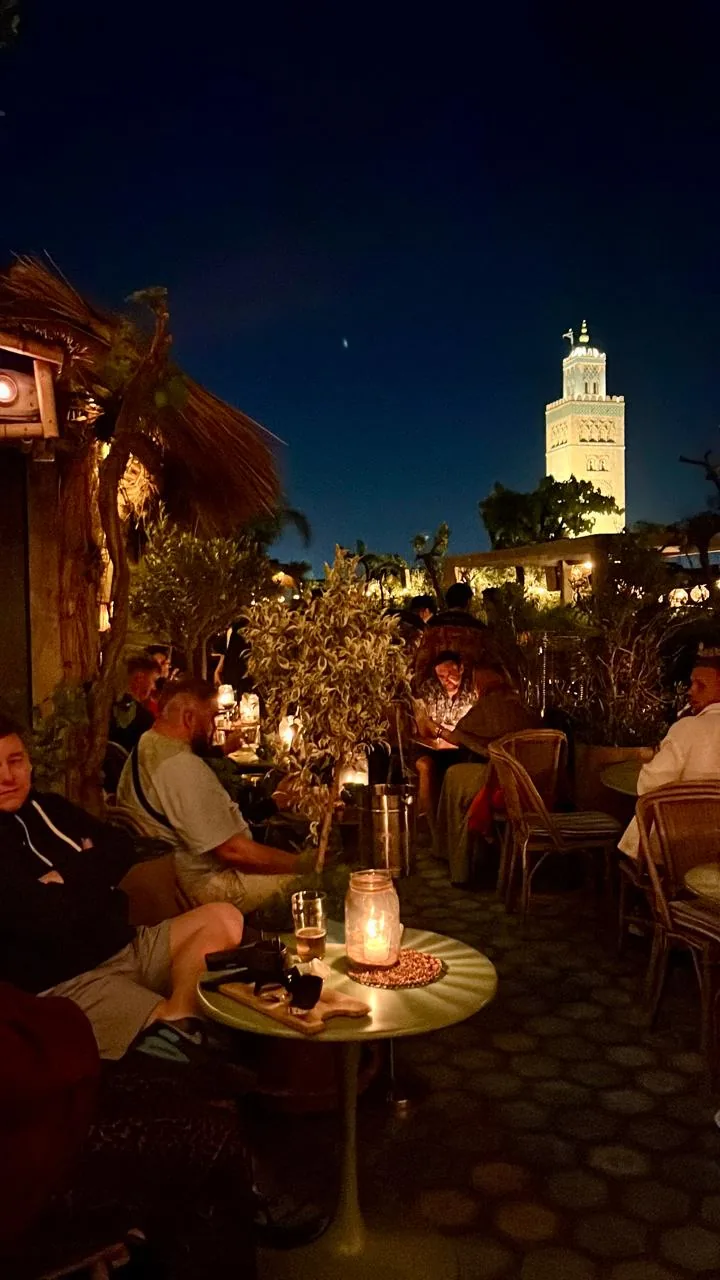
Marrakech Best Of: Our Local Picks
Our favorite rooftops, restaurants, cafés and riads in Marrakech — handpicked by Mouha Travel.
Read Guide
Practical Travel
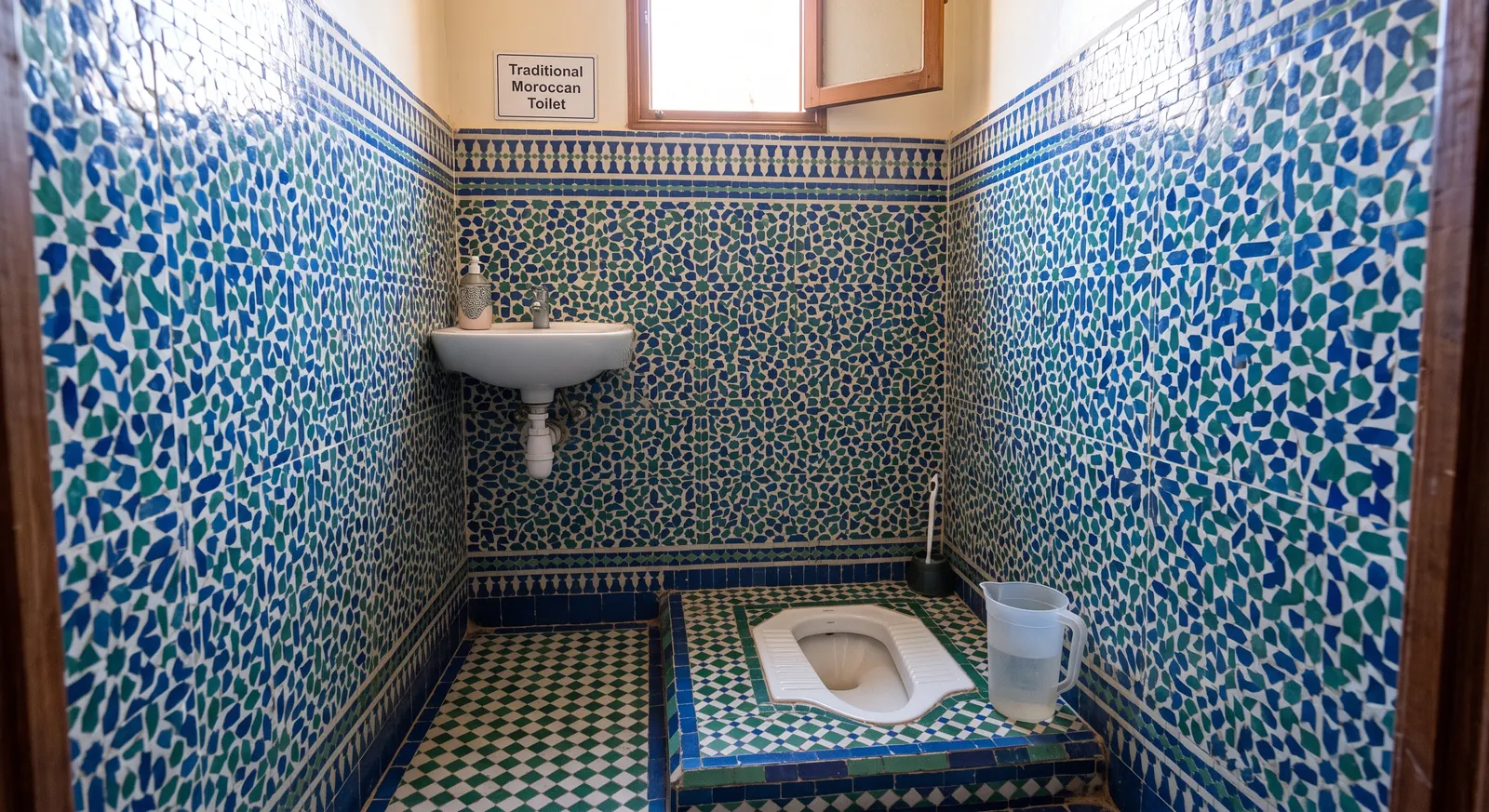
Bathrooms in Morocco: What Travelers Should Know Before Visiting Marrakech and Beyond
Wondering what bathrooms are like in Morocco? Learn about toilets in Marrakech, squat toilets, toilet paper, road-trip stops and Sahara desert camp bathrooms.
Read Guide
Cultural Etiquette
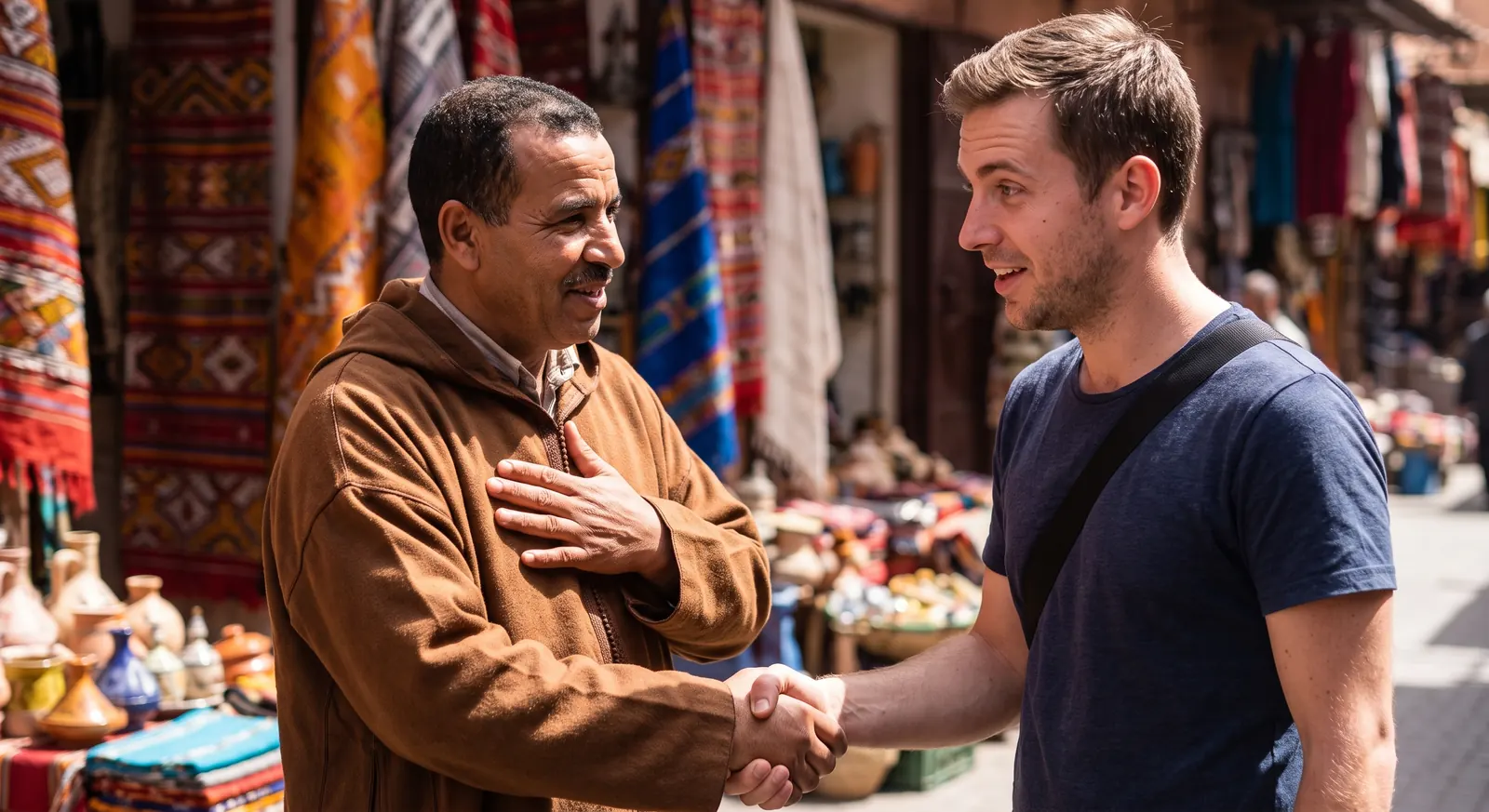
Things That Are Not Rude in Morocco — But Western Travelers Sometimes Think They Are
Learn Morocco etiquette before your trip: saying no, bargaining in souks, tipping, refusing food, personal questions and everyday Moroccan social customs.
Read Guide
Photography & Content
•
7 min read
•
By Mouha Travel Team
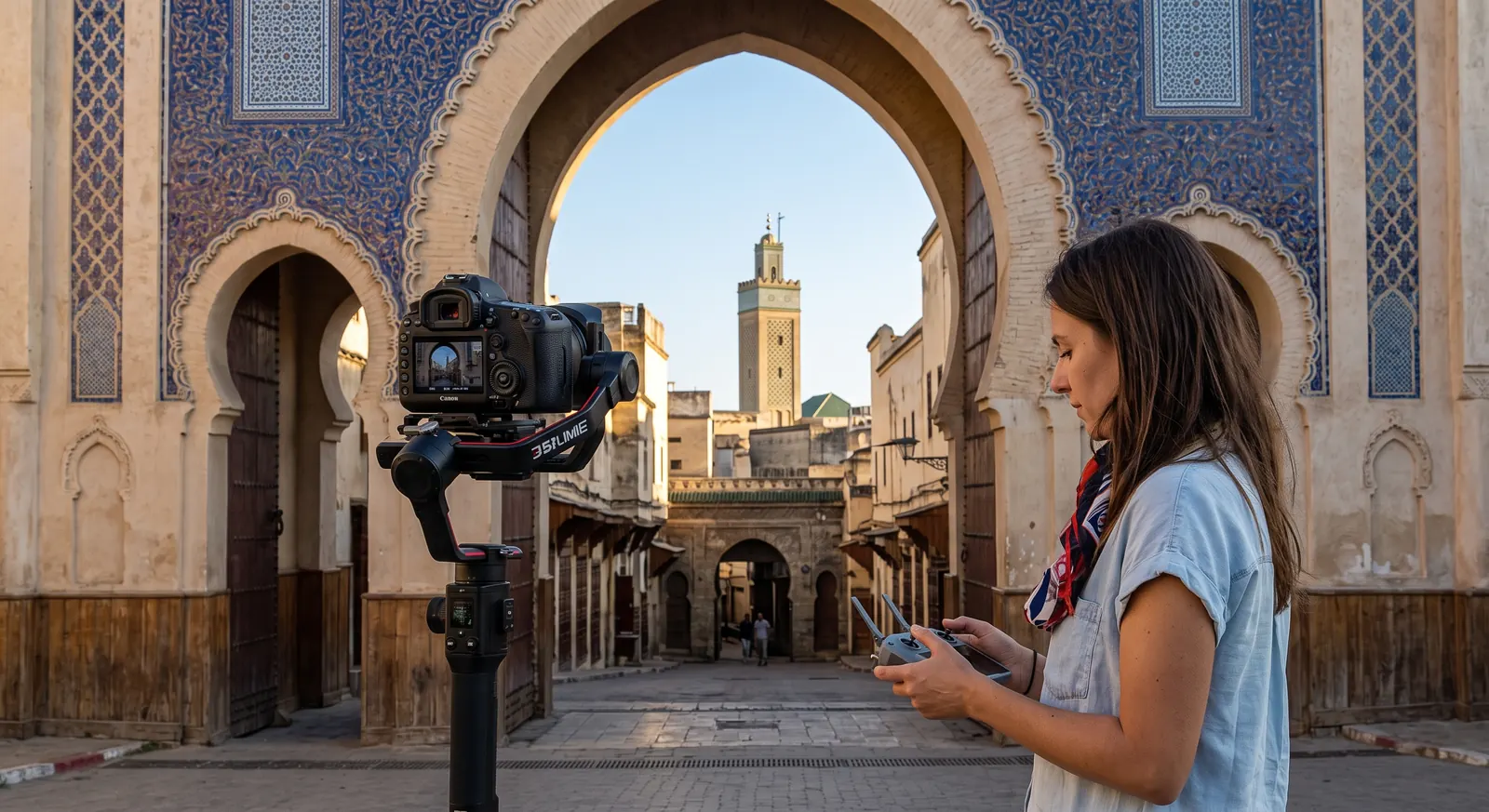
Filming & Photography in Morocco: What Travelers and Creators Should Know
In This Article
Planning photography or filming in Morocco? Learn how to film respectfully in Marrakech, souks and villages, plus drone, camera and Sahara photography tips.
Morocco is an incredible country for photography and video.
From the colorful streets of Marrakech and the blue alleys of Chefchaouen to the Atlas Mountains, traditional souks and the Sahara Desert, you can find something worth filming almost everywhere.
Whether you’re using a phone, a GoPro, a professional camera or a full vlogging setup, Morocco gives you plenty of opportunities to create amazing content.
But there are a few things worth knowing before you start filming.
You Can Film — But Be Respectful
In tourist areas, streets, landscapes and many public spaces, taking photos and videos is generally straightforward.
The most important rule is simple:
Respect people.
Morocco is full of interesting characters and beautiful everyday moments, but the people around you are not automatically part of your content.
If you want to take a close-up photo or video of someone, especially a shopkeeper, craftsman, street performer or local resident, ask first.
A simple:
“Can I take a photo?”
or even a smile and gesture toward your camera can be enough.
Most people will appreciate you asking, and sometimes a simple photo can turn into a great conversation.
The Souks Are Perfect for Content
The souks are one of the best places in Morocco for photography and video.
You’ll find colorful spices, handmade carpets, leather goods, lanterns, pottery, traditional workshops and endless movement.
But remember that these are people’s businesses.
If you’re filming inside a shop or workshop, especially for a vlog, YouTube video or commercial content, it’s better to ask first.
And don’t be surprised if a shopkeeper says no.
Why Would a Shop Refuse?
Some artisans have unique handmade pieces, particularly carpets, rugs, jewelry and other crafts. They may not want detailed videos of their designs online because they are concerned about their work being copied.
Others simply don’t want their shop or business appearing online.
There can also be another reason: some sellers may not want their prices recorded and shared publicly. Prices in Moroccan markets can depend on the product, quality, negotiation and customer, and some shopkeepers simply don’t want a video showing what they charged someone.
Whatever the reason, if someone says no filming, respect it.
Don’t argue and don’t secretly continue recording.
There are thousands of other beautiful things to capture.
Don’t Put the Camera in Someone’s Face
This is especially important when filming in busy markets.
A wide shot of a crowded souk is very different from putting a camera directly in someone’s face.
If someone looks uncomfortable, lower the camera or move on.
You don’t need every person you see to become part of your vlog.
Sometimes the best travel content comes from observing first and filming second.
Be Extra Respectful in Villages
The atmosphere can change considerably when you leave the major tourist cities.
Some villages and rural communities are more conservative and private, and people may not be comfortable being filmed, especially when it comes to their homes, families or everyday activities.
A scene that looks interesting to you may simply be someone’s private life.
If you’re visiting a small village, ask before filming people or their homes and pay attention to how the community reacts.
Sometimes the best thing to do is simply put the camera away, have a conversation and enjoy the moment.
Not everything needs to become content.
Interestingly, once people become comfortable with you, they may actually invite you to photograph or film something you would never have discovered on your own.
Filming in Restaurants, Riads & Hotels
Restaurants, cafés, riads and hotels can make beautiful backgrounds for your content.
But remember that these are private businesses.
If you’re setting up a tripod, using lights, recording interviews or doing a more professional production, ask the management first.
For a quick phone video or a few personal photos, it may be perfectly fine, but professional filming is different.
A quick question before setting up can save you an awkward situation later.
Tell Your Guide That You’re Creating Content
If you’re traveling with a private guide or driver, let them know that you’re interested in photography or creating content.
This can actually make your trip much better.
A local guide may know:
• A quieter viewpoint
• A beautiful road
• A traditional workshop
• A great rooftop
• A scenic village
• The best time for a particular location
• A sunrise or sunset spot
Instead of simply following an itinerary, your guide can help you find opportunities specifically for your content.
They can also help you communicate with locals when you want to photograph or film something.
Pay Attention to Your Guide’s Advice
Your guide can also help you understand when filming might not be appropriate.
If your guide tells you that a particular person or place doesn’t want to be filmed, take their advice seriously.
They understand the local environment and social expectations better than a visitor does.
Sometimes a guide might also suggest moving to another location because filming there could create an uncomfortable situation.
It’s usually better to listen and move on.
Be Careful Around Sensitive Locations
Avoid casually filming sensitive locations such as:
• Military installations
• Police facilities
• Government buildings
• Airports and security areas
• Other clearly restricted locations
If someone in authority asks you to stop filming, don’t argue.
Simply put the camera away and ask if there is somewhere appropriate where you can continue.
What About Drones?
If you’re planning to bring a drone to Morocco, don’t assume you can simply arrive and fly it.
Drone use is regulated, and permissions may be required.
If aerial footage is an important part of your trip, check the current Moroccan requirements well before traveling and make sure you have the necessary authorization.
This is particularly important around airports and security-sensitive areas.
Protect Your Equipment
Morocco can be hard on cameras — especially the desert.
If you’re heading to the Sahara, protect your equipment from sand and dust.
Bring:
• Extra memory cards
• Spare batteries
• Power banks
• Charging cables
• Lens cleaning cloths
• Protective cases
And be particularly careful when changing lenses in dusty or sandy environments.
Your camera may love the desert.
Your camera sensor probably doesn’t.
Don’t Forget to Experience the Moment
This might be the most important advice for anyone traveling with a camera.
It’s very easy to spend an entire sunset trying to get the perfect shot.
Get your footage.
Take your photos.
Then put the camera down.
Watch the sunset.
Listen to the music.
Talk to the people around you.
Enjoy where you are.
Because sometimes the best travel memories are the moments you didn’t film.
Morocco Is Made for Storytelling
You don’t need an expensive camera or a huge production team to create beautiful content in Morocco.
A phone can capture an incredible sunset in the Sahara.
A small camera can capture the energy of a Marrakech souk.
A GoPro can give you an amazing perspective while exploring the Atlas Mountains.
And a simple conversation with a local can become the most memorable part of your entire vlog.
Just remember:
Ask before filming people.
Respect shops that don’t want to be filmed.
Be particularly considerate in conservative villages and rural communities.
Ask businesses before professional filming.
Listen to your local guide.
Be careful around sensitive locations.
Check drone regulations before traveling.
Protect your equipment from sand and dust.
And most importantly:
Don’t let the camera become the reason you miss the experience.
Morocco is beautiful through a lens — but it’s even better when you’re actually there.
Best Places for Travel Photography in Morocco
Photography in Morocco is appealing because the visual character changes dramatically from one region to another. Marrakech offers red walls, tiled courtyards, rooftop views, busy souks and changing light in the Medina. Chefchaouen is known for blue-painted streets. The High Atlas Mountains bring dramatic roads, valleys and Amazigh villages, while the Sahara creates completely different opportunities for sunrise, sunset, silhouettes and night-sky photography.
If photography is an important part of your Morocco itinerary, think about time of day as much as location. Early mornings can give you quieter streets in Marrakech, while late afternoon often creates softer light in the desert and mountains. A private itinerary can be especially useful for photographers because it gives you more flexibility to stop at viewpoints and wait for better conditions.
Street Photography in Marrakech: Ask When the Person Is the Subject
A general street scene and a close portrait are not the same thing. If a person is clearly the subject of your image, asking permission is a respectful habit. Some people will happily agree, some may ask for money, and others may simply say no. Respect the answer. This is particularly important with children, artisans at work and people in smaller communities.
Commercial Filming Versus Personal Travel Content
A short phone clip for your personal travel memories is different from a commercial shoot with tripods, models, lights or a production crew. Professional filming in a hotel, riad, restaurant, heritage site or other controlled space may require permission. If content is connected to a brand campaign, advertisement, documentary or monetized production, check permissions in advance rather than assuming personal-tourist rules apply.
Frequently Asked Questions About Photography and Filming in Morocco
Can tourists take photos in Morocco?
Yes, photography is common in tourist areas, but visitors should respect people, private businesses and restricted locations.
Can I film in the Marrakech souks?
General filming is common, but ask before filming inside shops or making an individual seller or artisan the main subject.
Can I photograph Moroccan people without asking?
For close portraits or identifiable people who are clearly the subject, asking first is the respectful approach.
Can I use a drone in Morocco?
Drone use is regulated and may require authorization. Check current official requirements before traveling with a drone.
What camera gear should I take to the Sahara?
Bring spare batteries, memory cards, cleaning equipment and protection against sand and dust. Avoid changing lenses unnecessarily in windy desert conditions.
Is Marrakech good for travel photography?
Yes. The Medina, souks, architecture, rooftops, gardens, food and street life make Marrakech one of Morocco’s most varied photography destinations.
Continue planning
Related Morocco travel advice
Time-sensitive information last checked: 26 August 2026.
Read next
More Morocco Travel Guides
Marrakech Local Picks
Marrakech Best Of: Our Local Picks
Our favorite rooftops, restaurants, cafés and riads in Marrakech — handpicked by Mouha Travel.
Read Guide
Practical Travel
Bathrooms in Morocco: What Travelers Should Know Before Visiting Marrakech and Beyond
Wondering what bathrooms are like in Morocco? Learn about toilets in Marrakech, squat toilets, toilet paper, road-trip stops and Sahara desert camp bathrooms.
Read Guide
Cultural Etiquette
Things That Are Not Rude in Morocco — But Western Travelers Sometimes Think They Are
Learn Morocco etiquette before your trip: saying no, bargaining in souks, tipping, refusing food, personal questions and everyday Moroccan social customs.
Read Guide
Traveler Guidance
•
8 min read
•
By Mouha Travel Team
Is Morocco Racist? What Black Travelers Should Know Before Visiting
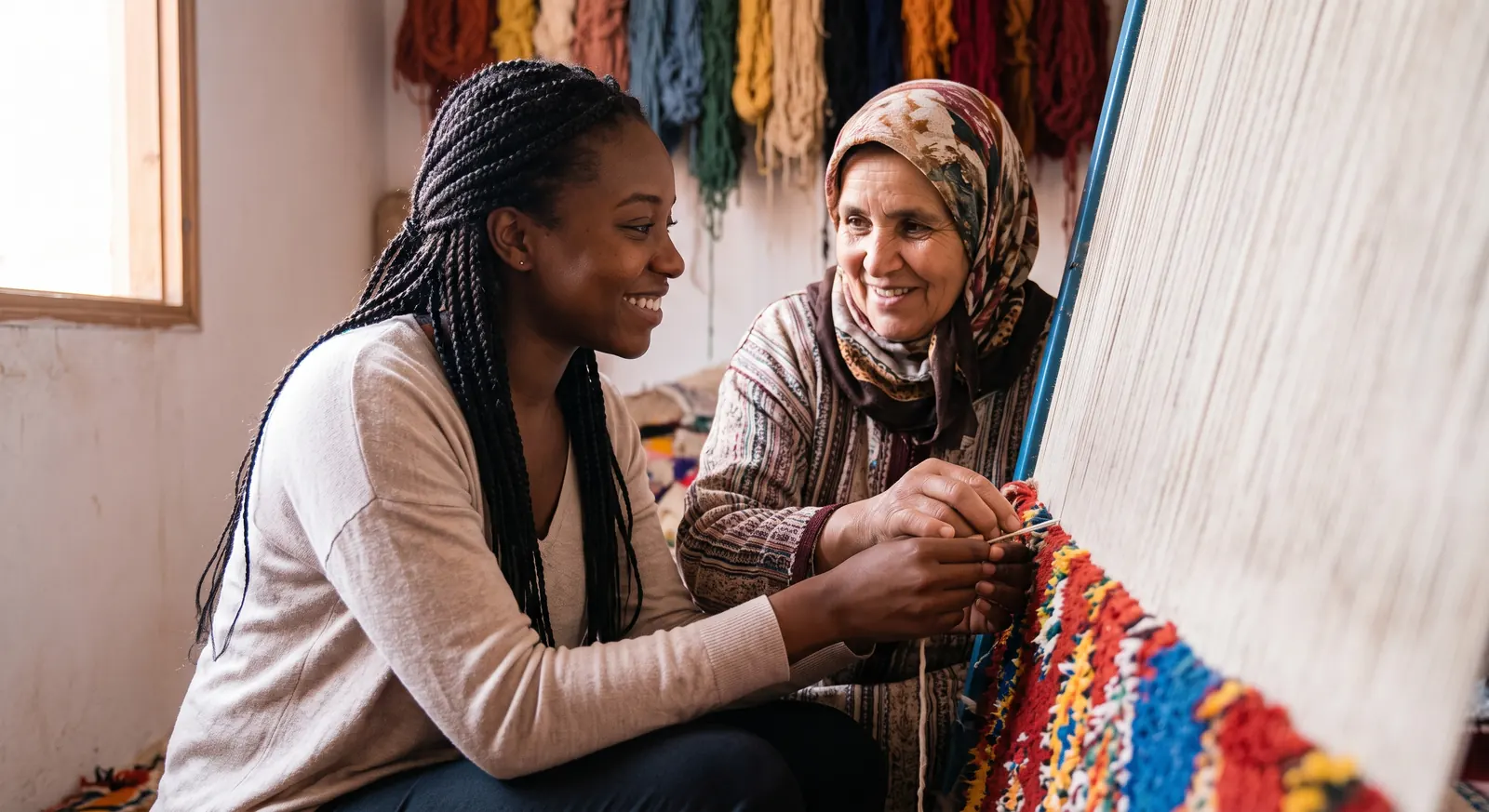
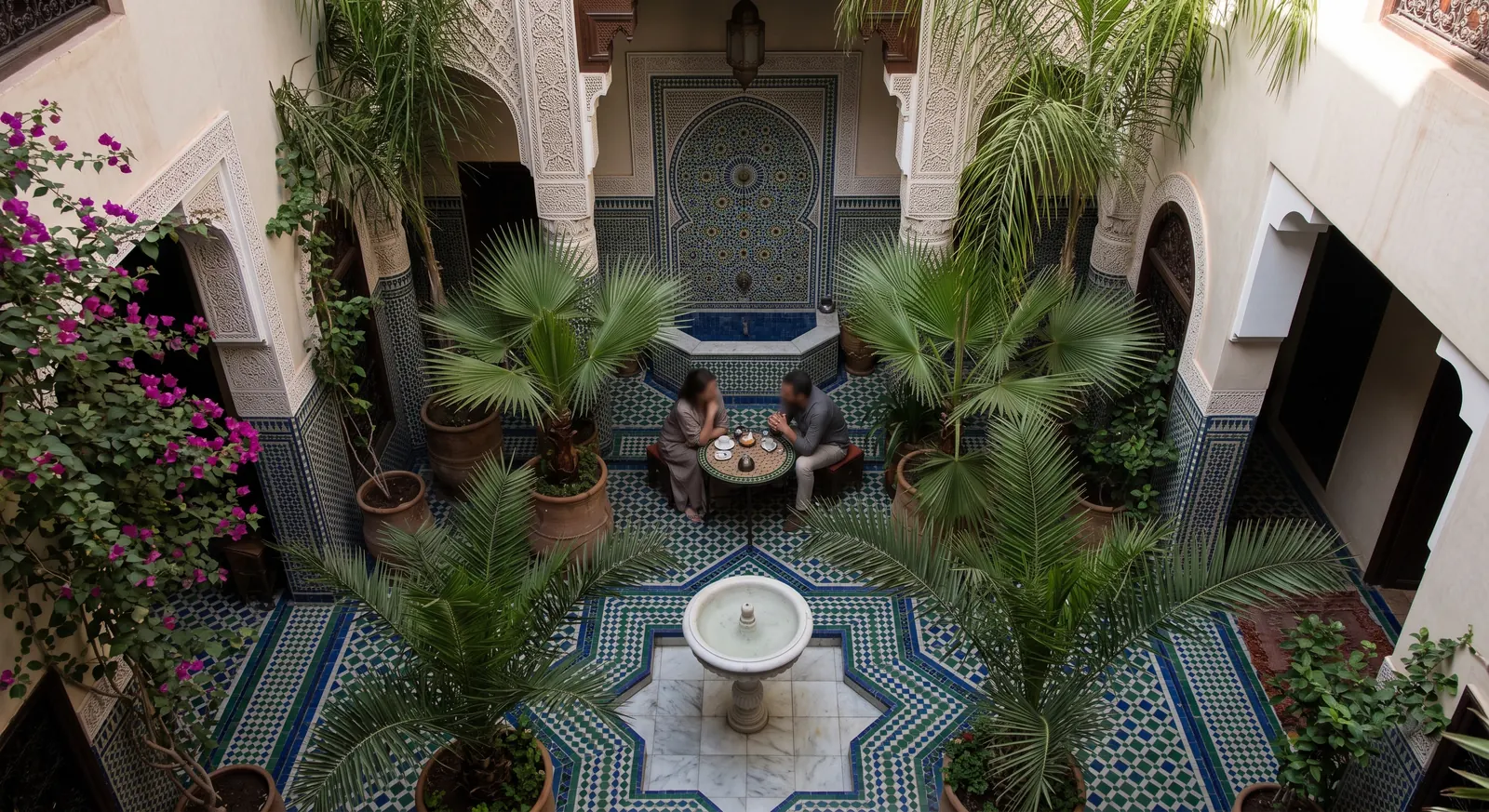
A trusted local team and carefully selected accommodation can make travel more comfortable.
In This Article
An honest guide for Black travelers in Morocco covering racism, cultural differences, Marrakech, security checks, local interactions and practical travel advice.
If you’re a Black traveler considering a trip to Morocco, you may have come across questions or concerns about racism in the country.
As a Moroccan who works in tourism and regularly welcomes travelers from different parts of the world, I want to give you an honest perspective — not tell you that racism doesn’t exist, but also not let a few experiences or stories give you the impression that Morocco is a country where you should expect to be treated badly because of your skin color.
Morocco Is Not the Same as the Country You Are Coming From
One of the biggest things to understand when traveling is that people don’t always have the same cultural references, social rules or understanding of certain words.
A behavior that is completely unacceptable in the United States, the UK or another Western country may not carry exactly the same meaning in Morocco.
That doesn’t automatically make the behavior acceptable. It simply means that sometimes there is a difference between what someone intends to say and how it is received by the person hearing it.
Morocco has a large and diverse population, including Black Moroccans who have been part of Moroccan society for generations. Being Black is not something completely unfamiliar or unusual here.
You may therefore hear Moroccans casually describe someone by their appearance — for example, saying “the Black guy” when referring to someone whose name they don’t know.
In some contexts, the person saying this may simply be describing the person they are talking about, rather than expressing hatred or trying to insult them.
However, there is an important distinction: a description can be culturally casual without being appropriate in every situation. If someone is uncomfortable with the way they are being described, that feeling is valid.
What About the N-Word?
This is something I especially want to clarify because I have personally witnessed situations involving young Moroccans using the N-word.
Sometimes young people hear the word through American music, rap, movies or social media and repeat it without understanding the historical and racial meaning it carries for Black people, particularly in the United States.
I have seen young people use it as if it were simply a word they heard in a song or as a way of talking to someone they consider a friend.
That doesn’t make the word harmless.
If you hear someone in Morocco use the N-word, you are absolutely allowed to find it offensive. At the same time, it is worth understanding that the person may not fully understand the history behind the word or the impact it has on you.
In other words, ignorance and racism can sometimes look similar from the outside, even though the intention behind them may be different.
The best response can simply be to make your discomfort clear and move away from the situation rather than assuming that everyone around you shares the same attitude.
You May Experience Curiosity
Morocco receives visitors from all over the world, but not every Moroccan has the same exposure to international travelers.
Depending on where you are, you may sometimes notice people looking at you, asking where you are from, or commenting on your appearance.
For some travelers, this can feel uncomfortable.
Sometimes it is genuine curiosity. Sometimes it can be ignorance. And sometimes, unfortunately, it can cross the line into prejudice or discrimination.
The important thing is not to assume that every interaction has the same meaning.
If someone is simply curious, a friendly conversation can often end it.
If someone is disrespectful, you don’t have to tolerate it.
What About Security Checks?
Another concern I sometimes hear from travelers is:
“Will Moroccan police or security stop me because I’m Black?”
Morocco has security checks in places such as airports, clubs, nightlife venues and other busy areas.
From my own experience as a Moroccan, being stopped or asked questions by security is not something that only happens to Black people.
I have personally been stopped at clubs, bars, airports and other places.
Security procedures can sometimes feel strict, and as a visitor you may not immediately understand why you are being questioned.
If this happens to you, don’t automatically assume that it is because of your skin color.
At the same time, if you genuinely feel that you are being treated differently because of your race, you should trust your judgment and seek help from your accommodation, tour operator or another trusted local person.
Does Racism Exist in Morocco?
It would be dishonest to say that racism does not exist in Morocco.
It does.
Research and human-rights reporting have documented anti-Black discrimination in Morocco, including discrimination affecting Black Moroccans and Sub-Saharan African migrants. A 2022 Arab Barometer survey cited by the U.S. State Department found that 37% of respondents considered racial discrimination a problem in Morocco, while around four in ten recognized anti-Black racism as a significant problem. (State.gov)
So I don’t want to tell Black travelers, “Don’t worry, Morocco has no racism.”
That would be unfair to people who have experienced it.
But I also don’t believe it is fair to describe Morocco as a country where Black travelers should expect racism everywhere they go.
Both statements can be true:
Racism exists in Morocco, and a Black traveler can have an amazing, welcoming and completely normal experience here.
My Advice to Black Travelers
Come to Morocco with an open mind, just as I would encourage anyone to do when visiting another country.
You may encounter things that feel strange or uncomfortable because Moroccan culture is different from what you are used to.
Sometimes it will simply be cultural difference.
Sometimes someone may be ignorant.
And sometimes you may genuinely encounter prejudice.
Don’t feel that you have to excuse disrespect just because you are a visitor.
But at the same time, don’t let one person’s behavior define an entire country or an entire people.
Talk to locals. Ask questions. Tell your guide if something makes you uncomfortable. And if you are traveling with a local professional, don’t hesitate to ask them about something you don’t understand.
Come Experience Morocco for Yourself
Morocco is a country of many cultures, languages, backgrounds and communities.
You can walk through the streets of Marrakech, explore the Atlas Mountains, meet families in the countryside, spend a night in the Sahara and share a meal with Moroccan people who will be genuinely happy to have you in their country.
As a Moroccan working in tourism, my advice is simple:
Don’t come expecting Morocco to be perfect. Come expecting it to be different.
You may experience cultural differences that you don’t immediately understand. You may encounter someone who is ignorant or disrespectful. But you will also meet incredibly welcoming people, make genuine connections and experience a country that is much more diverse and complex than what you may have read online.
And if something happens that you don’t understand, ask.
Sometimes a little cultural context can completely change how you understand an interaction.
Morocco is not perfect — no country is. But don’t let fear of racism stop you from discovering it for yourself.
What the Travel Experience Can Look Like for Black Visitors
Black travel in Morocco cannot be reduced to a single story. A traveler spending a weekend in an international hotel in Marrakech may have a very different experience from someone spending several weeks moving through smaller towns, nightlife venues and rural communities. Personality, language, location, social context and the people you meet can all affect the trip.
Many Black travelers visit Marrakech, Fez, Chefchaouen, Essaouira, the Atlas Mountains and the Sahara without racism becoming the defining feature of their journey. Others report uncomfortable comments, staring, stereotypes or discriminatory treatment. Both types of experiences deserve to be acknowledged. An honest Morocco travel guide should make room for positive experiences without dismissing negative ones.
African American Travelers in Morocco: Cultural Context Matters
For African American travelers in Morocco, certain words, jokes or ways of describing people may carry different cultural baggage from what they do in the United States. That context can explain why something was said, but it does not require you to accept language that makes you uncomfortable. You can tell a guide, driver or hotel staff member that a comment is not okay, ask for help, or simply leave the interaction.
It is also useful to remember that Morocco sits in North Africa and has long historical, cultural and economic connections with Sub-Saharan Africa. Moroccan identity is diverse, and conversations about race, color, migration and belonging can be complex. A short tourist interaction rarely captures that complexity.
Practical Advice for Black Travelers in Marrakech and Beyond
Choose accommodation with strong recent reviews, use reputable transportation, and keep the contact details of your riad, hotel or travel company available. If an interaction feels confusing, ask a trusted local person for context. If it feels threatening or discriminatory, prioritize your safety rather than debating the situation.
Traveling with a professional local guide can also make cultural interpretation easier. A guide can explain whether a comment was a normal local expression, poor taste, or something more serious, and can step in when necessary.
Frequently Asked Questions for Black Travelers in Morocco
Is Morocco safe for Black travelers?
Many Black travelers visit Morocco safely and have positive experiences. Racism and discrimination do exist, so experiences can vary by person and situation.
Do Black tourists experience racism in Marrakech?
Some travelers report prejudice or offensive comments, while many others report welcoming and ordinary travel experiences. One experience should not be treated as universal.
Will people stare at Black travelers in Morocco?
It can happen, especially in places with less exposure to international visitors. Staring can reflect curiosity, but context matters and travelers are entitled to set boundaries.
What should I do if I experience discrimination in Morocco?
Move away from the situation if needed and seek support from your hotel, riad, tour operator, guide or another trusted local contact.
Should fear of racism stop a Black traveler from visiting Morocco?
That is a personal decision, but the existence of racism does not mean that every Black visitor will have a negative trip. Research, preparation and trusted local support can help you travel with more confidence.
Continue planning
Related Morocco travel advice
Time-sensitive information last checked: 26 August 2026.
Read next
More Morocco Travel Guides
Marrakech Local Picks
Marrakech Best Of: Our Local Picks
Our favorite rooftops, restaurants, cafés and riads in Marrakech — handpicked by Mouha Travel.
Read Guide
Practical Travel
Bathrooms in Morocco: What Travelers Should Know Before Visiting Marrakech and Beyond
Wondering what bathrooms are like in Morocco? Learn about toilets in Marrakech, squat toilets, toilet paper, road-trip stops and Sahara desert camp bathrooms.
Read Guide
Cultural Etiquette
Things That Are Not Rude in Morocco — But Western Travelers Sometimes Think They Are
Learn Morocco etiquette before your trip: saying no, bargaining in souks, tipping, refusing food, personal questions and everyday Moroccan social customs.
Read Guide
Traveler Guidance
•
9 min read
•
By Mouha Travel Team
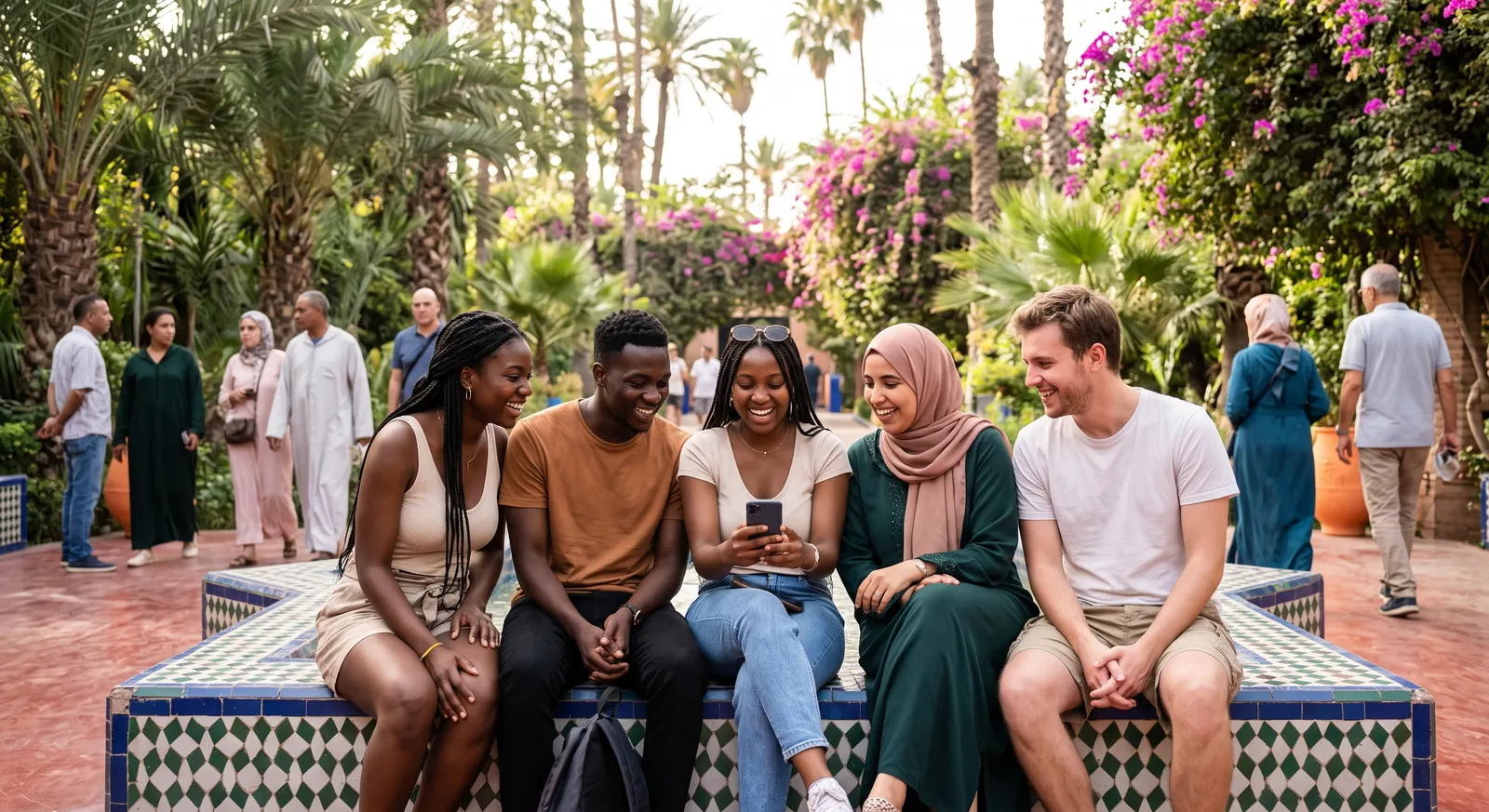
LGBT+ Travel in Morocco: What LGBTQ+ Travelers Should Know
In This Article
Planning LGBT travel in Morocco? Learn about Marrakech, the Sahara, local culture, public affection, rural areas, safety and practical advice for LGBTQ+ travelers.
_Planning a trip to Morocco as an LGBTQ+ traveler?_
Morocco is a fascinating destination of colorful cities, ancient medinas, Atlas Mountain villages, Atlantic beaches and the Sahara Desert.
For LGBTQ+ travelers, Morocco can be an incredible experience, but it is important to understand the country’s laws, culture and social environment before you arrive.
At Mouha Travel, we believe in giving travelers honest and practical advice. Morocco is culturally conservative in many respects, particularly regarding sexuality and public displays of affection. At the same time, LGBTQ+ travelers visit Morocco every year and many have memorable and positive experiences.
The key is simple:
Enjoy Morocco, respect the local culture, protect your privacy and use common sense.
_Is Morocco Safe for LGBT+ Travelers?_
LGBTQ+ travelers should understand that Morocco is not an openly LGBTQ+-friendly destination in the same sense as countries where same-sex relationships are legally protected and publicly accepted.
Same-sex sexual relations are illegal under Moroccan law. Current UK government travel advice also warns that public displays of affection can lead to prosecution and highlights potential risks associated with meeting people through dating applications.
For the latest official information, travelers should check their government’s travel advice before visiting Morocco:
However, the legal situation does not mean that LGBTQ+ travelers cannot visit Morocco.
Many LGBTQ+ travelers visit the country and have enjoyable experiences, particularly when they understand local customs and exercise discretion.
A recent firsthand account from a gay couple who visited Marrakech describes their experience traveling together and explains how being discreet and respectful of local culture helped them enjoy their trips:
Individual experiences vary, so online traveler stories should be viewed as personal experiences rather than guarantees.
LGBT+ Travel in Marrakech
Marrakech is one of Morocco’s most international destinations.
The city welcomes visitors from all over the world and has a large tourism industry, with international hotels, riads, restaurants, guides and travel companies.
For LGBTQ+ travelers, Marrakech can be a comfortable place to explore Morocco when normal discretion is observed.
You can enjoy the medina, visit the souks, discover the city’s architecture, experience Moroccan food, relax in a hammam or take day trips into the surrounding mountains.
However, Marrakech remains part of Moroccan society. Although the city is very accustomed to international tourism, it is not a destination where public displays of same-sex affection should be treated as normal or expected.
Our advice is simple:
Enjoy Marrakech openly as a traveler, but keep intimate moments private.
Can Same-Sex Couples Travel Together in Morocco?
Yes. Same-sex couples do travel together in Morocco.
You can explore the country together, enjoy restaurants, stay in hotels, take private tours, visit the desert and experience Moroccan culture.
The important distinction is between traveling together and displaying affection publicly.
Kissing, making out or behaving sexually in public should be avoided.
This is not only an LGBTQ+ issue. Moroccan society is generally more conservative about public displays of affection than many Western countries.
Walking together, having dinner together, taking photographs and enjoying your trip are very different from displaying intimate affection in a public place.
Keep romantic affection private and enjoy the rest of your journey freely.
Do LGBTQ+ Travelers Need to Hide Their Identity?
Not necessarily.
Respecting Moroccan culture does not mean that LGBTQ+ travelers should feel ashamed of who they are.
At the same time, Morocco is a country where conversations about sexuality can be more private and sensitive than they are in many Western countries.
You do not need to announce your sexuality to everyone you meet, and you do not need to debate your personal life with strangers.
If someone asks a personal question that makes you uncomfortable, you can simply change the subject.
Privacy is not the same as shame.
You can be comfortable with your identity while understanding that you are visiting a different cultural environment.
Public Displays of Affection in Morocco
This is one of the most important practical considerations for LGBTQ+ couples.
We recommend avoiding:
Kissing or making out in public
Sexual or highly intimate behavior in public
Excessive physical affection
Intimate behavior around religious or culturally sensitive locations
Deliberately drawing attention to your relationship
Confrontations intended to challenge local attitudes
Again, this principle applies to couples generally.
Morocco has a more conservative approach to public affection than many European or North American destinations.
Keep intimate moments private, especially in busy public places, traditional neighborhoods and rural communities.
Respect Moroccan Culture
One of the best ways to enjoy Morocco is to approach the country with curiosity rather than judgment.
You will encounter traditions, customs and social attitudes that may be different from those you are used to.
You do not have to agree with everything you encounter.
But you should respect the fact that you are visiting another country.
For LGBTQ+ travelers, this can be particularly important.
You do not need to prove your opinions to locals.
You do not need to convince someone that your worldview is correct.
And you do not need to turn every cultural difference into a confrontation.
If someone expresses an opinion you disagree with, it is usually better to politely move on.
You are on holiday. You do not need to win an argument with a stranger.
Your goal is to discover Morocco, meet people, enjoy Moroccan food and create unforgettable memories.
LGBTQ+ Travel in Rural Morocco
Morocco is a very diverse country.
Marrakech, Casablanca, Essaouira and other major tourist destinations have large international tourism industries. However, when you travel into smaller towns and rural communities, social attitudes can be considerably more traditional.
This is especially relevant when visiting:
Atlas Mountain villages
Amazigh communities
Small desert towns
Rural valleys
Traditional villages
Local family homes
These places can provide some of the most authentic and memorable experiences in Morocco.
They are also places where cultural awareness matters most.
When visiting rural communities, we recommend:
Dressing appropriately
Avoiding intimate behavior in public
Respecting local traditions
Following your guide’s advice
Being aware of your surroundings
Avoiding unnecessary confrontations
This does not mean LGBTQ+ travelers should avoid rural Morocco.
Quite the opposite.
Some of Morocco’s most beautiful experiences are found far away from the major cities.
Just travel with awareness and respect.
Visiting the Sahara Desert as an LGBTQ+ Traveler
The Sahara Desert is one of the highlights of traveling through Morocco.
A typical desert journey may include the Atlas Mountains, Aït Ben Haddou, the Dades Valley, Todra Gorge, Merzouga and the Sahara dunes.
LGBTQ+ travelers can enjoy these experiences just like any other visitor.
You can ride camels at sunset, enjoy a desert camp, watch the stars and discover the landscapes of southern Morocco.
However, reaching the Sahara usually means traveling through smaller towns and villages where social attitudes may be more conservative.
This is where having a knowledgeable local driver or guide can be especially useful.
At Mouha Travel, we help travelers understand local customs and navigate different environments throughout their journey.
You should never feel embarrassed to ask your guide whether something is appropriate.
Hotels and Riads for LGBTQ+ Travelers
Accommodation policies can vary between individual hotels and riads.
For a smoother experience, we recommend choosing reputable accommodation with established tourism experience.
Internationally oriented hotels and professionally managed riads are accustomed to welcoming travelers from many different countries and backgrounds.
If you are unsure about a particular property, ask before booking.
Mouha Travel can also help you select accommodation according to your preferred style, location and budget.
Clothing and Cultural Etiquette
You do not need to dress traditionally to visit Morocco.
However, modest clothing is generally appreciated, especially outside major tourist areas.
When visiting villages, traditional neighborhoods, religious sites or local communities, consider dressing more conservatively.
For example:
Cover your shoulders when appropriate
Avoid very revealing clothing in conservative areas
Follow local rules at religious sites
Observe local customs
Ask your guide if you are unsure
This is not specifically an LGBTQ+ rule.
It is simply good travel etiquette.
Should LGBTQ+ Travelers Use Dating Apps in Morocco?
This is an area where travelers should be particularly careful.
Current UK government travel advice warns that dating applications can involve legal, personal-safety and privacy risks in Morocco.
There are also discussions within LGBTQ+ travel communities about potential scams, extortion and unsafe meetings.
These are individual reports and do not mean that every interaction is dangerous. However, travelers should understand the risks.
Avoid unnecessary exposure to situations such as:
Meeting strangers in isolated locations
Sharing your accommodation details
Sending intimate photographs
Giving strangers personal information
Following someone to an unfamiliar location
Carrying large amounts of cash when meeting someone you do not know
If a situation feels suspicious or uncomfortable, leave.
LGBTQ+ Travelers and Moroccan Hospitality
One of the things many visitors remember about Morocco is its hospitality.
You may experience this while drinking mint tea with a family in the mountains, eating with locals, meeting artisans in the medina or talking with people during your journey.
Hospitality and attitudes toward sexuality are not necessarily the same thing.
A Moroccan person can be extremely welcoming to you as a traveler while also holding traditional or conservative personal beliefs.
Understanding this distinction can make cultural interactions much easier.
Approach people with respect, and you will often find that Moroccan hospitality is one of the most memorable parts of your trip.
What Other LGBTQ+ Travelers Say About Morocco
Reading firsthand experiences can be useful when planning your trip.
A gay couple who visited Marrakech shared their experience of traveling together and discussed topics including hotels, public affection and cultural expectations:
You can also find discussions from LGBTQ+ travelers on Reddit about visiting Marrakech and traveling through Morocco:
These are personal experiences rather than official safety recommendations. Conditions, laws and individual experiences can change, so travelers should always check current official travel advice before departure.
Our Advice for LGBTQ+ Travelers Visiting Morocco
If you are planning a trip to Morocco, keep these simple principles in mind:
1. Come and experience Morocco
Do not let uncertainty stop you from discovering an incredible country.
1. Keep public affection discreet
Avoid kissing, making out and other intimate behavior in public.
1. Respect local customs
This is especially important when visiting villages, rural communities and religious or culturally sensitive places.
1. Avoid unnecessary confrontations
You do not need to prove your opinions or challenge locals about sexuality, religion or social values.
Respectful disagreement is one thing. Deliberately provoking a confrontation is another.
1. Be more careful outside major tourist areas
Rural Morocco can be considerably more conservative than Marrakech or Essaouira.
1. Choose reputable accommodation
Established hotels and tourism businesses can provide a more comfortable and predictable experience.
1. Listen to your local guide
A knowledgeable local guide can explain cultural differences and help you understand what is appropriate in different situations.
1. Protect your privacy
Be particularly thoughtful about dating apps, intimate photographs, social media and sharing personal information.
1. Remember that respect works both ways
LGBTQ+ travelers deserve to be treated professionally and respectfully.
At the same time, visitors should extend the same respect to Moroccan communities and their traditions.
Why Travel With Mouha Travel?
At Mouha Travel, we specialize in private and personalized Morocco experiences.
Every traveler is different.
Some want to explore Marrakech. Others want to hike in the Atlas Mountains, discover Amazigh villages, travel through the Dades Valley, visit Aït Ben Haddou or spend several nights in the Sahara.
Our role is to organize the journey while helping you understand the country you are visiting.
For LGBTQ+ travelers, this can include:
Private transportation
Experienced local drivers
Professional local guides
Carefully selected accommodation
Flexible private itineraries
Cultural advice throughout your journey
Support before and during your trip
Most importantly, we want you to feel comfortable asking questions before you arrive.
If you are unsure about a destination, accommodation, activity or cultural situation, simply ask us.
Morocco Is Waiting
Morocco is not a destination where travelers should ignore local laws or cultural expectations.
But cultural differences do not mean that LGBTQ+ travelers cannot have an incredible experience here.
With realistic expectations, cultural awareness, discretion and good planning, many LGBTQ+ travelers have visited Morocco and returned home with unforgettable memories.
Explore the souks of Marrakech.
Watch the sunset over the Atlantic in Essaouira.
Cross the Atlas Mountains.
Discover Amazigh villages.
Share Moroccan food with locals.
Ride camels through the Sahara.
Sleep beneath the desert stars.
Travel respectfully. Travel confidently. And discover Morocco your way with Mouha Travel.
Frequently Asked Questions
Is Morocco safe for gay travelers?
LGBTQ+ travelers do visit Morocco and many report positive experiences. However, same-sex sexual relations are illegal under Moroccan law, and public displays of affection can create legal or social problems. Travelers should understand the local environment and exercise discretion.
Is Marrakech safe for gay couples?
Marrakech is one of Morocco’s most international tourist destinations, and LGBTQ+ couples have reported positive experiences there. However, public displays of affection should be avoided and Moroccan cultural norms should be respected.
Can gay couples stay in the same hotel room in Morocco?
Accommodation policies vary. Reputable hotels and riads regularly host international travelers, but couples with concerns should check the property’s policy before booking.
Can LGBTQ+ travelers visit the Sahara Desert?
Yes. LGBTQ+ travelers can enjoy private Sahara tours, camel rides, desert camps and other experiences. Additional cultural discretion is recommended when traveling through rural communities.
Should gay couples hold hands in Morocco?
It is better to avoid intimate public displays of affection. Kissing and making out in public should particularly be avoided.
Can lesbian travelers visit Morocco?
Yes. Lesbian travelers visit Morocco, and the same general principles apply: respect local customs, avoid intimate public displays and exercise additional discretion in conservative or rural areas.
Is Morocco LGBTQ-friendly?
Morocco should not be described as an openly LGBTQ+-friendly destination. Same-sex sexual relations remain illegal and social attitudes can be conservative. Nevertheless, LGBTQ+ travelers do visit Morocco and many report positive experiences when they understand the local environment and exercise appropriate discretion.
Do I need to tell my Moroccan guide that I am LGBTQ+?
No. You should never feel pressured to disclose personal information. However, if you have concerns about accommodation, activities or cultural situations, discussing them privately with a trusted travel professional can help you plan more comfortably.
Is rural Morocco different?
Yes. Rural communities can be more conservative than major tourist destinations. Travelers should pay particular attention to clothing, public behavior and local customs when visiting villages and remote areas.
A Final Note From Mouha Travel
We believe good travel advice should be honest.
We will not tell you that Morocco has the same social environment as Amsterdam, Madrid or New York.
It does not.
But we also do not believe that cultural differences mean you cannot have an incredible experience here.
Come with an open mind. Respect the country you are visiting. Protect your privacy. Use common sense. And allow Morocco to surprise you.
If you are planning a Morocco trip and have questions about traveling as an LGBTQ+ visitor, Mouha Travel is happy to help you plan your journey privately and professionally.
Mouha Travel — Discover Morocco, Your Way.
Planning an LGBTQ+ Morocco Itinerary With More Privacy and Flexibility
For LGBTQ+ travelers, a private Morocco itinerary can make practical planning easier because accommodation, transport and activities can be discussed in advance. This is particularly useful for couples who want clear information about room arrangements, rural stops, desert camps or cultural expectations without having to explain the same concerns repeatedly during the trip.
Marrakech, Essaouira and other major tourism destinations are accustomed to international visitors, while small villages and remote areas may be more socially conservative. The experience is therefore not only about a national rule; it also depends on the setting. A trusted local guide or driver can help you read that context without turning your entire holiday into a list of restrictions.
LGBTQ+ Travel From Marrakech to the Sahara Desert
A private Sahara Desert tour from Marrakech normally passes through the High Atlas Mountains, kasbahs, valleys, smaller towns and rural communities before reaching Merzouga or another desert area. LGBTQ+ travelers can enjoy the same landscapes, camel rides, desert camps and cultural experiences as other visitors. The practical advice is simply to be more discreet with intimate public affection as the trip moves into more traditional areas.
Frequently Asked Planning Questions
Is a private Morocco tour useful for LGBTQ+ couples?
It can be. Private travel gives couples more control over accommodation, pace, transport and communication with local partners.
Can LGBTQ+ travelers take a Sahara tour from Marrakech?
Yes. LGBTQ+ visitors travel to the Sahara, Atlas Mountains and other parts of Morocco. Cultural discretion is especially useful in rural areas.
Should LGBTQ+ travelers avoid Morocco completely?
That is a personal decision. Morocco has conservative laws and social attitudes, but LGBTQ+ travelers do visit the country. The article’s advice is to understand the legal and cultural context before deciding.
Can a travel company answer sensitive questions privately?
A professional operator should be able to discuss accommodation, itinerary and cultural concerns discreetly before booking.
*
Continue planning
Related Morocco travel advice
Time-sensitive information last checked: 26 August 2026.
Read next
More Morocco Travel Guides
Marrakech Local Picks
Marrakech Best Of: Our Local Picks
Our favorite rooftops, restaurants, cafés and riads in Marrakech — handpicked by Mouha Travel.
Read Guide
Practical Travel
Bathrooms in Morocco: What Travelers Should Know Before Visiting Marrakech and Beyond
Wondering what bathrooms are like in Morocco? Learn about toilets in Marrakech, squat toilets, toilet paper, road-trip stops and Sahara desert camp bathrooms.
Read Guide
Cultural Etiquette
Things That Are Not Rude in Morocco — But Western Travelers Sometimes Think They Are
Learn Morocco etiquette before your trip: saying no, bargaining in souks, tipping, refusing food, personal questions and everyday Moroccan social customs.
Read Guide
Marrakech Local Picks
•
5 min read
•
By Mouha Travel Team
Marrakech Best Of: Our Local Picks
In This Article
Our favorite rooftops, restaurants, cafés and riads in Marrakech — handpicked by Mouha Travel.
Marrakech has hundreds of places to eat, drink and stay. These are some of the places we personally recommend to our travelers — from rooftop sunsets and Moroccan food to great coffee and beautiful riads.
🌇 Best Rooftops
Kabana — Stylish rooftop, great for sunset, cocktails and a lively atmosphere.
DarDar — One of our favorite sunset spots. Reservation recommended several days in advance.
Manzah l’Koutoubia — Great location next to the Koutoubia Mosque.
Café de France — A Marrakech classic with views over Jemaa el-Fna.
La Pergola — Relaxed rooftop with live jazz music.
Shtatto — A nice rooftop to enjoy while exploring the Medina.
🍽️ Best Food
Farmers — Farm-to-table dining in the new town, with creative small plates and an intimate atmosphere.
Naranj — Excellent Lebanese food with a beautiful rooftop.
🇲🇦 Best Moroccan & Casual Restaurants
Chez Lamine — One of our favorite places for traditional mechoui.
Terrasse Bakchich — A relaxed spot for different Moroccan tagines.
Tiznit Restaurant — Good, casual Moroccan food.
Bendir — Moroccan food with a nice rooftop atmosphere.
🌍 Best Non-Moroccan Restaurants
Naranj — Lebanese cuisine.
Farmers — Modern farm-to-table dining.
Wauw — Asian food, including sushi, woks and poke bowls.
Mandala Society — Great for brunch and lunch, with international coffee and drinks.
PepeNero — Italian cuisine close to the main square.
☕ Best Cafés & Coffee
Bacha Coffee — One of the most beautiful coffee houses in Marrakech.
Seven Saints — A simple coffee stop near the main square.
Hyuna House Cafe — Coffee, fresh baked treats, good Wi-Fi and a rooftop.
Kech Cup — Good coffee. Cash only.
🍸 Where to Order Alcohol
For travelers looking for a drink, some options include:
Kabana
Café Arabe
DarDar
Le Marrakechi
La Pergola
🏡 Our Favorite Riads
Riad Dar Fanny — A charming option close to the heart of the Medina.
Riad Ksar Saad — Traditional atmosphere and a relaxing stay.
Riad Ines Home — A charming Medina experience.
Riad Valentine — Traditional Marrakech atmosphere.
Riad Dar Dounia — A good choice for families and groups.
Riad Pure House — Boutique, adults-only and well suited to couples.
Riad Le Pèlerin — Traditional and intimate.
The Little Hara — Small and charming Medina riad.
Riad Idra — Boutique luxury in the Medina.
Riad Nyla — A beautiful choice for couples and wellness.
❤️ A Little Help From a Local
There are countless places to discover in Medina Marrakech, and these are simply some of the ones we like to recommend.
If you’re unsure where to eat, where to stay, or what is worth visiting during your trip, ask Mouha Travel.
We’re based in Marrakech and are always happy to share our local recommendations.
**Discover Marrakech like a local.**
Mouha Travel
More Morocco Travel Guides
Practical Travel
Bathrooms in Morocco: What Travelers Should Know Before Visiting Marrakech and Beyond
Wondering what bathrooms are like in Morocco? Learn about toilets in Marrakech, squat toilets, toilet paper, road-trip stops and Sahara desert camp bathrooms.
Read Guide
Cultural Etiquette
Things That Are Not Rude in Morocco — But Western Travelers Sometimes Think They Are
Learn Morocco etiquette before your trip: saying no, bargaining in souks, tipping, refusing food, personal questions and everyday Moroccan social customs.
Read Guide
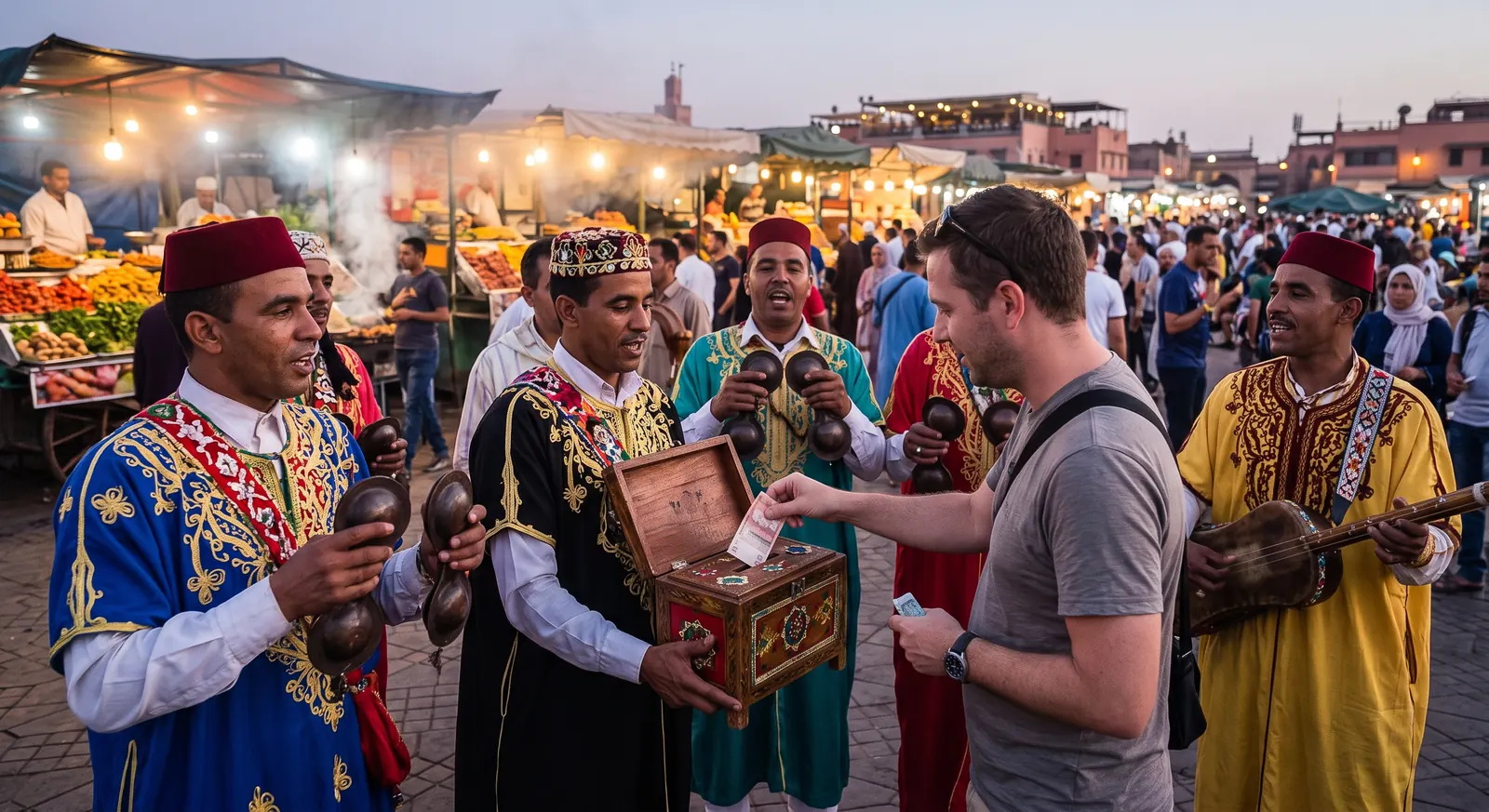
Responsible Travel
When Giving Money Becomes a Business Model: Giving Money in Marrakech
Should you give money to people asking in Marrakech? Understand street begging, children, tipping, charity and responsible ways to support local communities in Morocco.
Read Guide
Money & Currency
•
7 min read
•
By Mouha Travel Team
Money in Morocco: Currency, Exchange & Payment Tips for Travelers
In This Article
A practical guide to money in Morocco: Moroccan dirhams, ATMs, cash vs card, currency exchange, small notes and payment tips for Marrakech and beyond.
One of the first things you’ll need to figure out when arriving in Morocco is money.
What currency should you use? Where should you exchange your cash? Can you pay by card? How much cash should you carry?
Don’t worry. Once you understand a few simple things, using money in Morocco is quite easy.
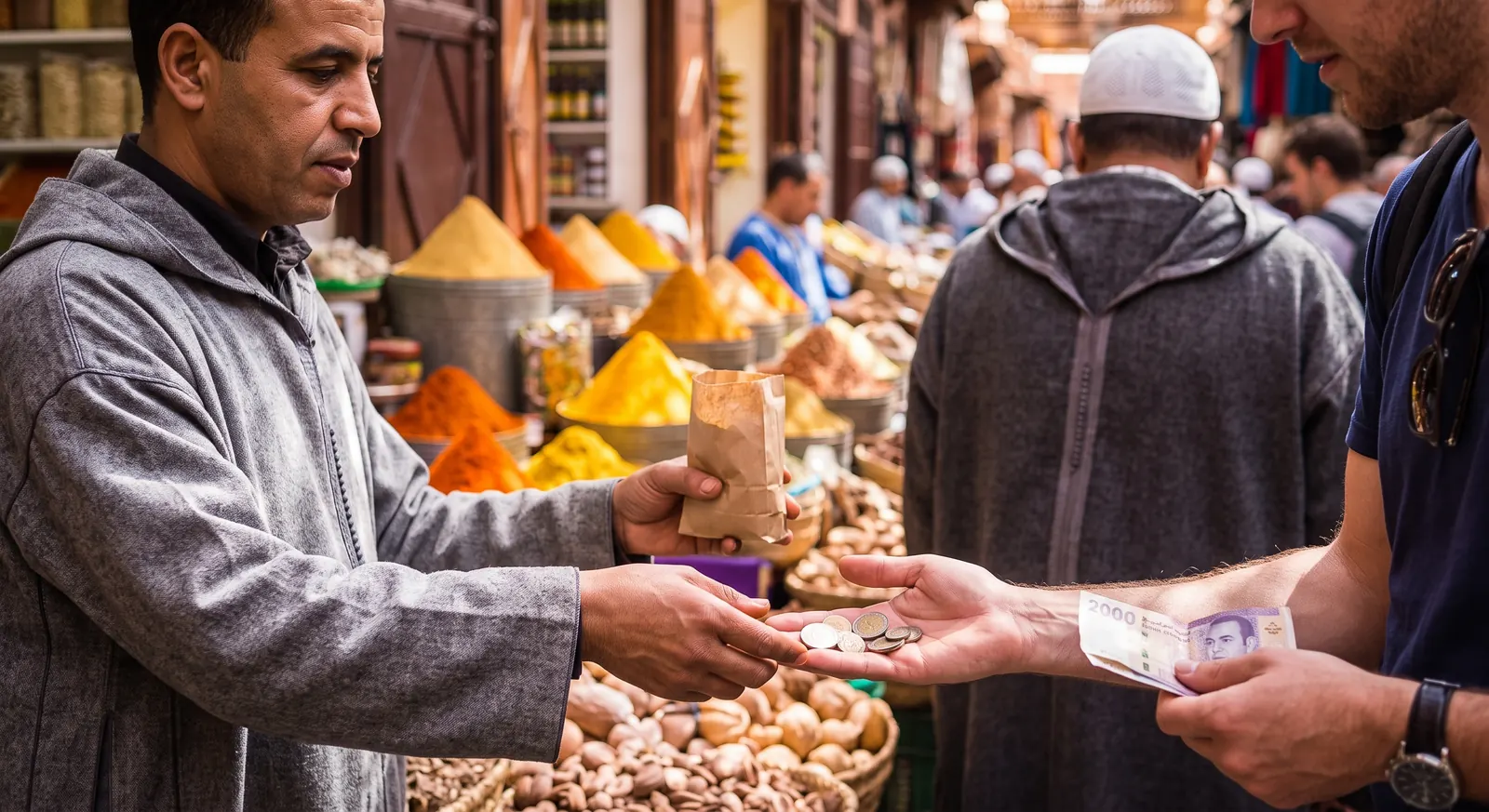
The Moroccan Dirham
Morocco uses the Moroccan Dirham (MAD).
You’ll usually see prices written as DH, MAD, or simply “dirhams.”
At first, the notes and coins might be confusing, especially when you’re hearing prices quickly in the souks. But you’ll get used to them very quickly.
Banknotes
• 200 DH — roughly $14–15
• 100 DH — roughly $7–8
• 50 DH — roughly $3.50–4
• 20 DH — roughly $1.50
Coins
• 10 DH — roughly $0.75
• 5 DH — roughly $0.35–0.40
• 2 DH — roughly $0.15
• 1 DH — roughly $0.07
• 0.50 DH — roughly $0.04
These are only rough examples because exchange rates change.
And one thing worth remembering from the beginning:
20 DH does not mean $20.
You’ll hear prices in dirhams everywhere, so getting familiar with the currency will make your trip much easier.
Exchanging Your Money
You can exchange euros, US dollars and other major currencies at exchange offices throughout Morocco.
One thing travelers sometimes don’t realize is that the rate you see on Google may not be exactly the rate you receive at a local exchange office.
Google’s rate is useful as a reference, but exchange offices have their own rates and margins. So don’t be surprised if the rate you are offered is slightly different.
Our advice is to compare before exchanging a large amount.
Avoid exchanging large amounts at the airport
Airport exchange counters are convenient, especially when you have just arrived, but convenience doesn’t necessarily mean the best rate.
If you need some Moroccan money immediately for your transfer, food or first expenses, exchange a small amount.
Then, once you’re in the city, compare rates at reputable exchange offices before exchanging more.
And always count your money before leaving the exchange counter.
ATMs: A Convenient Backup
ATMs are widely available in Morocco, especially in cities and tourist areas.
You’ll find ATMs from banks such as Al Barid Bank, as well as many other Moroccan banks. Al Barid Bank has a large network across the country, and its official tariff information shows that ATM fees can depend on the type of withdrawal and card used. (Al Barid Bank)
So don’t assume that every ATM withdrawal is completely free.
There are potentially two different costs to consider:
• A fee charged by the Moroccan ATM or bank
• A foreign transaction or withdrawal fee charged by your own bank
Always check the ATM screen before confirming the transaction.
One more ATM tip
Occasionally, an ATM can keep your card.
If that happens, getting your card back can take some time, especially if it happens outside banking hours or during a weekend.
For this reason, don’t make your bank card your only way of accessing money.
It’s smart to travel with:
• A backup card
• Some emergency cash
• Your bank’s contact information
• Your card stored safely when you’re not using it
And never let a stranger “help” you with your card or PIN at an ATM.
Cash Is King
If there’s one rule we would give travelers, it’s this:
Cash is king.
Cards are becoming increasingly common in Morocco, particularly in larger cities, hotels, modern restaurants, supermarkets and established businesses.
Visa and Mastercard are generally useful cards to have.
American Express, however, is much more likely to be rejected, so don’t rely on it as your only payment method.
And even if you’re staying in a hotel where you can pay by card, you should still carry some Moroccan cash.
You’ll need it for things like:
• Souk shopping
• Taxis
• Small local restaurants
• Street-food stalls
• Local markets
• Small independent shops
• Tips
• Small purchases
So the best approach is:
Card when available. Cash when necessary.
Always Check Before You Go
If you’re going somewhere specific, especially outside the major cities, it’s worth checking beforehand whether they accept cards.
A restaurant, activity, accommodation or shop may accept cards — or it may be cash only.
Don’t wait until you’ve finished your meal or activity to find out.
If you’re unsure, take enough cash with you.
At the same time, there’s no need to walk around with your entire travel budget in your pocket. Carry what you expect to need during the day and keep the rest somewhere secure.
Ask for the Price in Dirhams
When you’re shopping, especially in tourist areas, always ask for the price in Moroccan dirhams.
If someone tells you a price in euros or dollars, simply ask:
“How much in dirhams?”
This keeps things much clearer.
You don’t want a seller or service provider using their own exchange rate and then discovering later that the final price is higher than you expected.
If someone tells you something costs €50, for example, ask them to give you the price in DH and do the conversion yourself.
The local currency is always the clearest way to know what you’re actually paying.
Cash vs. Card Prices
In some places, you may notice that the price offered for a card payment is slightly different from the cash price.
There can be different reasons for this, including taxes, payment processing costs or how the business has structured its prices.
You may hear the term TVA, which is Morocco’s value-added tax.
Don’t automatically assume that every difference is a “card fee,” though. The important thing is to ask before paying:
“Is this the final price with TVA?”
and:
“Is the price the same if I pay by card?”
That way, you know exactly what you’re going to pay before the transaction is made.
Keep Small Notes and Coins
Small notes and coins are extremely useful when traveling around Morocco.
A 200 DH note isn’t always convenient when you’re paying for a small taxi ride, buying a snack or making a small purchase.
Try to keep some:
20 DH, 50 DH and 100 DH notes, along with a few coins.
If an ATM gives you mostly large notes, break them when you have the opportunity.
It will make everyday payments much easier.
Don’t Forget Your Change
When paying in busy places, especially markets and souks, take a moment to check your change before putting your wallet away.
This isn’t about assuming someone is going to cheat you. It’s simply good travel practice.
If you’re buying several things, make sure you know the total price before handing over your money.
And if you’ve negotiated a price, make sure both sides clearly agree on the final amount.
A Simple Money Strategy for Morocco
You don’t need to overthink money during your trip.
A good approach is:
Exchange a small amount when you arrive.
Compare exchange rates before exchanging more.
Use reputable ATMs when necessary.
Don’t rely on one card.
Carry some Moroccan cash every day.
Keep smaller notes and coins.
Ask for prices in dirhams.
Check whether card or cash is accepted before ordering.
Confirm the final price before paying.
And most importantly:
Cash is king, but a card is your backup.
Once you get used to Moroccan dirhams, you’ll quickly stop thinking about it and start enjoying the important part — exploring Morocco, eating good food, shopping in the souks and experiencing the country.
A little preparation with your money can save you a lot of unnecessary stress.
How Much Cash Should You Carry in Morocco?
There is no single amount that works for every traveler. Someone staying in an all-inclusive hotel and using private transfers may need very little daily cash, while a traveler shopping in souks, taking taxis and eating in small local restaurants will use cash much more often. A sensible approach is to carry enough Moroccan dirhams for the day while keeping the rest of your money and backup card securely stored.
When planning money in Morocco, think in categories: transport, food, small purchases, tips and activities. Keep a few smaller notes separate from larger bills so you do not need to open your full wallet every time you pay for a taxi, bottle of water or small souvenir.
Using ATMs in Marrakech, Fez and Other Moroccan Cities
ATMs in Morocco are easy to find in major cities and tourist centers. Whenever possible, use an ATM connected to a recognizable bank branch, especially if you are withdrawing a larger amount. Check the screen for any fee or currency-conversion option before confirming. Your home bank may also charge a foreign withdrawal fee even when the Moroccan ATM does not.
If a machine offers to convert the transaction into your home currency, read the rate carefully. Travelers often prefer to understand the cost before accepting any conversion offered at the ATM. The most important rule is to avoid rushing through screens you do not understand.
Paying by Card in Morocco
Card acceptance is improving, especially in hotels, higher-end restaurants, supermarkets and established shops. But “cards accepted” does not mean you can travel cash-free. Small businesses, local taxis, market stalls and rural stops may still operate mainly in cash. Visa and Mastercard are usually more practical than less commonly accepted networks.
Frequently Asked Questions About Money in Morocco
What currency is used in Morocco?
Morocco uses the Moroccan dirham, usually shown as MAD or DH.
Should I bring cash to Morocco?
Yes. Cards are useful, but cash remains important for taxis, souks, tips and many small local businesses.
Can I use US dollars or euros in Morocco?
Some tourism businesses may quote foreign currencies, but the Moroccan dirham is the local currency and usually gives you the clearest basis for payment.
Are ATMs easy to find in Marrakech?
Yes. Marrakech has many ATMs, particularly in central and tourist areas. Fees can depend on the ATM and your own bank.
Should I exchange money at Marrakech airport?
Exchanging a small amount for immediate expenses can be convenient. For larger amounts, compare rates at reputable exchange offices in the city.
Is Morocco cashless?
No. Card use is growing, but cash is still important throughout the country, especially outside major hotels and modern businesses.
*
Continue planning
Related Morocco travel advice
Time-sensitive information last checked: 26 August 2026.
Read next
More Morocco Travel Guides
Marrakech Local Picks
Marrakech Best Of: Our Local Picks
Our favorite rooftops, restaurants, cafés and riads in Marrakech — handpicked by Mouha Travel.
Read Guide
Practical Travel
Bathrooms in Morocco: What Travelers Should Know Before Visiting Marrakech and Beyond
Wondering what bathrooms are like in Morocco? Learn about toilets in Marrakech, squat toilets, toilet paper, road-trip stops and Sahara desert camp bathrooms.
Read Guide
Cultural Etiquette
Things That Are Not Rude in Morocco — But Western Travelers Sometimes Think They Are
Learn Morocco etiquette before your trip: saying no, bargaining in souks, tipping, refusing food, personal questions and everyday Moroccan social customs.
Read Guide
Cultural Etiquette
•
8 min read
•
By Mouha Travel Team
Things That Are Not Rude in Morocco — But Western Travelers Sometimes Think They Are
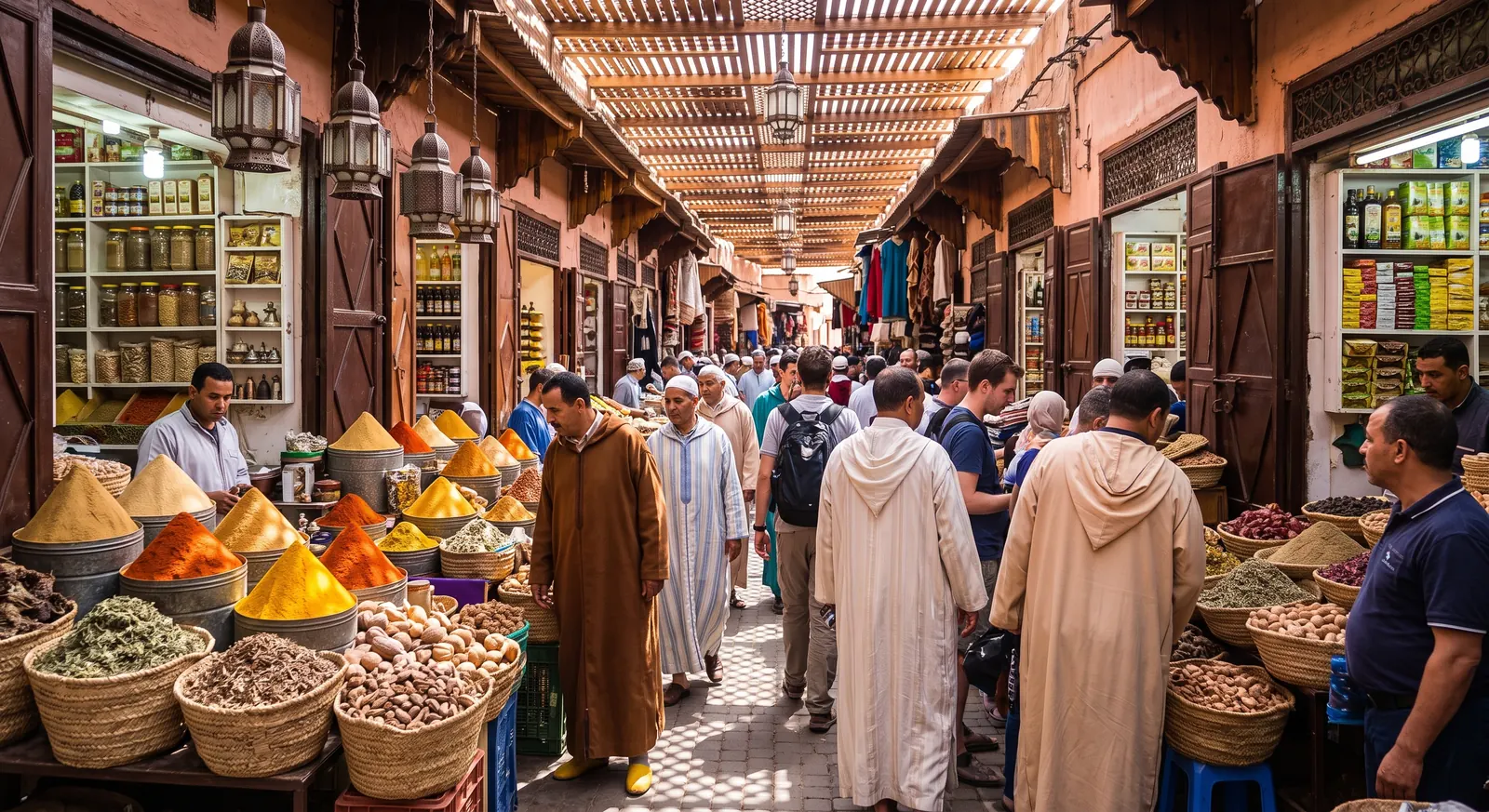
The souks are lively spaces where a friendly, clear no is completely acceptable.
In This Article
Learn Morocco etiquette before your trip: saying no, bargaining in souks, tipping, refusing food, personal questions and everyday Moroccan social customs.
A Moroccan’s Guide to the Social Rules You May Not Expect
One of the most interesting parts of traveling is discovering that “polite” doesn’t mean exactly the same thing everywhere.
Something that feels completely normal in Morocco can sometimes feel unusual — or even rude — to someone coming from the United States, Canada, the UK or Western Europe.
And the opposite is also true.
You may behave perfectly politely according to the social rules you grew up with, while a Moroccan person interprets your behavior differently.
After working with international travelers in Morocco, I’ve noticed that some of the misunderstandings are not really about good manners or bad manners.
They’re simply about different cultures having different ideas about what is normal.
So here are some things you may experience in Morocco that you don’t necessarily need to interpret as rude.
1. Asking Personal Questions Is Not Necessarily Rude
This is probably one of the biggest cultural differences.
You may be having a friendly conversation with your Moroccan guide, driver, shopkeeper or someone you have just met.
Then suddenly they ask:
“What do you do?”
“Are you married?”
“Do you have a boyfriend?”
“Do you have a husband?”
“Where are you from?”
You answer:
“The USA.”
And then:
“Which city?”
And then maybe:
“How old are you?”
For someone from a culture where privacy is highly valued, you might immediately think:
“Why is this person asking me so many personal questions?”
But in Morocco, these questions can simply be part of making conversation.
Moroccan social interactions can involve less personal distance and privacy than some Western cultures are used to.
Asking where you are from is an especially common conversation starter.
If you say you’re from the United States, don’t be surprised if the next question is:
“Which state?”
Then:
“New York? California? Texas?”
And maybe:
“Have you been to Morocco before?”
This isn’t necessarily an attempt to invade your privacy.
It can simply mean:
“I’m interested in getting to know you.”
Of course, you don’t have to answer anything you’re uncomfortable answering.
You can always smile and change the subject.
But don’t automatically interpret the question itself as disrespectful.
2. Saying “No” Is Not Rude
This is something I especially want visitors to understand.
You are allowed to say:
No.
You don’t have to buy something.
You don’t have to accept a tour.
You don’t have to take a photo.
You don’t have to accept someone’s offer.
You don’t have to drink something.
You don’t have to follow someone into a shop.
And saying no does not make you disrespectful.
A simple:
“La, shukran.”
No, thank you.
is perfectly fine.
In fact, Moroccans say no all the time.
The important thing is that you say it clearly and politely.
You don’t need a long explanation.
3. Bargaining Is Not Rude
If you come from a culture where prices are fixed, bargaining can initially feel uncomfortable.
You see something you like.
You ask:
“How much?”
The seller says:
“500 dirhams.”
You say:
“300?”
The seller says:
“450.”
You say:
“350.”
They say:
“400.”
You say:
“350.”
Eventually:
“Okay, 350.”
And then you walk away thinking:
“Was I being rude?”
No.
In many Moroccan souks and traditional markets, bargaining is simply part of the commercial culture.
You’re not insulting the seller by making an offer.
And the seller isn’t necessarily offended because you didn’t accept their first price.
It’s a negotiation.
The important thing is how you negotiate.
You can bargain firmly while remaining friendly.
You don’t need to become aggressive or disrespectful.
And remember: bargaining is generally appropriate in places where bargaining is expected.
A restaurant with a menu and fixed prices is not the same thing as a souk.
4. You Don’t Have to Eat When Someone Offers You Food
Moroccan hospitality often involves food.
A lot of food.
Someone may tell you:
“Eat!”
You say:
“I’m full.”
They say:
“Just a little more.”
You say:
“No, thank you.”
And they insist.
This can sometimes make visitors feel guilty about refusing.
But you are absolutely allowed to decide when and how much you eat.
You don’t need to finish everything.
You don’t need to accept another plate.
You don’t need to eat something you don’t like.
And you don’t need to feel bad about it.
If you’re traveling with a Moroccan family, your host may insist because they genuinely want to make sure you are comfortable and well fed.
That’s hospitality.
You can still politely say:
“Shukran, I’m full.”
And if you really don’t want more, don’t eat more.
5. Eating When You Want Is Not Rude
There is no requirement that you must eat according to someone else’s schedule while traveling.
If you’re hungry, eat.
If you’re not hungry, don’t.
If you want breakfast at 10 instead of 8, that’s fine.
If you want a light lunch, that’s fine.
If you want to stop for a snack, that’s fine.
Morocco has an incredible food culture, but you are still the person who decides what and when you eat.
Don’t feel pressured to eat simply because somebody thinks it’s time.
6. Not Giving a Tip Is Not Automatically Rude
This is another important misconception.
Morocco does have a tipping culture.
If someone provides you with good service, giving a tip is often appreciated.
But tipping should not mean:
“You must give me money regardless of the quality of the service.”
If someone provided excellent service, you may want to show your appreciation.
If someone did the bare minimum or treated you badly, you don’t have to feel guilty about not tipping.
And if someone never provided a service at all, you don’t automatically owe them a tip simply because they approached you.
A tip is supposed to be appreciation, not a punishment.
Of course, expectations can vary depending on the profession and situation, so it’s worth asking your guide or travel company what is customary.
7. You Don’t Have to Talk to Every Seller in the Souk
This is a big one for first-time visitors.
You walk through the souk.
A seller says:
“Hello!”
You keep walking.
They say:
“My friend, come look!”
You keep walking.
They show you something.
You keep walking.
You feel guilty because you’re not responding.
Don’t.
You are not being rude.
You don’t have to stop and explain yourself to every person who wants to sell you something.
If you’re not interested, you can simply continue walking.
You can say:
“La, shukran.”
Or even just smile and keep going.
Silence is perfectly acceptable.
You don’t owe every shopkeeper a conversation.
8. You Don’t Have to Answer Every Question in the Souk
A shopkeeper might ask:
“Where are you from?”
“How long are you staying?”
“First time in Morocco?”
“What hotel?”
“Do you like Morocco?”
Again, this is often simply part of starting a conversation and trying to build a relationship with a potential customer.
You can answer if you want.
Or you can simply keep walking.
You don’t have to give your hotel name, personal information or travel plans if you don’t want to.
Being friendly doesn’t mean giving away your privacy.
9. Refusing a Juice Sample in Jemaa el-Fna Is Not Rude
If you’ve ever walked through Jemaa el-Fna, you probably know what I’m talking about.
Someone offers you orange juice.
Another person offers you something else.
You say no.
They offer again.
You feel awkward.
Don’t.
You are perfectly allowed to say:
“La, shukran.”
and continue walking.
The same applies to food stalls.
If you don’t want to try something, you don’t have to.
You don’t need to taste something just because someone offered it to you.
10. You Don’t Have to Enter a Shop Because Someone Invited You
You’ll hear:
“Come look, my friend.”
Maybe they genuinely want you to see their products.
But if you aren’t interested, you can say no.
You don’t need to enter the shop to be polite.
And you don’t need to feel guilty for walking away.
A good shopkeeper should understand that tourists are allowed to browse without buying.
11. You Can Leave Without Buying Anything
This is especially important in the souks.
You can enter a shop.
Look around.
Ask questions.
See the products.
And leave without purchasing.
If you don’t like the price, walk away.
If you changed your mind, walk away.
If you simply don’t want it anymore, walk away.
That’s normal.
12. Negotiating Doesn’t Mean You Have to Be Aggressive
There is a difference between:
“That’s too expensive for me. Can you do 300?”
and:
“You’re ripping tourists off!”
The first is normal negotiation.
The second can quickly become disrespectful.
The best bargaining is often done with a smile.
You can laugh.
You can make an offer.
You can walk away.
And sometimes the seller will call you back with a better price.
It’s part of the experience.
13. Silence Is Not Rude
Western cultures sometimes place a lot of importance on conversational engagement.
In Morocco, you don’t always have to fill every silence.
If you’re sitting in a car with your driver and you don’t feel like talking, that’s okay.
If you’re walking through the Medina and don’t want to talk to sellers, that’s okay.
If you’re eating and want to enjoy your meal quietly, that’s okay.
You don’t need to constantly make conversation to prove that you’re friendly.
14. Your Guide or Driver May Ask About Your Personal Life
This is particularly common when you spend several days traveling with the same person.
Your guide or driver may eventually ask:
“Are you married?”
“Do you have children?”
“Where does your family live?”
“What do you do for work?”
“How long have you been together?”
For some Western travelers, this can feel unusually personal.
But often, the relationship has moved beyond a purely professional interaction.
You’ve spent hours together.
You’ve shared meals.
You’ve talked about your countries.
The guide may simply be trying to get to know you as a person.
You can answer or not answer.
But the question itself isn’t necessarily meant to be invasive.
15. Don’t Confuse Cultural Difference With Bad Manners
This is perhaps the biggest lesson.
If someone asks you:
“Are you married?”
you might think:
“That’s incredibly personal.”
They might think:
“I’m getting to know my new friend.”
If someone insists:
“Eat more!”
you might think:
“Why won’t they respect my answer?”
They might think:
“I’m being a good host.”
If someone says:
“Come, look at my shop!”
you might think:
“They’re bothering me.”
They might think:
“I’m doing my job.”
The behavior hasn’t necessarily changed.
Your cultural interpretation of it has.
That’s why travel requires a little flexibility.
But Culture Is Not an Excuse for Everything
This is equally important.
Understanding cultural differences does not mean accepting everything.
Harassment is still harassment.
Unwanted touching is still unwanted touching.
Following someone after they have clearly said no is not simply “Moroccan culture.”
Discrimination isn’t something a visitor should be expected to tolerate.
Threatening behavior isn’t hospitality.
And deliberately exploiting tourists isn’t something we should defend by saying:
“That’s just how Morocco is.”
Culture can explain behavior.
It does not automatically justify it.
The Moroccan Rule: Be Polite, But Have Boundaries
If I had to give a first-time visitor one piece of advice, it would be this:
Be friendly, but don’t be afraid to say no.
You can smile.
You can joke.
You can negotiate.
You can ask questions.
You can accept an invitation.
You can refuse an invitation.
You can walk away.
You can sit quietly.
You can change your mind.
You can say:
“La, shukran.”
And nobody reasonable should consider that rude.
A Few Moroccan Expressions Every Tourist Should Know
La
No.
La, shukran
No, thank you.
Probably the most useful phrase for tourists.
La, la
No, no.
Useful when someone keeps insisting.
Walo
Depending on context:
Nothing / I don’t have anything.
You may hear it when someone is asking for money or something from you.
Shukran
Thank you.
Safi
Enough / that’s it / okay.
A very useful Moroccan expression that can signal that you’ve finished a conversation or interaction.
The Best Part of Cultural Understanding
When you understand these differences, something changes.
You stop interpreting every unfamiliar behavior as disrespect.
You become less stressed.
You become better at setting boundaries.
And you can actually enjoy Morocco more.
You realize that:
A personal question isn’t necessarily an invasion of privacy.
A seller approaching you isn’t necessarily harassment.
A high opening price isn’t necessarily a scam.
Bargaining isn’t an argument.
Saying no isn’t rude.
Not tipping isn’t automatically disrespectful.
Refusing food isn’t insulting.
Walking silently through a souk isn’t unfriendly.
Refusing a juice sample isn’t offensive.
And at the same time:
You are still allowed to have your own boundaries.
That’s the balance.
Morocco Doesn’t Expect You to Become Moroccan
You don’t need to change your personality to visit Morocco.
You don’t need to eat everything.
You don’t need to talk to everyone.
You don’t need to bargain for every souvenir.
You don’t need to accept every invitation.
And you certainly don’t need to give money to everyone who asks.
Just come with a little curiosity.
Understand that some social rules are different.
Be respectful.
And don’t be afraid to politely say no.
Because sometimes the biggest cultural misunderstanding isn’t that someone was rude.
It’s simply that two people were following two different definitions of what “normal” means.
And that’s one of the most interesting parts of traveling.
How Morocco Etiquette Changes Between Tourist Areas and Local Areas
Morocco etiquette is not identical everywhere. In Marrakech, Fez, Casablanca, Rabat and other places that receive many international visitors, people are accustomed to different accents, clothing styles and habits. In a small village, a family home or a more conservative rural community, social expectations may feel more traditional. That does not mean you need a completely different personality; it simply means paying attention to context.
For example, bargaining in a Marrakech souk may be expected, while negotiating a fixed restaurant bill is not. A shopkeeper may call you “my friend” within seconds of meeting you, while a family host may express hospitality by repeatedly offering food. Understanding these patterns helps visitors distinguish Moroccan customs from actual pressure or disrespect.
Morocco Souk Etiquette: Friendly, Clear and Relaxed
One of the most searched questions about Moroccan culture for tourists is how to behave in the souks. The best approach is friendly confidence. If you want to look, look. If you want to ask a price, ask. If you want to bargain, make a reasonable offer. If you are not interested, “La, shukran” is enough. You do not need to invent an excuse, and you do not need to continue a negotiation you no longer want.
Remember that a souk is both a cultural experience and a working commercial environment. Sellers are trying to sell, visitors are trying to understand prices, and negotiation can be part of the interaction. A smile and a clear boundary usually work better than frustration.
Moroccan Hospitality and Refusing Food Politely
Visitors sometimes worry that refusing tea or food will offend a Moroccan host. Hospitality is important in Morocco, and hosts may insist because offering more is a sign of generosity. You can appreciate the gesture without forcing yourself to eat. Thank the person warmly, explain that you are full if you want, and stop eating when you have had enough.
Frequently Asked Questions About Morocco Etiquette
Is it rude to say no in Morocco?
No. A clear and polite “La, shukran” is widely understood and useful for travelers.
Is bargaining rude in Marrakech?
Not in traditional souks where negotiation is expected. Be respectful, avoid insulting the seller or product, and remember that fixed-price shops and restaurants are different.
Is it rude not to tip in Morocco?
Tipping is appreciated in many service situations, but expectations depend on the service. A tip should reflect genuine service rather than pressure.
Is it rude to refuse Moroccan tea or food?
No. Thank the host and decline politely if you do not want more. Repeated offers often reflect hospitality rather than offense.
Can I ignore sellers in the Marrakech souks?
Yes. You can smile, say “La, shukran,” or keep walking. You do not owe every seller a conversation.
Why do Moroccans ask personal questions?
Questions about work, family, age or origin can be normal conversation starters. You are still free not to answer anything that feels too personal.
Continue planning
Related Morocco travel advice
Read next
More Morocco Travel Guides
Marrakech Local Picks
Marrakech Best Of: Our Local Picks
Our favorite rooftops, restaurants, cafés and riads in Marrakech — handpicked by Mouha Travel.
Read Guide
Practical Travel
Bathrooms in Morocco: What Travelers Should Know Before Visiting Marrakech and Beyond
Wondering what bathrooms are like in Morocco? Learn about toilets in Marrakech, squat toilets, toilet paper, road-trip stops and Sahara desert camp bathrooms.
Read Guide
Responsible Travel
When Giving Money Becomes a Business Model: Giving Money in Marrakech
Should you give money to people asking in Marrakech? Understand street begging, children, tipping, charity and responsible ways to support local communities in Morocco.
Read Guide
Moroccan Cuisine
•
6 min read
•
By Mouha Travel Team
Vegan & Gluten-Free Food in Morocco: What Travelers Should Know
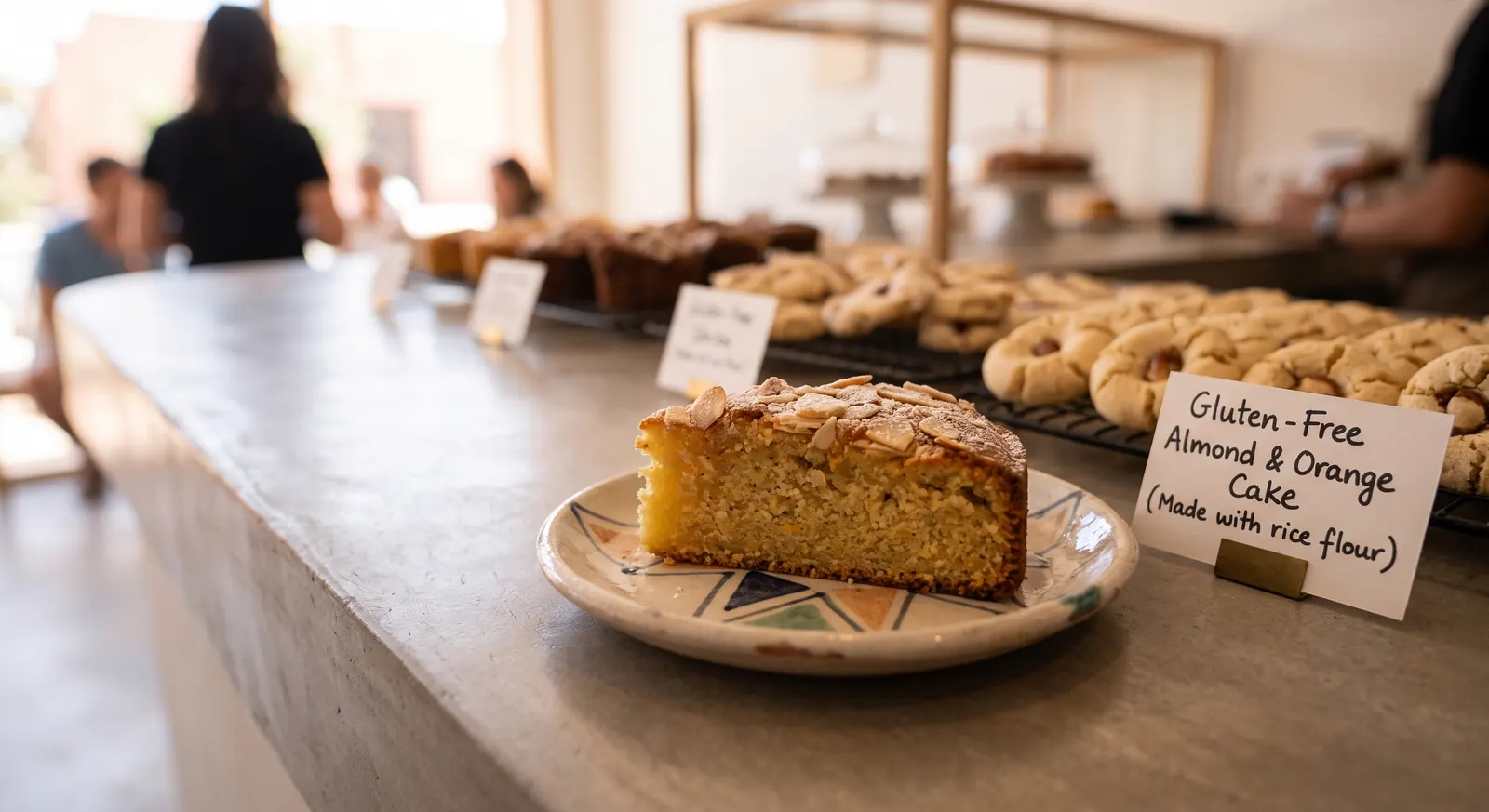
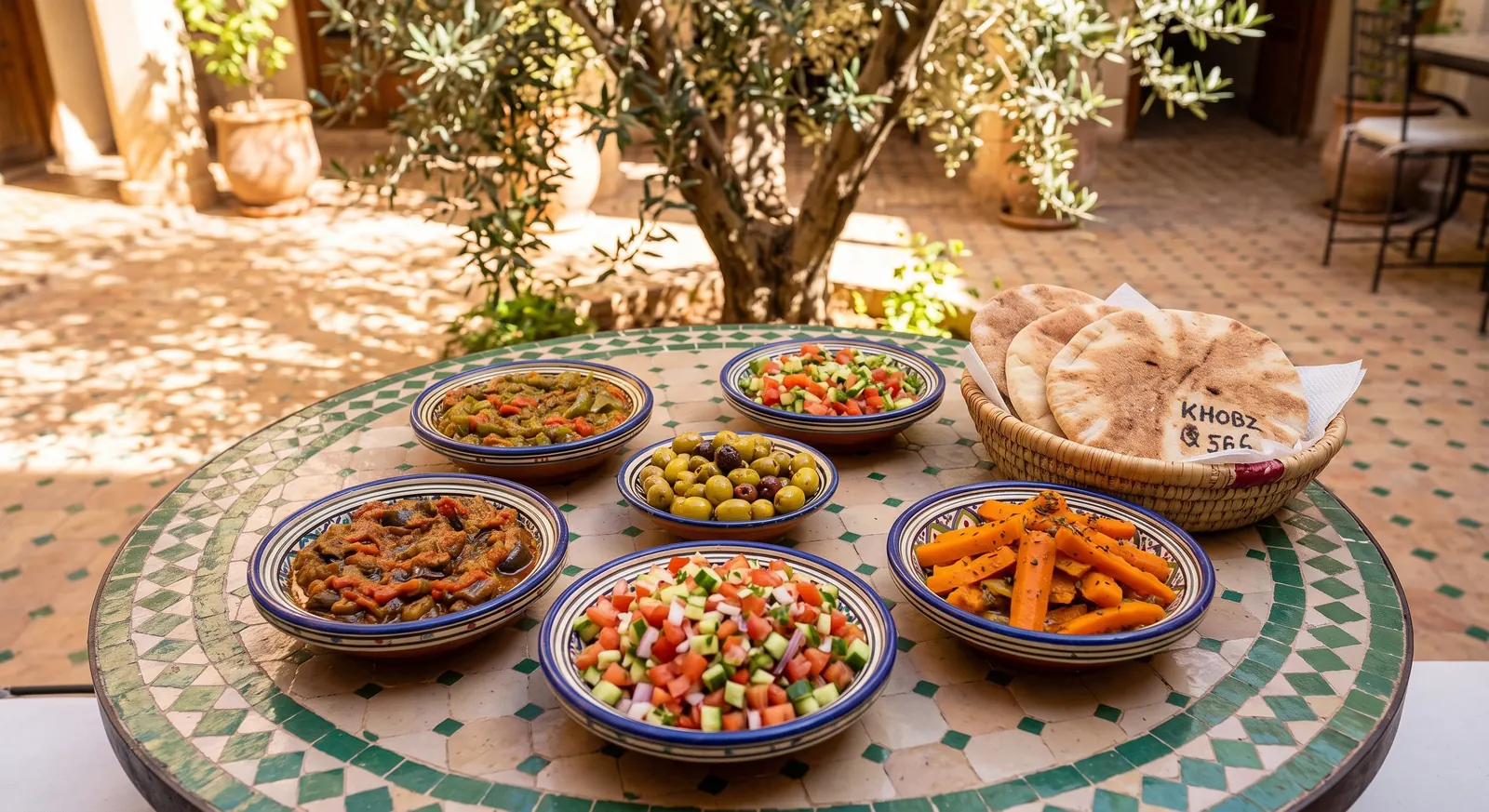
Fresh salads, vegetables and olives can make delicious additions to a dietary-aware meal.
In This Article
Find vegan and gluten-free food in Morocco, including Marrakech options, Moroccan dishes, celiac travel tips, allergies and what to order on a Morocco trip.
If you’re vegan or gluten-free, you might wonder whether traveling around Morocco will be difficult when it comes to food.
The good news is: you can absolutely enjoy Morocco while following a vegan or gluten-free diet.
Moroccan cuisine uses a lot of vegetables, legumes, olive oil, spices, fruits and nuts, so there are more options than you might expect. You just need to know what to ask for.
Vegan Food in Morocco
Morocco isn’t traditionally a vegan country, but many Moroccan dishes can easily be enjoyed without meat or dairy.
One of the easiest choices is a vegetable tagine, usually prepared with potatoes, carrots, zucchini, tomatoes, onions and Moroccan spices. Moroccan salads are another great option. You can try zaalouk, made with eggplant and tomatoes, or taktouka, made with peppers and tomatoes.
You can also find bissara, a simple soup made from fava beans, as well as lentils, chickpeas, olives and plenty of fresh fruit.
Just remember that some dishes may contain butter, dairy or animal stock, so it’s always best to explain clearly that you’re vegan.
What About Couscous?
Couscous is one of the foods most travelers want to try in Morocco.
If you’re vegan, vegetable couscous can be a great choice.
But if you’re gluten-free, there’s an important difference: traditional Moroccan couscous is made from wheat semolina, so it contains gluten.
You can ask for vegetables with rice instead, or choose a tagine.
Is Morocco Gluten-Free Friendly?
It is possible to travel gluten-free in Morocco, but you’ll need to be a little more careful.
Bread is served with almost every meal, and wheat is used in many Moroccan foods. Traditional couscous, Moroccan bread, briouats and pastilla are not gluten-free.
Even harira, the famous Moroccan soup, can contain flour or pasta depending on how it is prepared.
On the other hand, many tagines, Moroccan salads, grilled meats, vegetables, olives, nuts and fresh fruits can naturally be gluten-free.
If you have celiac disease or a serious allergy, it’s important to explain your requirements clearly and ask about ingredients and preparation to reduce the risk of cross-contamination.
Eating in Marrakech, Casablanca, Fez and Rabat
If you’re visiting Morocco’s larger cities such as Marrakech, Casablanca, Fez or Rabat, you’ll generally have more choices.
There are many international restaurants, cafés and modern dining spots offering vegetarian, vegan and gluten-free options.
Many chefs in these restaurants are also accustomed to welcoming international travelers with food allergies and can adapt dishes or pay particular attention to ingredients and preparation.
For serious allergies, it’s still important to communicate your requirements clearly and confirm with the chef or restaurant before eating.
Be More Careful in Local Areas
Once you leave the big cities and travel through smaller villages, mountain areas and local communities, it’s worth being more careful if you have a serious food allergy.
Some small local restaurants or family-run places may not be familiar with how dangerous certain allergies can be. They may misunderstand what you mean by an allergy or simply focus on removing the ingredient you mentioned without understanding the risks of cross-contamination.
For example, if you say that you cannot eat a certain ingredient, someone might simply remove it from your plate without realizing that even a small amount or contact with another ingredient could cause a serious reaction.
This doesn’t mean you should avoid local food. Local food is one of the best parts of traveling around Morocco. It simply means that travelers with serious allergies should take extra care and make sure their requirements are properly understood.
Having someone local who understands your situation can make a big difference, especially when communicating with restaurants, riads, desert camps or local cooks.
Traveling Around Morocco With Dietary Requirements
When we organize private trips around Morocco, we recommend telling us about any dietary requirements before your trip.
This gives us time to communicate with your riad, restaurants and desert camp in advance, so your meals can be planned around your needs.
Whether you’re exploring the streets of Marrakech, having lunch in the Atlas Mountains or spending a night under the stars in the Sahara, your dietary requirements shouldn’t stop you from experiencing Moroccan food and hospitality.
Morocco has much more to offer than just couscous and tagine — and with a little preparation, you can enjoy it safely and confidently.
How to Order Vegan Food in Morocco More Clearly
Finding vegan food in Morocco becomes easier when you explain what you do not eat rather than relying only on the word “vegan.” In some local restaurants, staff may understand vegetarian but interpret it as “no meat” while still using butter, milk, eggs or a meat-based stock. If your diet is strict, clearly explain that you do not eat meat, chicken, fish, eggs, milk or butter.
A vegetable tagine is often a strong starting point, but recipes vary from kitchen to kitchen. Moroccan salads such as zaalouk and taktouka are frequently plant-based, while lentils, chickpeas, beans, olives, fruit and nuts can make simple meals much easier. In Marrakech, vegan travelers also have the advantage of a large restaurant scene with both Moroccan and international options.
Gluten-Free Travel in Morocco and Cross-Contamination
Gluten-free travel in Morocco requires more attention because bread and wheat products are deeply integrated into everyday meals. Even a dish that looks naturally gluten-free may be served with bread, prepared on a shared surface or cooked with an ingredient you did not expect. This distinction is especially important for travelers with celiac disease, for whom “a little flour” is not simply a preference issue.
If you have celiac disease or a serious allergy, carry a translated allergy card and explain that cross-contamination matters. In a private tour, tell your travel company before arrival so restaurants, riads and desert camps can be contacted in advance.
Vegan and Gluten-Free Options on a Morocco Road Trip
Traveling between Marrakech, the Atlas Mountains, Ouarzazate, Dades and the Sahara does not mean you have to live on snacks. With advance notice, many accommodations can prepare vegetable tagines, rice, salads, lentils, fruit and other simple meals. The key is communication, particularly in smaller towns where specialist dietary terminology may be unfamiliar.
Frequently Asked Questions About Vegan and Gluten-Free Morocco Travel
Is Moroccan tagine vegan?
Some vegetable tagines are vegan, but recipes vary. Ask whether butter, meat stock or other animal ingredients are used.
Is couscous gluten-free in Morocco?
Traditional Moroccan couscous is made from wheat semolina and is not gluten-free.
Can I find vegan food in Marrakech?
Yes. Marrakech has many Moroccan and international restaurants, and vegan options are increasingly easy to find.
Is Morocco suitable for travelers with celiac disease?
It is possible to travel in Morocco with celiac disease, but careful communication and attention to cross-contamination are important.
What Moroccan foods are naturally gluten-free?
Depending on preparation, many tagines, salads, grilled foods, vegetables, olives, fruit, nuts and rice-based dishes can be gluten-free. Always confirm ingredients.
Should I tell my Morocco tour company about food allergies?
Yes. Advance notice gives the team time to contact accommodations, cooks and restaurants before you arrive.
Continue planning
Related Morocco travel advice
Read next
More Morocco Travel Guides
Marrakech Local Picks
Marrakech Best Of: Our Local Picks
Our favorite rooftops, restaurants, cafés and riads in Marrakech — handpicked by Mouha Travel.
Read Guide
Practical Travel
Bathrooms in Morocco: What Travelers Should Know Before Visiting Marrakech and Beyond
Wondering what bathrooms are like in Morocco? Learn about toilets in Marrakech, squat toilets, toilet paper, road-trip stops and Sahara desert camp bathrooms.
Read Guide
Cultural Etiquette
Things That Are Not Rude in Morocco — But Western Travelers Sometimes Think They Are
Learn Morocco etiquette before your trip: saying no, bargaining in souks, tipping, refusing food, personal questions and everyday Moroccan social customs.
Read Guide
Responsible Travel
•
7 min read
•
By Mouha Travel Team
When Giving Money Becomes a Business Model: Giving Money in Marrakech
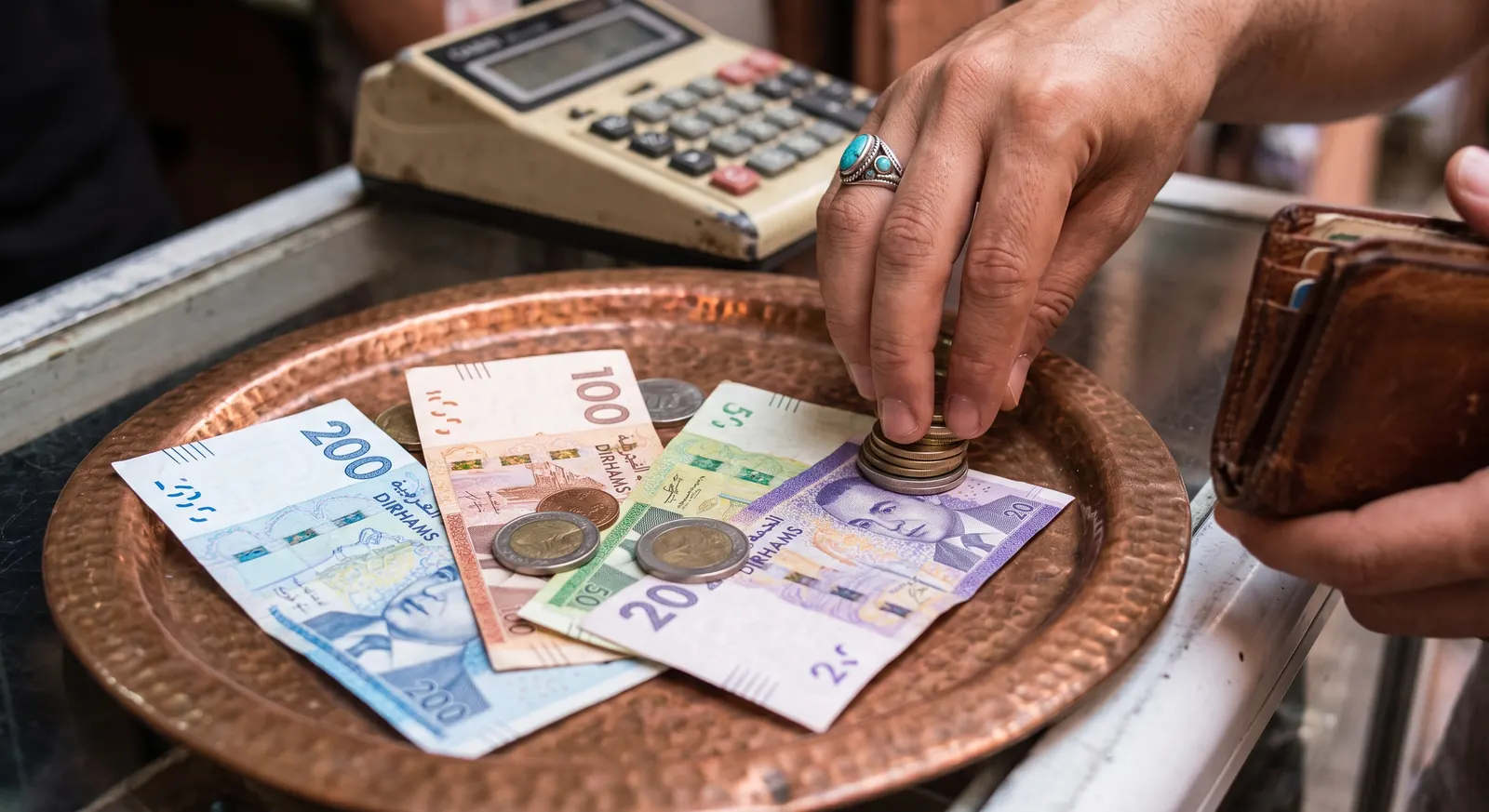
Support local people thoughtfully by paying fairly for genuine goods and services.
In This Article
Should you give money to people asking in Marrakech? Understand street begging, children, tipping, charity and responsible ways to support local communities in Morocco.
There is another part of this story that is rarely discussed openly.
Marrakech has been receiving international tourists for decades.
Over time, generations of people have grown up around tourism and have seen firsthand how easily some visitors will give money.
A tourist may feel empathy when they see a child walking around alone, someone asking for help, or somebody telling a sad story.
The tourist thinks:
“It’s only 100 dirhams. Maybe this will really help them.”
For the tourist, 100 dirhams may feel like a relatively small gesture.
But imagine the difference between that 100 dirhams and what someone working a long day might earn.
If a father works for many hours to earn his daily income and then sees that his child can approach tourists and receive the same amount — sometimes even more — in a few minutes, a very different incentive is created.
This is where tourism can unintentionally change behavior.
The lesson becomes:
“There is money here.”
And when that lesson is repeated for years and across generations, asking tourists for money can become part of the local informal economy.
This is not unique to Marrakech.
You see similar patterns in many major tourist destinations around the world.
But Marrakech’s enormous concentration of visitors makes the effect particularly visible.
When Kindness Accidentally Reinforces the Problem
This is one of the hardest things for a visitor to understand.
Giving money can feel like helping.
And sometimes it does provide immediate relief.
But if the same behavior is rewarded again and again, it can also encourage that behavior to continue.
Consider a simple example.
A child approaches ten tourists.
Most people say no.
One tourist feels sorry for the child and gives them 100 or 200 dirhams.
The child goes home with more money than they might have expected from several hours of ordinary work.
The next day, the child does it again.
Then another child sees what happened.
Then another.
Eventually, the behavior can become normalized.
The intention of the tourist was kindness.
But the unintended consequence can be:
“Approaching tourists is worth doing.”
This is particularly important when children are involved.
A child should be learning that education, skills and meaningful work create opportunities for their future — not that approaching foreigners is an easier way to earn money.
That is why responsible tourism organizations generally encourage visitors to think carefully before giving money directly to children.
What About Children in the Streets?
This is an especially sensitive subject.
Visitors sometimes encounter children around tourist areas who appear to be alone, asking for money, selling small items or approaching tourists with stories designed to create sympathy.
Some may genuinely be vulnerable.
Some may be working to help their families.
Some may simply have learned that tourists are an easy source of money.
And sometimes visitors may be told stories that are difficult to verify.
You may even see children carrying school materials or appearing to be studying in public spaces while simultaneously approaching tourists.
It can be very difficult for a visitor to know what is really happening.
The safest conclusion is not to assume that every story is true — or that every child is lying.
Instead, understand the incentive:
When tourists consistently reward children with money, there is a reason for the behavior to continue.
The “Jungle” of Marrakech
There is a phrase I sometimes use to describe the reality of highly tourist-dependent areas:
It can become a jungle.
Not because Marrakech is lawless.
And not because people are inherently dishonest.
But because there is intense competition for money.
Everyone needs to earn.
A taxi driver needs customers.
A shopkeeper needs sales.
A guide needs bookings.
A street vendor needs buyers.
A porter needs tips.
A performer needs contributions.
Someone asking for charity needs donations.
And when thousands of tourists arrive every day carrying money from much wealthier economies, competition for that money becomes intense.
This is what happens in many major tourist destinations.
The more concentrated the tourism becomes, the more visible the competition can become.
Why Doesn’t Everyone Just Ask for Money?
This is where the story becomes more complicated.
Moroccan culture also has a strong tradition of dignity through work.
Many people would rather work extremely hard for a small income than ask another person for money.
You’ll see people working long hours in shops, restaurants, taxis, construction, agriculture, crafts and countless other jobs.
At the same time, Morocco also has a culture of charity and helping people who are struggling.
Both things exist together:
“I should work for what I earn.”
and
“If someone is in need, I should help them.”
That combination is important to understand.
Someone asking for help is not necessarily viewed in exactly the same way as a tourist from another culture might expect.
Small acts of charity are part of everyday life for many Moroccans.
But tourism can create a completely different incentive when the person being asked is a foreign visitor who appears considerably wealthier.
Should You Give Money?
This is where I would give travelers a clear answer:
You don’t have to.
If you want to help someone, there are often better ways than handing over cash.
If you see someone who genuinely appears to need food or water, you can offer food or a bottle of water.
You can also support legitimate charities and organizations working with vulnerable people rather than giving money randomly on the street.
Why?
Because once you hand someone cash, you have no control over what happens to it afterward.
The money could genuinely help.
But it could also reinforce begging, support an exploitative situation involving children, or simply disappear without addressing the reason the person is struggling in the first place.
And for people dealing with addiction or other serious problems, giving cash may not necessarily help them move away from the street.
That doesn’t mean every person asking for money has an addiction.
It means that cash is not automatically the same thing as meaningful help.
Your 200 Dirhams Won’t Fix the Problem
This is perhaps the most important message.
You may think:
“I’ll give them 200 dirhams. At least I’ve helped someone today.”
And you have provided immediate assistance.
But you haven’t solved poverty.
You haven’t created a job.
You haven’t given a child better education.
And you haven’t changed the circumstances that brought that person to the street.
In some situations, you’ve potentially created an incentive for the same behavior to continue.
That’s why responsible tourism isn’t about telling visitors:
“Don’t care.”
It is about teaching visitors:
“Care intelligently.”
If You Really Want to Help
There is nothing wrong with wanting to help.
In fact, your instinct to help someone who appears vulnerable is a good one.
Just think about how you help.
Instead of automatically handing over money:
• Offer food or water if appropriate.
• Support reputable local organizations.
• Buy from legitimate small businesses.
• Pay local guides and artisans fairly.
• Choose locally owned accommodation.
• Book legitimate tours that employ local people.
• Tip people who genuinely provide you with a service.
• Support businesses that provide real employment.
Your money can have a much greater impact when it supports someone’s work rather than simply rewarding an approach on the street.
How to Say No Without Being Rude
You don’t need to speak Arabic to handle these situations.
A few simple Moroccan expressions can make things much easier.
“La, la.”
No, no.
Simple and clear.
“Walo.”
Literally, depending on context:
“Nothing.” / “I don’t have anything.”
You may hear Moroccans use it casually when someone asks them for something.
“La, shukran.”
No, thank you.
This is probably the most useful phrase for visitors.
“Ma bghitsh, shukran.”
I don’t want it, thank you.
You don’t need to explain yourself.
Sometimes the best response is simply to smile, say:
“La, shukran.”
and keep walking.
If somebody continues following you, don’t get into a long argument.
Walk toward a busy public area, your hotel, your guide or another place where you feel comfortable.
You Are Not a Bad Person for Saying No
This deserves to be said clearly.
Many visitors feel guilty.
They think:
“I’m fortunate enough to be visiting Morocco. Who am I to refuse someone asking for money?”
But you cannot personally solve every person’s financial problems.
And giving money to every person who asks is not a sustainable solution.
You can care about poverty without giving money to every person who approaches you.
You can be generous without being pressured.
And you can say no while still respecting the person in front of you.
“No” doesn’t have to mean “I don’t care.”
Sometimes it means:
“I don’t believe this is the best way for me to help.”
The Bigger Question: What Kind of Tourism Do We Want?
This is ultimately bigger than tourists and beggars.
The question is:
What kind of tourism should Marrakech build for the next generation?
A tourism economy where visitors feel that every interaction is an opportunity to extract money?
Or a tourism economy where visitors feel comfortable, respected and genuinely connected to the people they meet?
The second option is better for everyone.
A tourist who feels respected is more likely to return.
They are more likely to recommend Marrakech.
They are more likely to spend money willingly.
And they are more likely to leave with a positive impression of Morocco.
Tourism works best when money changes hands because both sides see value in the exchange.
Not because one side feels pressured.
A Final Perspective
If you visit Marrakech, you may encounter people asking for money.
You may encounter children approaching you.
You may encounter people offering unsolicited help.
You may encounter aggressive sellers.
And yes, sometimes you may feel uncomfortable.
You don’t need to pretend these things don’t happen.
But don’t let them convince you that every Moroccan is trying to take advantage of you.
There is another side of Marrakech that is just as real.
The person who gives you directions and refuses money.
The old man who invites you to sit down for tea.
The shopkeeper who explains how his products are made.
The driver who recommends somewhere because he genuinely thinks you’ll enjoy it.
The guide who takes pride in showing you his city.
The family who welcomes you to their table.
That’s Morocco too.
So come prepared.
Be polite.
Be generous when you genuinely want to be.
But don’t feel pressured.
Learn to say:
“La, shukran.”
And keep walking.
Because responsible travel isn’t about closing your heart.
It’s about understanding where your generosity can actually make a difference.
Tipping, Begging and Buying: Three Different Types of Money Exchange
For travelers, one useful way to think about giving money in Marrakech is to separate tipping, buying and street requests. A tip is linked to a service that was actually provided. A purchase supports a product, craft, meal or experience. A street request may come without a clear exchange and can be much harder for a visitor to evaluate. Treating these situations differently can help you make decisions without feeling guilty or pressured.
Responsible tourism in Morocco is often most effective when money supports real local work. Buying from a small artisan, eating in a family-run restaurant, booking a licensed or reputable local guide, staying in locally owned accommodation and tipping someone who provided good service all keep tourism income connected to employment and skills.
What If a Child Asks You for Money in Marrakech?
This is one of the most emotionally difficult situations for visitors. There is no way for a tourist passing through the Medina to know the full circumstances of every child they meet. A child may be vulnerable, helping a family, selling something, repeating behavior that has been rewarded before, or be in a situation the visitor cannot see. Because of that uncertainty, direct cash is not always the most responsible response.
If you want to help children or vulnerable families in Morocco, consider supporting a reputable local organization, social project or community initiative that can provide structured support. This approach does not require you to become suspicious of everyone; it simply gives your generosity a clearer destination.
How to Handle Persistent Requests Calmly
Most situations end with a simple refusal. Keep your answer short: “La, shukran.” Do not open your wallet in the middle of a crowd to prove you have no small change, and do not feel required to explain your budget or personal situation. If someone keeps following you or the interaction becomes uncomfortable, move toward your accommodation, guide, driver, a busy shop, restaurant or another place where you feel secure.
Frequently Asked Questions About Giving Money in Marrakech
Should tourists give money to people asking in Marrakech?
You are not obligated to. If you want to help, consider food, water, reputable charities or spending with legitimate local businesses and service providers.
Is everyone asking for money in Marrakech a scammer?
No. People’s circumstances vary, and it is not possible to know every story. The practical advice is to avoid making assumptions while also maintaining clear boundaries.
Should I give money to children in Morocco?
Direct cash can create unintended incentives. Travelers who want to support children may prefer reputable organizations or community projects.
Is tipping the same as begging?
No. Tipping usually rewards a service. A street request for money is a different situation and should be evaluated separately.
How can tourists support local people responsibly?
Choose local businesses, pay fairly for services, hire professional local guides, buy authentic crafts, tip good service and support credible community organizations.
Continue planning
Related Morocco travel advice
Read next
More Morocco Travel Guides
Marrakech Local Picks
Marrakech Best Of: Our Local Picks
Our favorite rooftops, restaurants, cafés and riads in Marrakech — handpicked by Mouha Travel.
Read Guide
Practical Travel
Bathrooms in Morocco: What Travelers Should Know Before Visiting Marrakech and Beyond
Wondering what bathrooms are like in Morocco? Learn about toilets in Marrakech, squat toilets, toilet paper, road-trip stops and Sahara desert camp bathrooms.
Read Guide
Cultural Etiquette
Things That Are Not Rude in Morocco — But Western Travelers Sometimes Think They Are
Learn Morocco etiquette before your trip: saying no, bargaining in souks, tipping, refusing food, personal questions and everyday Moroccan social customs.
Read Guide
Flight Routes
•
8 min read
•
By Mouha Travel Team
Atlanta to Marrakech: A Complete Guide to Flying ATL to RAK and Exploring Morocco
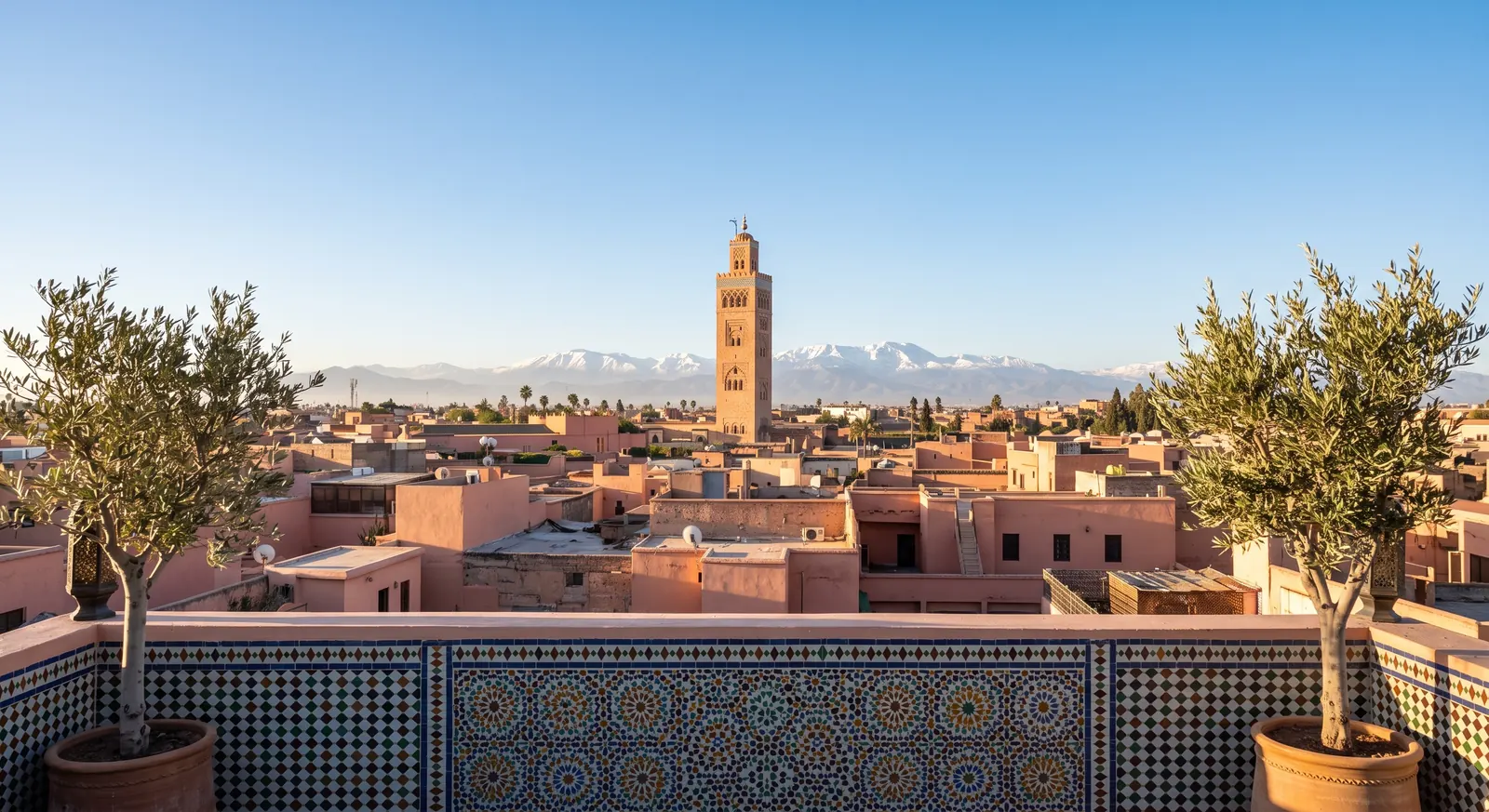
In This Article
Flying from Atlanta to Marrakech? Plan your ATL to RAK trip with Marrakech arrival tips, airport transfers, Morocco itineraries, Atlas Mountains and Sahara travel ideas.
From ATL to RAK: what to know before your Morocco trip, how to plan your first days in Marrakech, how to reach the Sahara, and the story behind our connection with Delta Air Lines travelers.
For travelers coming from Atlanta, Morocco can feel surprisingly accessible.
Marrakech is one of the country’s most popular starting points, and with Delta Air Lines operating an ATL–RAK service, travelers from Atlanta have a convenient gateway into Morocco. Delta currently lists the Atlanta–Marrakech service as operating three times weekly. (https://www.delta.com/us/en/flight-deals/africa-flights/flights-to-morocco ↗)
But arriving in Marrakech is only the beginning.
From the Medina and its souks to the Atlas Mountains, the Atlantic coast and the Sahara Desert, there is a lot to discover once you land at Marrakech Menara Airport.
I know this route particularly well because, over the years, I have had the opportunity to welcome travelers from the Delta community, including cabin crew members and their families.
What started as an unexpected recommendation while I was working at a riad in the Marrakech Medina eventually became a network of travelers who continued recommending me to one another.
This is that story — along with some practical advice for anyone planning a trip from Atlanta to Morocco.
ATL to RAK: What You Should Know
Your journey begins at Hartsfield-Jackson Atlanta International Airport (ATL), one of the major aviation hubs in the United States.
Your destination is Marrakech Menara Airport (RAK), officially listed by Morocco’s National Airports Office as GMMX/RAK. The airport is approximately 3.5 km from central Marrakech. (https://www.onda.ma/mobile?utm_source=chatgpt.com ↗)
For current flight schedules and availability, always check directly with Delta before traveling, as schedules can change.
Important tip for Delta travelers arriving in Marrakech
Delta currently has an airport advisory for Marrakech Menara stating that digital boarding passes are not accepted for Delta flights departing RAK. Travelers should arrive four hours before departure to obtain a printed boarding pass from the Delta counter.(https://www.delta.com/us/en/advisories/airports/overview ↗)
This is the kind of small detail that can make a big difference when you’re traveling internationally.
Always check Delta’s latest airport guidance before your return flight, since airport procedures can change.
Arriving at Marrakech Menara Airport
Once you land at RAK, Marrakech is relatively close.
The airport is only a few kilometers from the city center, but where you’re staying can make the arrival experience very different.
If you’re staying in a modern hotel in Gueliz or Hivernage, reaching your accommodation is generally straightforward.
If you’re staying in a traditional riad inside the Medina, things can be slightly more complicated.
Many parts of the Medina are pedestrian-only, meaning your vehicle may not be able to reach the actual entrance of your riad.
For first-time visitors, arranging a private airport transfer can make the first hour in Morocco much easier.
After a long international flight, the last thing you want is to arrive in Marrakech and immediately start figuring out transportation, luggage and directions through unfamiliar streets.
How Many Days Should You Spend in Marrakech?
For a first visit, I recommend spending at least 2–3 nights in Marrakech before moving on.
Marrakech is not simply a place to sleep before heading to the desert.
The city itself deserves time.
The official Moroccan National Tourism Office highlights Marrakech’s Medina, Jemaa el-Fna, souks, Bahia Palace, Koutoubia and Majorelle Garden among its major attractions. (https://www.visitmorocco.com/en/travel/marrakesh ↗)
During your time in Marrakech, you could explore:
• The Medina and traditional souks
• Jemaa el-Fna
• Bahia Palace
• Koutoubia Mosque
• Le Jardin Secret
• Majorelle Garden
• Traditional Moroccan cuisine
• Rooftop cafés and restaurants
• Moroccan hammam and spa experiences
• Local markets and artisan workshops
If you prefer a deeper introduction to the city, a [private Marrakech guided tour] can be a good way to understand the history, culture and Medina rather than simply walking between landmarks.
Beyond Marrakech: Where Should You Go Next?
One of the biggest advantages of starting in Marrakech is the number of different experiences accessible from the city.
You can go into the mountains, toward the Atlantic coast, or south toward the Sahara.
The best route depends on how much time you have.
Marrakech to the Atlas Mountains
If you only have one extra day, the Atlas Mountains are one of the easiest ways to experience a completely different side of Morocco.
You can visit the Ourika Valley, explore mountain villages, hike around Imlil or enjoy a traditional meal with mountain views.
For travelers who want nature and culture without committing to a long road trip, an [Atlas Mountains or Ourika Valley experience] can work very well as a day trip from Marrakech.
Marrakech to the Sahara Desert
For many visitors from the United States, the Sahara is the experience they have been imagining before they even arrive in Morocco.
But there is something important to understand:
The Sahara is not just a short excursion from Marrakech.
Getting from Marrakech to the main desert areas is a journey through some of Morocco’s most spectacular landscapes.
A classic route can include:
Marrakech → High Atlas Mountains → Ait Ben Haddou → Ouarzazate → Dades Valley → Todra Gorge → Merzouga → Sahara Desert
The road is part of the experience.
You’ll move from the red landscapes around Marrakech into the High Atlas Mountains, through valleys and kasbahs, and eventually toward the vast desert landscapes of southeastern Morocco.
That’s why I usually recommend giving yourself at least 3 days for a Sahara experience from Marrakech, and longer if your schedule allows.
If you have 3 days
Our [3-Day Marrakech to Sahara Desert Tour] is designed for travelers who want to experience the desert while keeping the journey relatively compact.
If you have 4 days
A [4-Day Marrakech to Sahara Desert Tour] gives you more breathing room and allows you to enjoy more of the route rather than treating the journey simply as transportation to and from the desert.
For travelers coming all the way from Atlanta, I generally prefer the slower option when the schedule allows.
You have already traveled a long way to reach Morocco.
You might as well enjoy the journey.
What About Essaouira?
If the Sahara isn’t your priority, another excellent option from Marrakech is the Atlantic coast.
Essaouira offers a completely different atmosphere from Marrakech — ocean air, seafood, white-and-blue architecture, a relaxed medina and a slower pace.
A [private Marrakech to Essaouira day trip] is a good option if you have an additional day and want to experience Morocco’s Atlantic coast without changing hotels.
Traveling to Morocco on a Standby Ticket
This is a subject I understand particularly well because many of the travelers I’ve worked with through the Delta community travel standby.
Non-rev travel is different from a conventional holiday.
Your plans can change.
You may not get the flight you expected.
Your arrival time can move.
You may need to adjust your hotel, airport transfer or first activity.
And sometimes you simply don’t know exactly when you’re going to land until much closer to departure.
That’s why I learned to build flexibility into the way I organize trips.
If an arrival time changes, we adapt.
If a traveler needs to move an activity, we look at the options.
If plans change, the goal is to find a solution rather than simply say that the original itinerary can no longer work.
For standby travelers, flexibility isn’t a luxury. It’s part of good service.
How I Started Working With Delta Air Lines Travelers
My connection with Delta travelers started long before Mouha Travel existed under its current name.
At the time, I was working at a riad in the heart of the Marrakech Medina while also organizing tours for travelers as a side business.
That’s when I met a couple named Michael and Seema.
Michael was working for Delta Air Lines at the time.
After experiencing one of my tours, he enjoyed the experience and decided to recommend me to other people in his travel community.
He shared my information within a private group used by Delta’s non-rev travelers.
Then something unexpected happened.
I started receiving messages from other Delta crew members traveling to Morocco.
One traveler became another.
People who had experienced Morocco with me started referring their colleagues.
Some returned with their families.
Others recommended me to friends.
Over time, that simple recommendation became an important part of my work.
It was never an official Delta endorsement or partnership. It was something much more personal:
one traveler telling another traveler, “I know someone in Morocco you can trust.”
What Working With These Travelers Taught Me
Working with international travelers — and especially travelers who are accustomed to standby flying — taught me to become extremely adaptable.
Travel rarely goes exactly according to plan.
Flights change.
People arrive earlier or later.
Weather can affect activities.
Travelers discover something they love and want to spend more time there.
Sometimes they decide that they want to change the itinerary completely.
Over the years, I became used to responding to those situations.
That experience has shaped the way I operate today.
I don’t believe a good Morocco trip should feel like following a rigid spreadsheet.
The itinerary should give you structure, but there should still be room to enjoy the country.
From Amnzou Holidays to Mouha Travel
Many of the earlier experiences described in this article took place while I was operating under the name Amnzou Holidays.
Today, I continue that journey under the name Mouha Travel.
The brand has evolved, but the local experience and personal approach remain at the heart of what I do.
Some of our earlier traveler experiences and TripAdvisor reviews were collected under the Amnzou Holidays name. You can [see our existing TripAdvisor traveler reviews here].
As the business moves forward, new travelers are discovering and reviewing us under the Mouha Travel name.
The change is therefore not about starting from zero.
It’s about continuing the same journey under a new name.
A Few Tips for Your First Trip From Atlanta to Morocco
1. Give yourself enough time
If you’re flying from Atlanta to Marrakech, don’t try to see all of Morocco in four or five days.
If you want Marrakech and the Sahara, give yourself enough time to enjoy both.
2. Don’t underestimate Moroccan distances
Morocco may look relatively compact on a map, but driving between Marrakech and the Sahara takes time.
The good news is that the journey contains some of the country’s most beautiful scenery.
3. Leave some flexibility
This is particularly important for standby travelers.
Don’t schedule a non-refundable activity immediately after your expected arrival if you can avoid it.
4. Book the important things in advance
Airport transfers, accommodation and longer private journeys are worth arranging before arrival, especially during busy travel periods.
5. Don’t only visit the famous sights
The best memories aren’t always the landmarks.
Sometimes it’s tea with a local family, a meal in a small restaurant, watching the sunset, walking through a village or simply sitting on a rooftop in the Medina.
Leave some space for those moments.
6. Consider a private itinerary
If you are traveling as a couple, family or small group, a private itinerary gives you much more flexibility.
You can adjust the pace, choose where to stop and build the trip around what you actually want to experience.
Planning Your Trip From Atlanta to Marrakech?
If you’re flying ATL to RAK and wondering what to do once you arrive, I’d be happy to help you build the rest of your Morocco journey.
At Mouha Travel, I organize private and customized Morocco experiences for couples, families, friends and solo travelers.
You can explore Marrakech, travel into the Atlas Mountains, visit Essaouira, experience the Agafay Desert or continue south toward the Sahara.
Explore our Morocco experiences
[3-Day Sahara Desert Tour from Marrakech]
A compact desert journey through the Atlas Mountains, kasbahs, valleys and Sahara.
[4-Day Sahara Desert Tour from Marrakech]
A more relaxed version of the Sahara journey, allowing more time to enjoy the route.
[Private Marrakech Tours]
Discover the Medina, souks, palaces, food and culture with a local guide.
[Atlas Mountains Experiences]
Explore the mountains, villages and valleys around Marrakech.
[Essaouira Private Day Trip]
Spend a day on Morocco’s Atlantic coast and experience a completely different side of the country.
[Plan a Custom Morocco Trip]
Have something different in mind? Tell us how you want to travel, how many days you have and what you want to experience.
From Atlanta to Marrakech — and Beyond
For me, this story started in a riad in the Marrakech Medina with a few tours organized on the side.
A recommendation from Michael and Seema led to another traveler.
Then another.
And eventually, travelers began bringing their families and recommending me to people they cared about.
That’s something I don’t take for granted.
Today, under Mouha Travel, I continue doing what I have always enjoyed most:
helping people experience Morocco personally, comfortably and with someone local they can trust.
Whether you’re flying from Atlanta, traveling standby, visiting Morocco for the first time, or simply looking for a more personal way to explore the country, the journey starts when you land at RAK.
And what happens after that is up to you.
Planning a Morocco Itinerary After Your ATL to RAK Flight
Travelers searching Atlanta to Marrakech are often focused on the flight, but the bigger planning question is what to do after arriving at RAK. Marrakech works well as a gateway because you can build several very different Morocco itineraries from the city. A short stay can combine the Medina with the Atlas Mountains or Essaouira. A longer trip can continue through Ait Ben Haddou, Ouarzazate, Dades Valley and the Sahara Desert.
If this is your first Morocco trip from the USA, resist the temptation to add too many destinations. Morocco rewards slower travel. Driving days can be scenic, but they are still driving days, and rushing from Marrakech to the Sahara and back without enough time can turn an exciting itinerary into a checklist.
ATL to RAK Arrival Tips for First-Time Visitors
Before departure from Atlanta, keep your Marrakech accommodation address, transfer contact and booking details somewhere you can access offline. Once you arrive at Marrakech Menara Airport, a pre-arranged transfer is especially useful if your riad is inside the Medina. Drivers can usually take you to the nearest accessible point, but some riads require a final walk through pedestrian lanes.
If your Delta Atlanta–Marrakech flight schedule changes, leave enough flexibility around the first day of the trip. Avoid placing an expensive, non-refundable activity immediately after landing. An easy first evening—check in, have dinner, walk nearby and sleep—can make the rest of the Morocco itinerary much more enjoyable.
How to Combine Marrakech, Atlas Mountains and the Sahara
For travelers with enough time, one of the classic routes from Marrakech crosses the High Atlas Mountains toward Ait Ben Haddou and Ouarzazate, continues through Dades and Todra, and reaches the dunes near Merzouga. This route is more than transportation to the Sahara: mountain passes, kasbahs, valleys, oases and small communities are part of the experience.
A private Morocco itinerary gives you flexibility to stop for photographs, meals, viewpoints and local visits. It can also make sense for families, couples or friends arriving from a long international flight who want the pace adjusted to their energy level.
Frequently Asked Questions: Atlanta to Marrakech
Can you fly from Atlanta to Marrakech?
Flight schedules can change, so check Delta or your airline directly for the current ATL to RAK schedule before booking.
What airport do you fly into for Marrakech?
Marrakech Menara Airport uses the airport code RAK.
How long should I stay in Marrakech on my first trip?
Two to three nights gives many first-time visitors enough time to explore key parts of Marrakech without rushing before continuing elsewhere.
Can I visit the Sahara from Marrakech?
Yes. Sahara tours from Marrakech usually require several days because of the driving distance and the number of worthwhile stops along the route.
Can I combine Marrakech and the Atlas Mountains?
Yes. The Atlas Mountains are one of the most popular additions to a Marrakech itinerary and can be visited on a day trip or as part of a longer route.
Is a private airport transfer useful at RAK?
It can be especially helpful for first-time visitors, late arrivals, families with luggage and travelers staying in a riad inside the Medina.
Continue planning
Related Morocco travel advice
Time-sensitive information last checked: 26 August 2026.
Read next
More Morocco Travel Guides
Marrakech Local Picks
Marrakech Best Of: Our Local Picks
Our favorite rooftops, restaurants, cafés and riads in Marrakech — handpicked by Mouha Travel.
Read Guide
Practical Travel
Bathrooms in Morocco: What Travelers Should Know Before Visiting Marrakech and Beyond
Wondering what bathrooms are like in Morocco? Learn about toilets in Marrakech, squat toilets, toilet paper, road-trip stops and Sahara desert camp bathrooms.
Read Guide
Cultural Etiquette
Things That Are Not Rude in Morocco — But Western Travelers Sometimes Think They Are
Learn Morocco etiquette before your trip: saying no, bargaining in souks, tipping, refusing food, personal questions and everyday Moroccan social customs.
Read Guide