
When Giving Money Becomes a Business Model: Giving Money in Marrakech
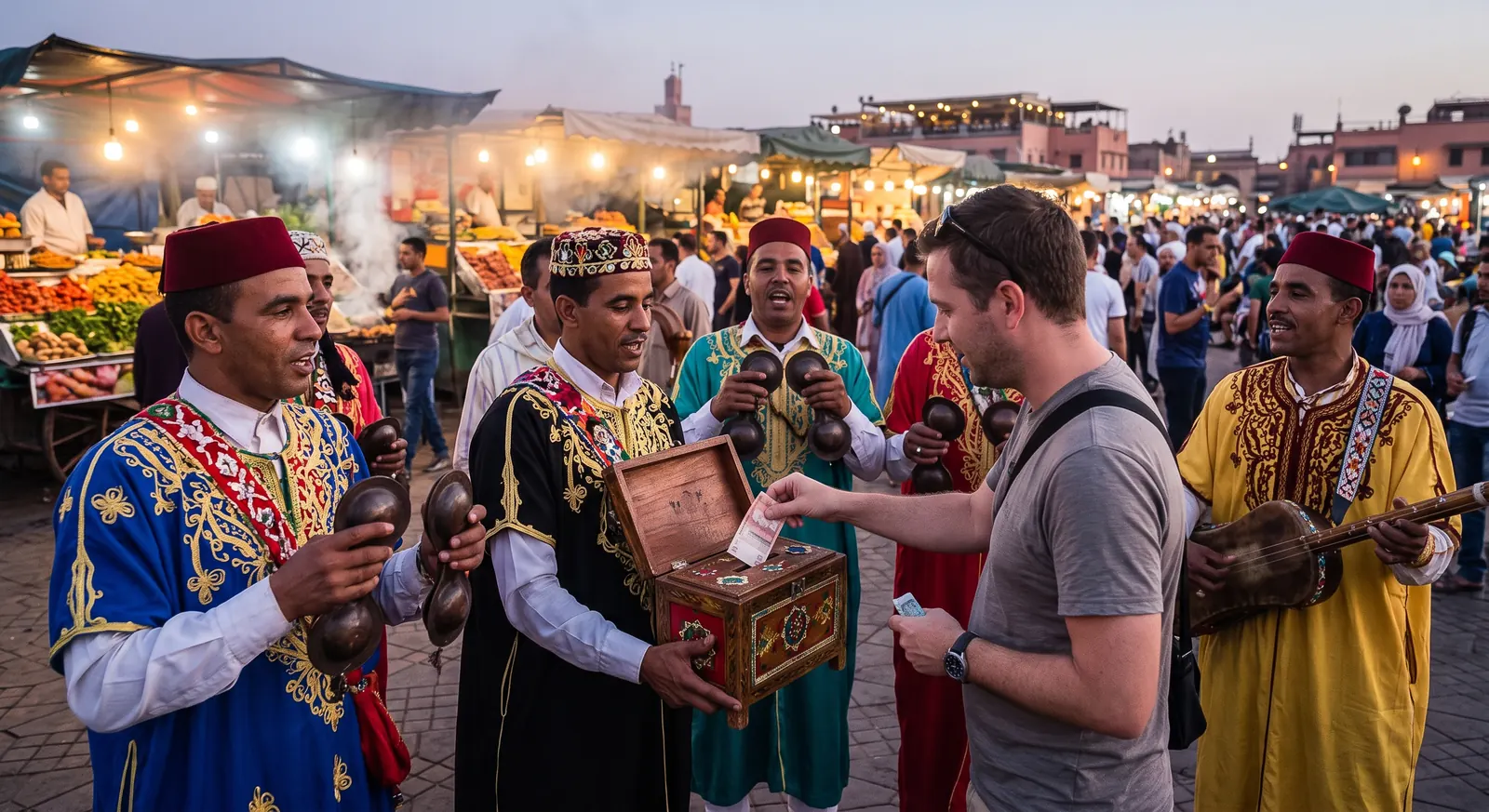
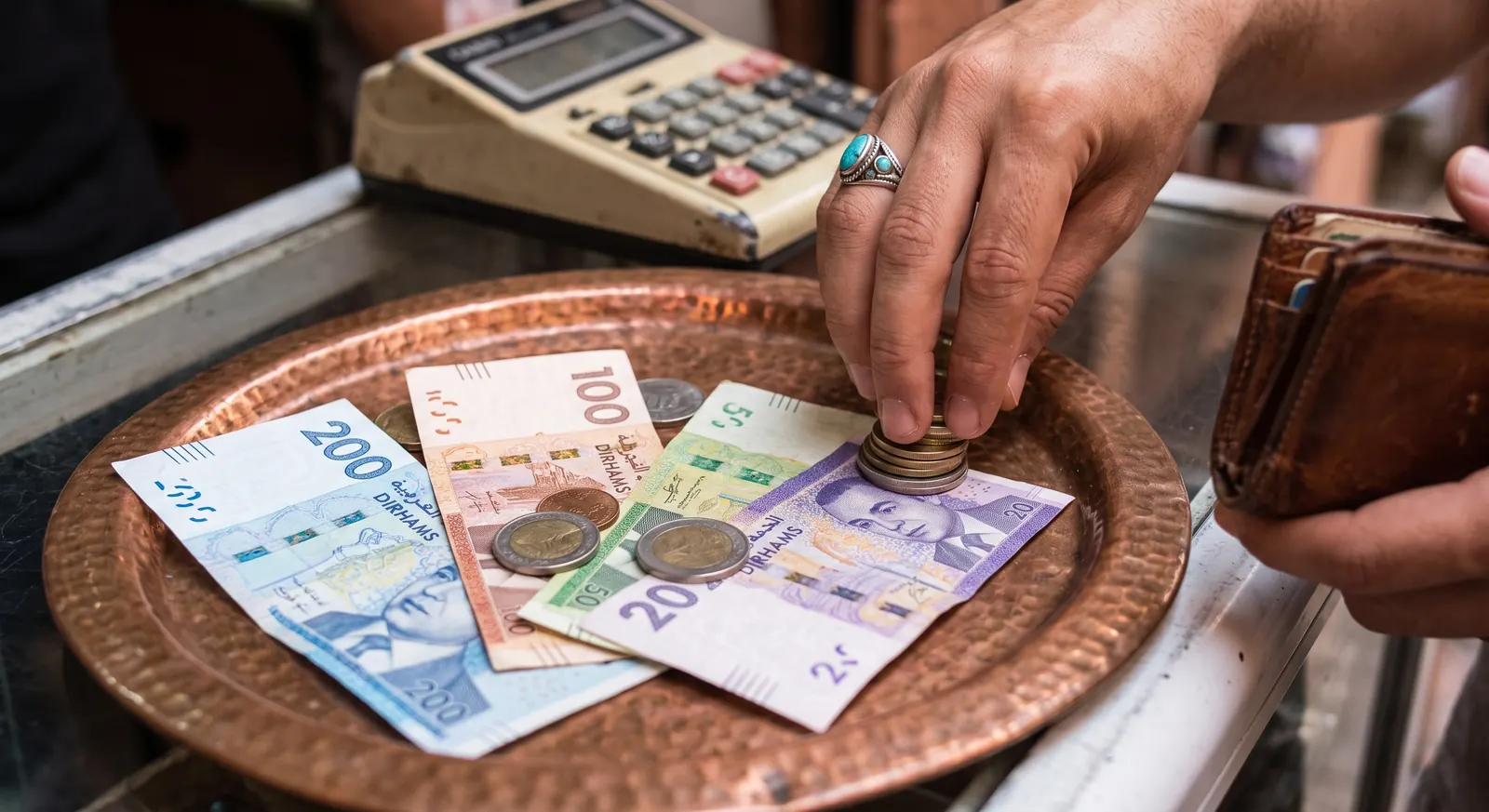
Should you give money to people asking in Marrakech? Understand street begging, children, tipping, charity and responsible ways to support local communities in Morocco.
There is another part of this story that is rarely discussed openly.
Marrakech has been receiving international tourists for decades.
Over time, generations of people have grown up around tourism and have seen firsthand how easily some visitors will give money.
A tourist may feel empathy when they see a child walking around alone, someone asking for help, or somebody telling a sad story.
The tourist thinks:
“It’s only 100 dirhams. Maybe this will really help them.”
For the tourist, 100 dirhams may feel like a relatively small gesture.
But imagine the difference between that 100 dirhams and what someone working a long day might earn.
If a father works for many hours to earn his daily income and then sees that his child can approach tourists and receive the same amount — sometimes even more — in a few minutes, a very different incentive is created.
This is where tourism can unintentionally change behavior.
The lesson becomes:
“There is money here.”
And when that lesson is repeated for years and across generations, asking tourists for money can become part of the local informal economy.
This is not unique to Marrakech.
You see similar patterns in many major tourist destinations around the world.
But Marrakech’s enormous concentration of visitors makes the effect particularly visible.
When Kindness Accidentally Reinforces the Problem
This is one of the hardest things for a visitor to understand.
Giving money can feel like helping.
And sometimes it does provide immediate relief.
But if the same behavior is rewarded again and again, it can also encourage that behavior to continue.
Consider a simple example.
A child approaches ten tourists.
Most people say no.
One tourist feels sorry for the child and gives them 100 or 200 dirhams.
The child goes home with more money than they might have expected from several hours of ordinary work.
The next day, the child does it again.
Then another child sees what happened.
Then another.
Eventually, the behavior can become normalized.
The intention of the tourist was kindness.
But the unintended consequence can be:
“Approaching tourists is worth doing.”
This is particularly important when children are involved.
A child should be learning that education, skills and meaningful work create opportunities for their future — not that approaching foreigners is an easier way to earn money.
That is why responsible tourism organizations generally encourage visitors to think carefully before giving money directly to children.
What About Children in the Streets?
This is an especially sensitive subject.
Visitors sometimes encounter children around tourist areas who appear to be alone, asking for money, selling small items or approaching tourists with stories designed to create sympathy.
Some may genuinely be vulnerable.
Some may be working to help their families.
Some may simply have learned that tourists are an easy source of money.
And sometimes visitors may be told stories that are difficult to verify.
You may even see children carrying school materials or appearing to be studying in public spaces while simultaneously approaching tourists.
It can be very difficult for a visitor to know what is really happening.
The safest conclusion is not to assume that every story is true — or that every child is lying.
Instead, understand the incentive:
When tourists consistently reward children with money, there is a reason for the behavior to continue.
The “Jungle” of Marrakech
There is a phrase I sometimes use to describe the reality of highly tourist-dependent areas:
It can become a jungle.
Not because Marrakech is lawless.
And not because people are inherently dishonest.
But because there is intense competition for money.
Everyone needs to earn.
A taxi driver needs customers.
A shopkeeper needs sales.
A guide needs bookings.
A street vendor needs buyers.
A porter needs tips.
A performer needs contributions.
Someone asking for charity needs donations.
And when thousands of tourists arrive every day carrying money from much wealthier economies, competition for that money becomes intense.
This is what happens in many major tourist destinations.
The more concentrated the tourism becomes, the more visible the competition can become.
Why Doesn’t Everyone Just Ask for Money?
This is where the story becomes more complicated.
Moroccan culture also has a strong tradition of dignity through work.
Many people would rather work extremely hard for a small income than ask another person for money.
You’ll see people working long hours in shops, restaurants, taxis, construction, agriculture, crafts and countless other jobs.
At the same time, Morocco also has a culture of charity and helping people who are struggling.
Both things exist together:
“I should work for what I earn.”
and
“If someone is in need, I should help them.”
That combination is important to understand.
Someone asking for help is not necessarily viewed in exactly the same way as a tourist from another culture might expect.
Small acts of charity are part of everyday life for many Moroccans.
But tourism can create a completely different incentive when the person being asked is a foreign visitor who appears considerably wealthier.
Should You Give Money?
This is where I would give travelers a clear answer:
You don’t have to.
If you want to help someone, there are often better ways than handing over cash.
If you see someone who genuinely appears to need food or water, you can offer food or a bottle of water.
You can also support legitimate charities and organizations working with vulnerable people rather than giving money randomly on the street.
Why?
Because once you hand someone cash, you have no control over what happens to it afterward.
The money could genuinely help.
But it could also reinforce begging, support an exploitative situation involving children, or simply disappear without addressing the reason the person is struggling in the first place.
And for people dealing with addiction or other serious problems, giving cash may not necessarily help them move away from the street.
That doesn’t mean every person asking for money has an addiction.
It means that cash is not automatically the same thing as meaningful help.
Your 200 Dirhams Won’t Fix the Problem
This is perhaps the most important message.
You may think:
“I’ll give them 200 dirhams. At least I’ve helped someone today.”
And you have provided immediate assistance.
But you haven’t solved poverty.
You haven’t created a job.
You haven’t given a child better education.
And you haven’t changed the circumstances that brought that person to the street.
In some situations, you’ve potentially created an incentive for the same behavior to continue.
That’s why responsible tourism isn’t about telling visitors:
“Don’t care.”
It is about teaching visitors:
“Care intelligently.”
If You Really Want to Help
There is nothing wrong with wanting to help.
In fact, your instinct to help someone who appears vulnerable is a good one.
Just think about how you help.
Instead of automatically handing over money:
• Offer food or water if appropriate. • Support reputable local organizations. • Buy from legitimate small businesses. • Pay local guides and artisans fairly. • Choose locally owned accommodation. • Book legitimate tours that employ local people. • Tip people who genuinely provide you with a service. • Support businesses that provide real employment.
Your money can have a much greater impact when it supports someone’s work rather than simply rewarding an approach on the street.
How to Say No Without Being Rude
You don’t need to speak Arabic to handle these situations.
A few simple Moroccan expressions can make things much easier.
“La, la.”
No, no.
Simple and clear.
“Walo.”
Literally, depending on context:
“Nothing.” / “I don’t have anything.”
You may hear Moroccans use it casually when someone asks them for something.
“La, shukran.”
No, thank you.
This is probably the most useful phrase for visitors.
“Ma bghitsh, shukran.”
I don’t want it, thank you.
You don’t need to explain yourself.
Sometimes the best response is simply to smile, say:
“La, shukran.”
and keep walking.
If somebody continues following you, don’t get into a long argument.
Walk toward a busy public area, your hotel, your guide or another place where you feel comfortable.
You Are Not a Bad Person for Saying No
This deserves to be said clearly.
Many visitors feel guilty.
They think:
“I’m fortunate enough to be visiting Morocco. Who am I to refuse someone asking for money?”
But you cannot personally solve every person’s financial problems.
And giving money to every person who asks is not a sustainable solution.
You can care about poverty without giving money to every person who approaches you.
You can be generous without being pressured.
And you can say no while still respecting the person in front of you.
“No” doesn’t have to mean “I don’t care.”
Sometimes it means:
“I don’t believe this is the best way for me to help.”
The Bigger Question: What Kind of Tourism Do We Want?
This is ultimately bigger than tourists and beggars.
The question is:
What kind of tourism should Marrakech build for the next generation?
A tourism economy where visitors feel that every interaction is an opportunity to extract money?
Or a tourism economy where visitors feel comfortable, respected and genuinely connected to the people they meet?
The second option is better for everyone.
A tourist who feels respected is more likely to return.
They are more likely to recommend Marrakech.
They are more likely to spend money willingly.
And they are more likely to leave with a positive impression of Morocco.
Tourism works best when money changes hands because both sides see value in the exchange.
Not because one side feels pressured.
A Final Perspective
If you visit Marrakech, you may encounter people asking for money.
You may encounter children approaching you.
You may encounter people offering unsolicited help.
You may encounter aggressive sellers.
And yes, sometimes you may feel uncomfortable.
You don’t need to pretend these things don’t happen.
But don’t let them convince you that every Moroccan is trying to take advantage of you.
There is another side of Marrakech that is just as real.
The person who gives you directions and refuses money.
The old man who invites you to sit down for tea.
The shopkeeper who explains how his products are made.
The driver who recommends somewhere because he genuinely thinks you’ll enjoy it.
The guide who takes pride in showing you his city.
The family who welcomes you to their table.
That’s Morocco too.
So come prepared.
Be polite.
Be generous when you genuinely want to be.
But don’t feel pressured.
Learn to say:
“La, shukran.”
And keep walking.
Because responsible travel isn’t about closing your heart.
It’s about understanding where your generosity can actually make a difference.
Tipping, Begging and Buying: Three Different Types of Money Exchange
For travelers, one useful way to think about giving money in Marrakech is to separate tipping, buying and street requests. A tip is linked to a service that was actually provided. A purchase supports a product, craft, meal or experience. A street request may come without a clear exchange and can be much harder for a visitor to evaluate. Treating these situations differently can help you make decisions without feeling guilty or pressured.
Responsible tourism in Morocco is often most effective when money supports real local work. Buying from a small artisan, eating in a family-run restaurant, booking a licensed or reputable local guide, staying in locally owned accommodation and tipping someone who provided good service all keep tourism income connected to employment and skills.
What If a Child Asks You for Money in Marrakech?
This is one of the most emotionally difficult situations for visitors. There is no way for a tourist passing through the Medina to know the full circumstances of every child they meet. A child may be vulnerable, helping a family, selling something, repeating behavior that has been rewarded before, or be in a situation the visitor cannot see. Because of that uncertainty, direct cash is not always the most responsible response.
If you want to help children or vulnerable families in Morocco, consider supporting a reputable local organization, social project or community initiative that can provide structured support. This approach does not require you to become suspicious of everyone; it simply gives your generosity a clearer destination.
How to Handle Persistent Requests Calmly
Most situations end with a simple refusal. Keep your answer short: “La, shukran.” Do not open your wallet in the middle of a crowd to prove you have no small change, and do not feel required to explain your budget or personal situation. If someone keeps following you or the interaction becomes uncomfortable, move toward your accommodation, guide, driver, a busy shop, restaurant or another place where you feel secure.
Frequently Asked Questions About Giving Money in Marrakech
Should tourists give money to people asking in Marrakech? You are not obligated to. If you want to help, consider food, water, reputable charities or spending with legitimate local businesses and service providers.
Is everyone asking for money in Marrakech a scammer? No. People’s circumstances vary, and it is not possible to know every story. The practical advice is to avoid making assumptions while also maintaining clear boundaries.
Should I give money to children in Morocco? Direct cash can create unintended incentives. Travelers who want to support children may prefer reputable organizations or community projects.
Is tipping the same as begging? No. Tipping usually rewards a service. A street request for money is a different situation and should be evaluated separately.
How can tourists support local people responsibly? Choose local businesses, pay fairly for services, hire professional local guides, buy authentic crafts, tip good service and support credible community organizations.
Continue planning
Related Morocco travel advice
Read next
More Morocco Travel Guides
View All Guides →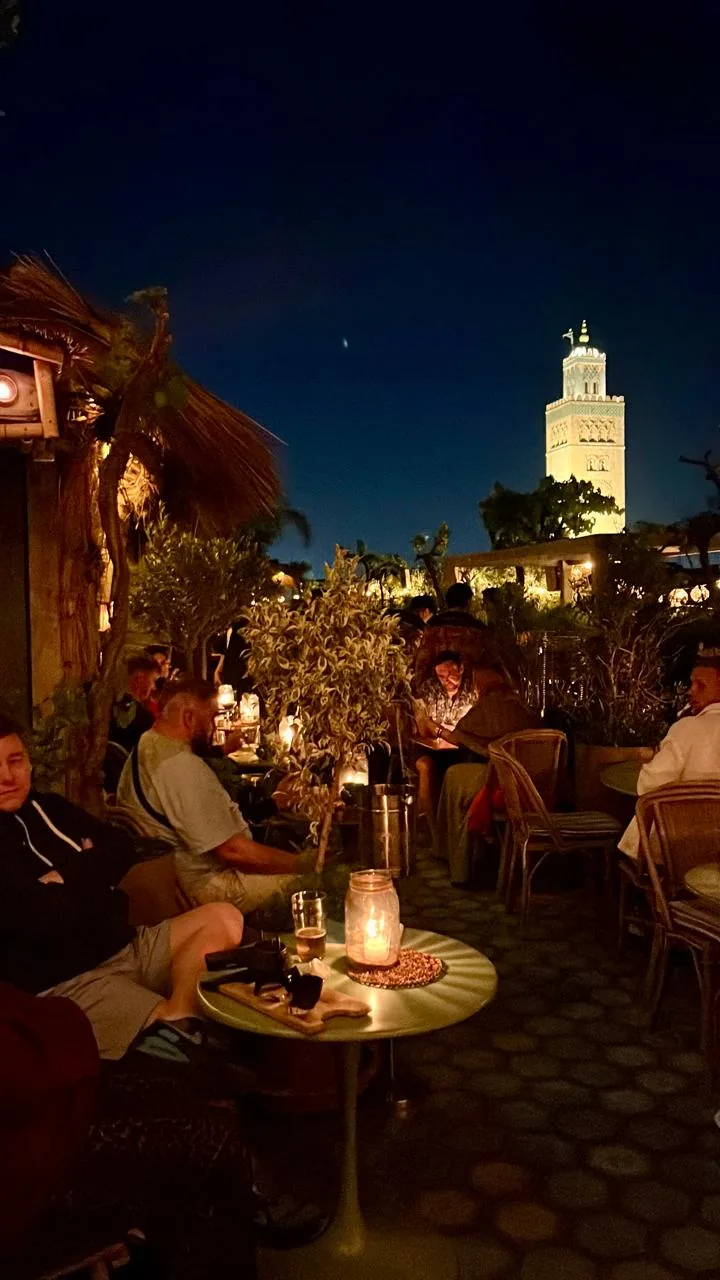
Marrakech Best Of: Our Local Picks
Our favorite rooftops, restaurants, cafés and riads in Marrakech — handpicked by Mouha Travel.
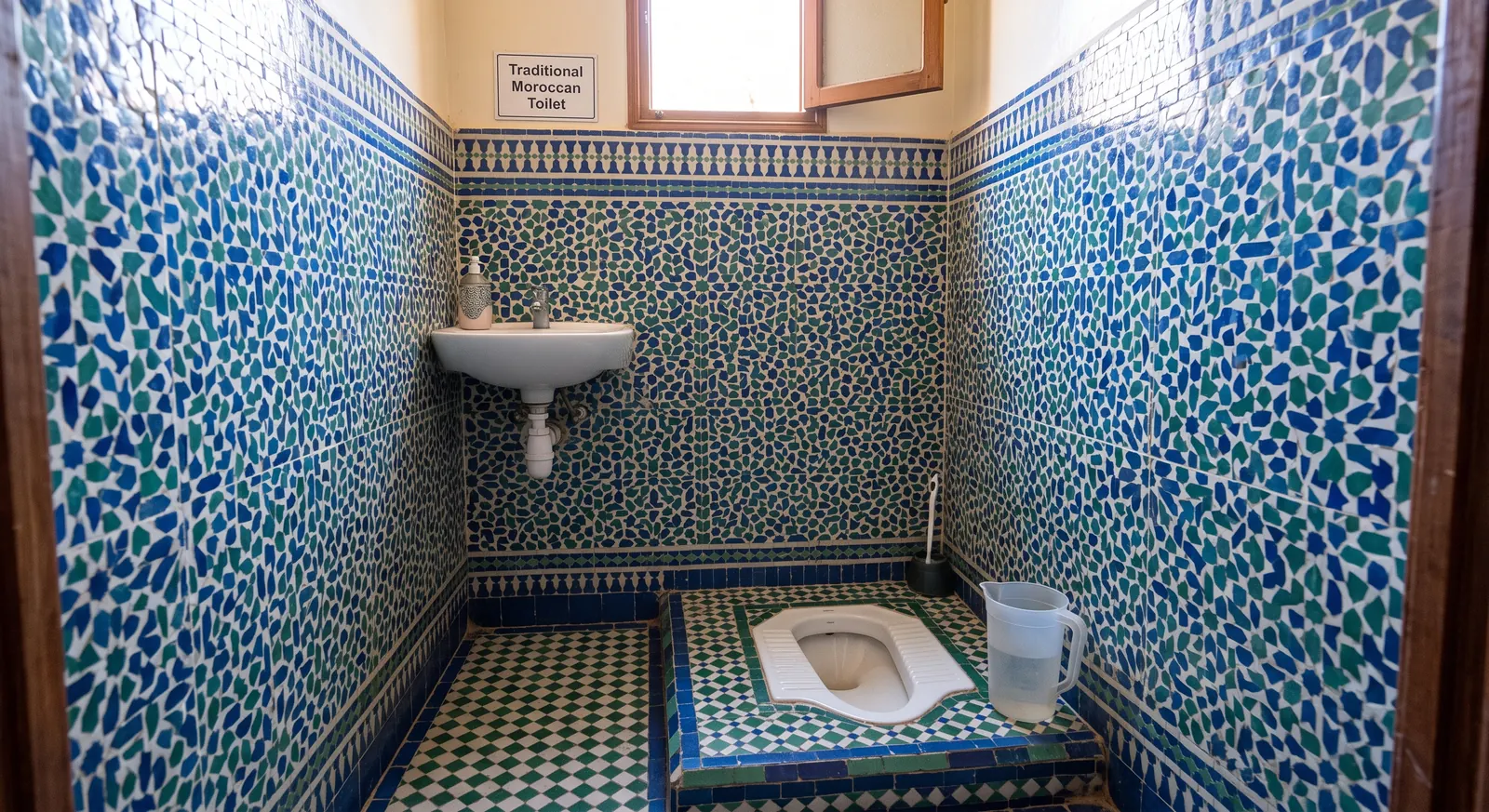
Bathrooms in Morocco: What Travelers Should Know Before Visiting Marrakech and Beyond
Wondering what bathrooms are like in Morocco? Learn about toilets in Marrakech, squat toilets, toilet paper, road-trip stops and Sahara desert camp bathrooms.
Things That Are Not Rude in Morocco — But Western Travelers Sometimes Think They Are
Learn Morocco etiquette before your trip: saying no, bargaining in souks, tipping, refusing food, personal questions and everyday Moroccan social customs.