
Things That Are Not Rude in Morocco — But Western Travelers Sometimes Think They Are
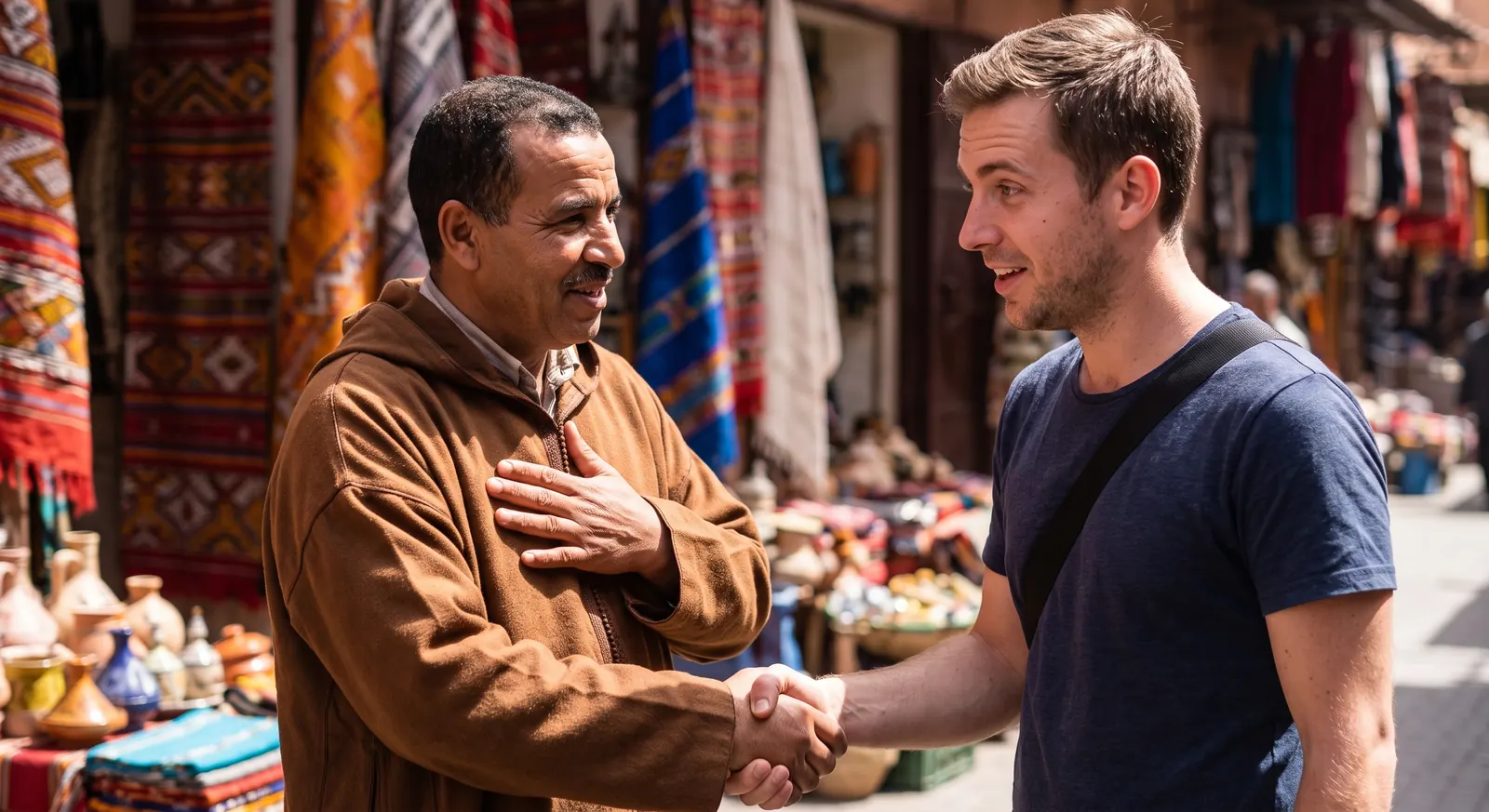
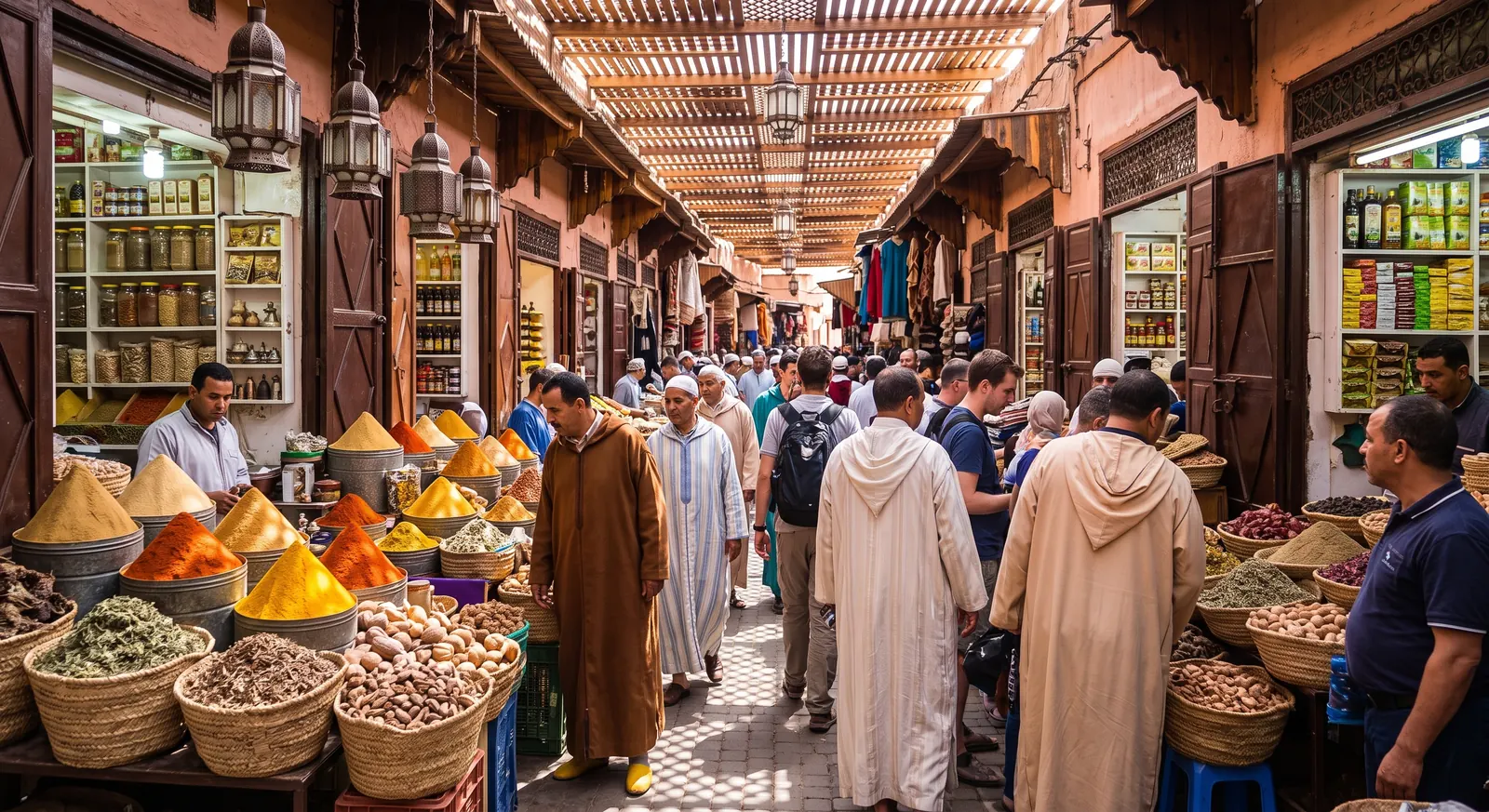
Learn Morocco etiquette before your trip: saying no, bargaining in souks, tipping, refusing food, personal questions and everyday Moroccan social customs.
A Moroccan’s Guide to the Social Rules You May Not Expect
One of the most interesting parts of traveling is discovering that “polite” doesn’t mean exactly the same thing everywhere.
Something that feels completely normal in Morocco can sometimes feel unusual — or even rude — to someone coming from the United States, Canada, the UK or Western Europe.
And the opposite is also true.
You may behave perfectly politely according to the social rules you grew up with, while a Moroccan person interprets your behavior differently.
After working with international travelers in Morocco, I’ve noticed that some of the misunderstandings are not really about good manners or bad manners.
They’re simply about different cultures having different ideas about what is normal.
So here are some things you may experience in Morocco that you don’t necessarily need to interpret as rude.
1. Asking Personal Questions Is Not Necessarily Rude
This is probably one of the biggest cultural differences.
You may be having a friendly conversation with your Moroccan guide, driver, shopkeeper or someone you have just met.
Then suddenly they ask:
“What do you do?”
“Are you married?”
“Do you have a boyfriend?”
“Do you have a husband?”
“Where are you from?”
You answer:
“The USA.”
And then:
“Which city?”
And then maybe:
“How old are you?”
For someone from a culture where privacy is highly valued, you might immediately think:
“Why is this person asking me so many personal questions?”
But in Morocco, these questions can simply be part of making conversation.
Moroccan social interactions can involve less personal distance and privacy than some Western cultures are used to.
Asking where you are from is an especially common conversation starter.
If you say you’re from the United States, don’t be surprised if the next question is:
“Which state?”
Then:
“New York? California? Texas?”
And maybe:
“Have you been to Morocco before?”
This isn’t necessarily an attempt to invade your privacy.
It can simply mean:
“I’m interested in getting to know you.”
Of course, you don’t have to answer anything you’re uncomfortable answering.
You can always smile and change the subject.
But don’t automatically interpret the question itself as disrespectful.
2. Saying “No” Is Not Rude
This is something I especially want visitors to understand.
You are allowed to say:
No.
You don’t have to buy something.
You don’t have to accept a tour.
You don’t have to take a photo.
You don’t have to accept someone’s offer.
You don’t have to drink something.
You don’t have to follow someone into a shop.
And saying no does not make you disrespectful.
A simple:
“La, shukran.”
No, thank you.
is perfectly fine.
In fact, Moroccans say no all the time.
The important thing is that you say it clearly and politely.
You don’t need a long explanation.
3. Bargaining Is Not Rude
If you come from a culture where prices are fixed, bargaining can initially feel uncomfortable.
You see something you like.
You ask:
“How much?”
The seller says:
“500 dirhams.”
You say:
“300?”
The seller says:
“450.”
You say:
“350.”
They say:
“400.”
You say:
“350.”
Eventually:
“Okay, 350.”
And then you walk away thinking:
“Was I being rude?”
No.
In many Moroccan souks and traditional markets, bargaining is simply part of the commercial culture.
You’re not insulting the seller by making an offer.
And the seller isn’t necessarily offended because you didn’t accept their first price.
It’s a negotiation.
The important thing is how you negotiate.
You can bargain firmly while remaining friendly.
You don’t need to become aggressive or disrespectful.
And remember: bargaining is generally appropriate in places where bargaining is expected.
A restaurant with a menu and fixed prices is not the same thing as a souk.
4. You Don’t Have to Eat When Someone Offers You Food
Moroccan hospitality often involves food.
A lot of food.
Someone may tell you:
“Eat!”
You say:
“I’m full.”
They say:
“Just a little more.”
You say:
“No, thank you.”
And they insist.
This can sometimes make visitors feel guilty about refusing.
But you are absolutely allowed to decide when and how much you eat.
You don’t need to finish everything.
You don’t need to accept another plate.
You don’t need to eat something you don’t like.
And you don’t need to feel bad about it.
If you’re traveling with a Moroccan family, your host may insist because they genuinely want to make sure you are comfortable and well fed.
That’s hospitality.
You can still politely say:
“Shukran, I’m full.”
And if you really don’t want more, don’t eat more.
5. Eating When You Want Is Not Rude
There is no requirement that you must eat according to someone else’s schedule while traveling.
If you’re hungry, eat.
If you’re not hungry, don’t.
If you want breakfast at 10 instead of 8, that’s fine.
If you want a light lunch, that’s fine.
If you want to stop for a snack, that’s fine.
Morocco has an incredible food culture, but you are still the person who decides what and when you eat.
Don’t feel pressured to eat simply because somebody thinks it’s time.
6. Not Giving a Tip Is Not Automatically Rude
This is another important misconception.
Morocco does have a tipping culture.
If someone provides you with good service, giving a tip is often appreciated.
But tipping should not mean:
“You must give me money regardless of the quality of the service.”
If someone provided excellent service, you may want to show your appreciation.
If someone did the bare minimum or treated you badly, you don’t have to feel guilty about not tipping.
And if someone never provided a service at all, you don’t automatically owe them a tip simply because they approached you.
A tip is supposed to be appreciation, not a punishment.
Of course, expectations can vary depending on the profession and situation, so it’s worth asking your guide or travel company what is customary.
7. You Don’t Have to Talk to Every Seller in the Souk
This is a big one for first-time visitors.
You walk through the souk.
A seller says:
“Hello!”
You keep walking.
They say:
“My friend, come look!”
You keep walking.
They show you something.
You keep walking.
You feel guilty because you’re not responding.
Don’t.
You are not being rude.
You don’t have to stop and explain yourself to every person who wants to sell you something.
If you’re not interested, you can simply continue walking.
You can say:
“La, shukran.”
Or even just smile and keep going.
Silence is perfectly acceptable.
You don’t owe every shopkeeper a conversation.
8. You Don’t Have to Answer Every Question in the Souk
A shopkeeper might ask:
“Where are you from?”
“How long are you staying?”
“First time in Morocco?”
“What hotel?”
“Do you like Morocco?”
Again, this is often simply part of starting a conversation and trying to build a relationship with a potential customer.
You can answer if you want.
Or you can simply keep walking.
You don’t have to give your hotel name, personal information or travel plans if you don’t want to.
Being friendly doesn’t mean giving away your privacy.
9. Refusing a Juice Sample in Jemaa el-Fna Is Not Rude
If you’ve ever walked through Jemaa el-Fna, you probably know what I’m talking about.
Someone offers you orange juice.
Another person offers you something else.
You say no.
They offer again.
You feel awkward.
Don’t.
You are perfectly allowed to say:
“La, shukran.”
and continue walking.
The same applies to food stalls.
If you don’t want to try something, you don’t have to.
You don’t need to taste something just because someone offered it to you.
10. You Don’t Have to Enter a Shop Because Someone Invited You
You’ll hear:
“Come look, my friend.”
Maybe they genuinely want you to see their products.
But if you aren’t interested, you can say no.
You don’t need to enter the shop to be polite.
And you don’t need to feel guilty for walking away.
A good shopkeeper should understand that tourists are allowed to browse without buying.
11. You Can Leave Without Buying Anything
This is especially important in the souks.
You can enter a shop.
Look around.
Ask questions.
See the products.
And leave without purchasing.
If you don’t like the price, walk away.
If you changed your mind, walk away.
If you simply don’t want it anymore, walk away.
That’s normal.
12. Negotiating Doesn’t Mean You Have to Be Aggressive
There is a difference between:
“That’s too expensive for me. Can you do 300?”
and:
“You’re ripping tourists off!”
The first is normal negotiation.
The second can quickly become disrespectful.
The best bargaining is often done with a smile.
You can laugh.
You can make an offer.
You can walk away.
And sometimes the seller will call you back with a better price.
It’s part of the experience.
13. Silence Is Not Rude
Western cultures sometimes place a lot of importance on conversational engagement.
In Morocco, you don’t always have to fill every silence.
If you’re sitting in a car with your driver and you don’t feel like talking, that’s okay.
If you’re walking through the Medina and don’t want to talk to sellers, that’s okay.
If you’re eating and want to enjoy your meal quietly, that’s okay.
You don’t need to constantly make conversation to prove that you’re friendly.
14. Your Guide or Driver May Ask About Your Personal Life
This is particularly common when you spend several days traveling with the same person.
Your guide or driver may eventually ask:
“Are you married?”
“Do you have children?”
“Where does your family live?”
“What do you do for work?”
“How long have you been together?”
For some Western travelers, this can feel unusually personal.
But often, the relationship has moved beyond a purely professional interaction.
You’ve spent hours together.
You’ve shared meals.
You’ve talked about your countries.
The guide may simply be trying to get to know you as a person.
You can answer or not answer.
But the question itself isn’t necessarily meant to be invasive.
15. Don’t Confuse Cultural Difference With Bad Manners
This is perhaps the biggest lesson.
If someone asks you:
“Are you married?”
you might think:
“That’s incredibly personal.”
They might think:
“I’m getting to know my new friend.”
If someone insists:
“Eat more!”
you might think:
“Why won’t they respect my answer?”
They might think:
“I’m being a good host.”
If someone says:
“Come, look at my shop!”
you might think:
“They’re bothering me.”
They might think:
“I’m doing my job.”
The behavior hasn’t necessarily changed.
Your cultural interpretation of it has.
That’s why travel requires a little flexibility.
But Culture Is Not an Excuse for Everything
This is equally important.
Understanding cultural differences does not mean accepting everything.
Harassment is still harassment.
Unwanted touching is still unwanted touching.
Following someone after they have clearly said no is not simply “Moroccan culture.”
Discrimination isn’t something a visitor should be expected to tolerate.
Threatening behavior isn’t hospitality.
And deliberately exploiting tourists isn’t something we should defend by saying:
“That’s just how Morocco is.”
Culture can explain behavior.
It does not automatically justify it.
The Moroccan Rule: Be Polite, But Have Boundaries
If I had to give a first-time visitor one piece of advice, it would be this:
Be friendly, but don’t be afraid to say no.
You can smile.
You can joke.
You can negotiate.
You can ask questions.
You can accept an invitation.
You can refuse an invitation.
You can walk away.
You can sit quietly.
You can change your mind.
You can say:
“La, shukran.”
And nobody reasonable should consider that rude.
A Few Moroccan Expressions Every Tourist Should Know
La
No.
La, shukran
No, thank you.
Probably the most useful phrase for tourists.
La, la
No, no.
Useful when someone keeps insisting.
Walo
Depending on context:
Nothing / I don’t have anything.
You may hear it when someone is asking for money or something from you.
Shukran
Thank you.
Safi
Enough / that’s it / okay.
A very useful Moroccan expression that can signal that you’ve finished a conversation or interaction.
The Best Part of Cultural Understanding
When you understand these differences, something changes.
You stop interpreting every unfamiliar behavior as disrespect.
You become less stressed.
You become better at setting boundaries.
And you can actually enjoy Morocco more.
You realize that:
A personal question isn’t necessarily an invasion of privacy.
A seller approaching you isn’t necessarily harassment.
A high opening price isn’t necessarily a scam.
Bargaining isn’t an argument.
Saying no isn’t rude.
Not tipping isn’t automatically disrespectful.
Refusing food isn’t insulting.
Walking silently through a souk isn’t unfriendly.
Refusing a juice sample isn’t offensive.
And at the same time:
You are still allowed to have your own boundaries.
That’s the balance.
Morocco Doesn’t Expect You to Become Moroccan
You don’t need to change your personality to visit Morocco.
You don’t need to eat everything.
You don’t need to talk to everyone.
You don’t need to bargain for every souvenir.
You don’t need to accept every invitation.
And you certainly don’t need to give money to everyone who asks.
Just come with a little curiosity.
Understand that some social rules are different.
Be respectful.
And don’t be afraid to politely say no.
Because sometimes the biggest cultural misunderstanding isn’t that someone was rude.
It’s simply that two people were following two different definitions of what “normal” means.
And that’s one of the most interesting parts of traveling.
How Morocco Etiquette Changes Between Tourist Areas and Local Areas
Morocco etiquette is not identical everywhere. In Marrakech, Fez, Casablanca, Rabat and other places that receive many international visitors, people are accustomed to different accents, clothing styles and habits. In a small village, a family home or a more conservative rural community, social expectations may feel more traditional. That does not mean you need a completely different personality; it simply means paying attention to context.
For example, bargaining in a Marrakech souk may be expected, while negotiating a fixed restaurant bill is not. A shopkeeper may call you “my friend” within seconds of meeting you, while a family host may express hospitality by repeatedly offering food. Understanding these patterns helps visitors distinguish Moroccan customs from actual pressure or disrespect.
Morocco Souk Etiquette: Friendly, Clear and Relaxed
One of the most searched questions about Moroccan culture for tourists is how to behave in the souks. The best approach is friendly confidence. If you want to look, look. If you want to ask a price, ask. If you want to bargain, make a reasonable offer. If you are not interested, “La, shukran” is enough. You do not need to invent an excuse, and you do not need to continue a negotiation you no longer want.
Remember that a souk is both a cultural experience and a working commercial environment. Sellers are trying to sell, visitors are trying to understand prices, and negotiation can be part of the interaction. A smile and a clear boundary usually work better than frustration.
Moroccan Hospitality and Refusing Food Politely
Visitors sometimes worry that refusing tea or food will offend a Moroccan host. Hospitality is important in Morocco, and hosts may insist because offering more is a sign of generosity. You can appreciate the gesture without forcing yourself to eat. Thank the person warmly, explain that you are full if you want, and stop eating when you have had enough.
Frequently Asked Questions About Morocco Etiquette
Is it rude to say no in Morocco? No. A clear and polite “La, shukran” is widely understood and useful for travelers.
Is bargaining rude in Marrakech? Not in traditional souks where negotiation is expected. Be respectful, avoid insulting the seller or product, and remember that fixed-price shops and restaurants are different.
Is it rude not to tip in Morocco? Tipping is appreciated in many service situations, but expectations depend on the service. A tip should reflect genuine service rather than pressure.
Is it rude to refuse Moroccan tea or food? No. Thank the host and decline politely if you do not want more. Repeated offers often reflect hospitality rather than offense.
Can I ignore sellers in the Marrakech souks? Yes. You can smile, say “La, shukran,” or keep walking. You do not owe every seller a conversation.
Why do Moroccans ask personal questions? Questions about work, family, age or origin can be normal conversation starters. You are still free not to answer anything that feels too personal.
Continue planning
Related Morocco travel advice
Read next
More Morocco Travel Guides
View All Guides →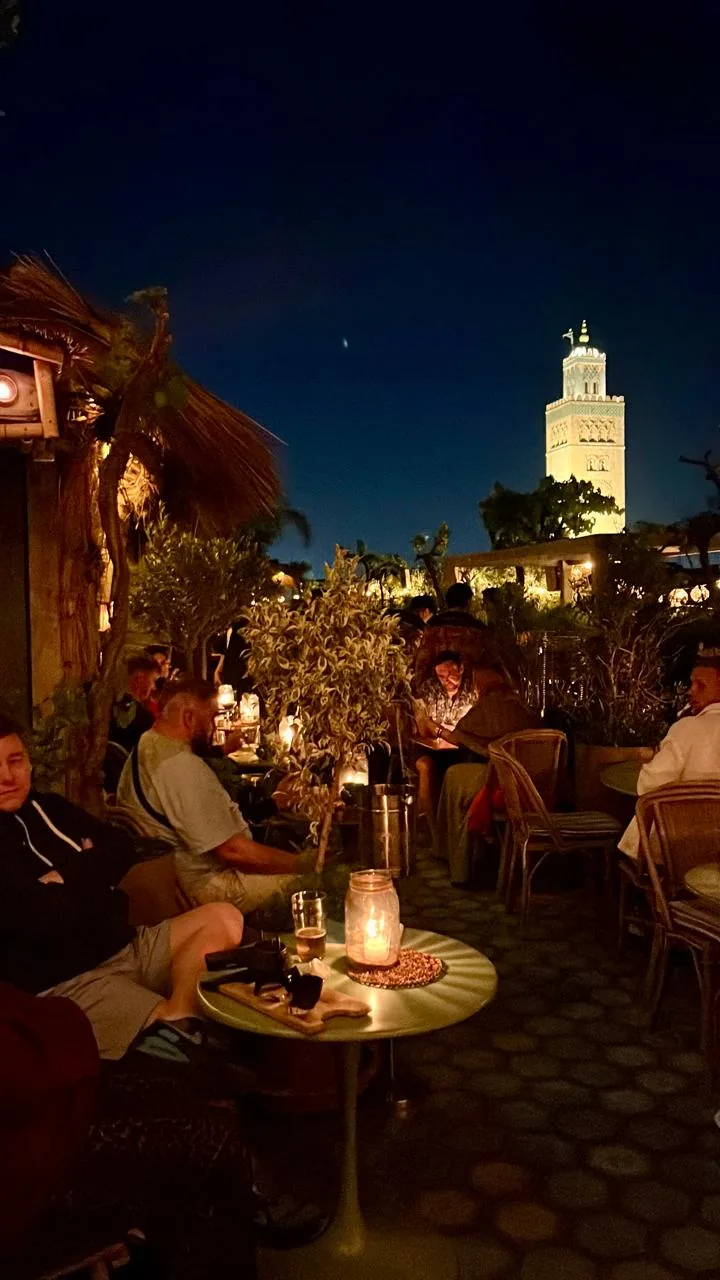
Marrakech Best Of: Our Local Picks
Our favorite rooftops, restaurants, cafés and riads in Marrakech — handpicked by Mouha Travel.
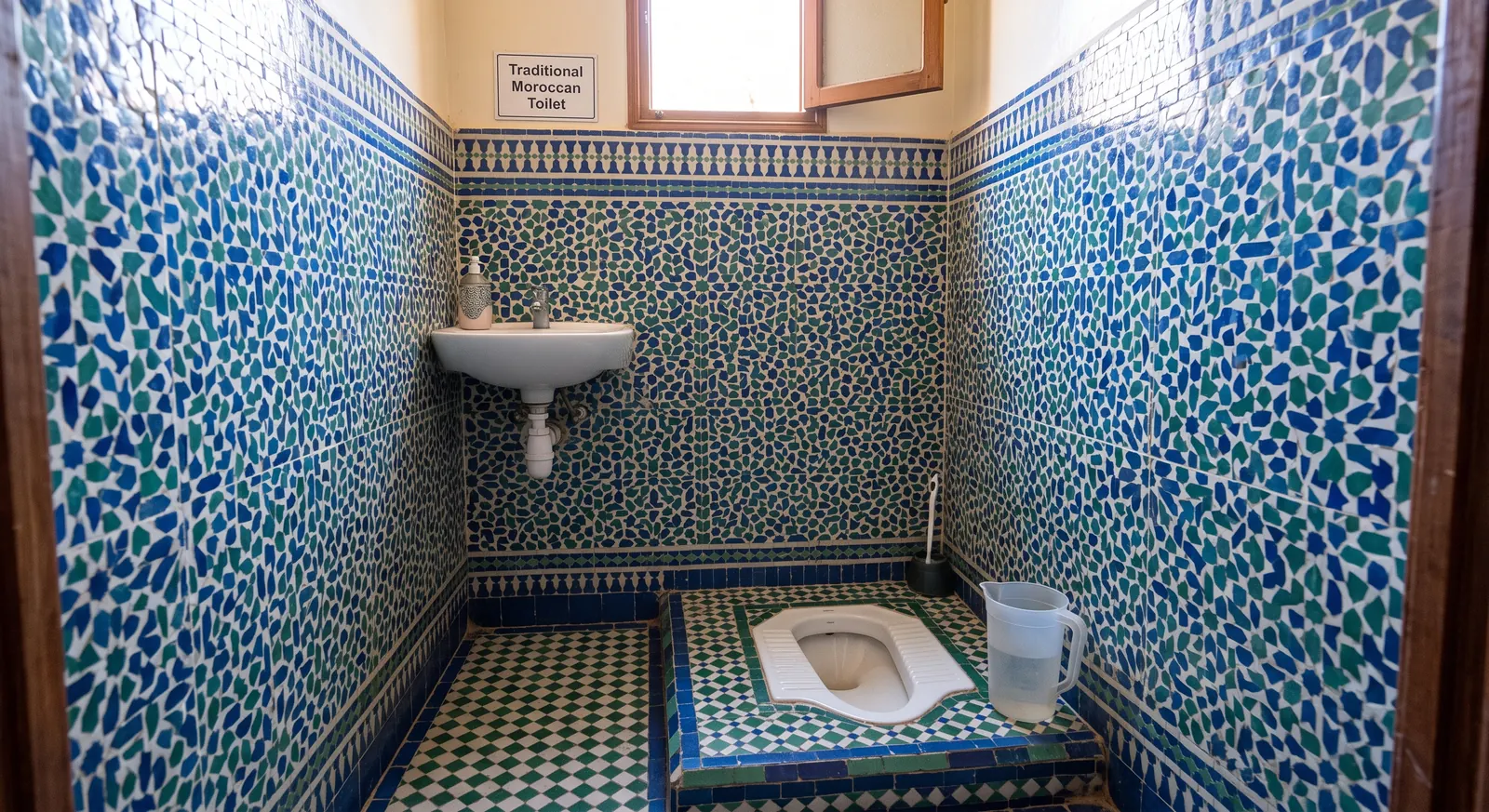
Bathrooms in Morocco: What Travelers Should Know Before Visiting Marrakech and Beyond
Wondering what bathrooms are like in Morocco? Learn about toilets in Marrakech, squat toilets, toilet paper, road-trip stops and Sahara desert camp bathrooms.
When Giving Money Becomes a Business Model: Giving Money in Marrakech
Should you give money to people asking in Marrakech? Understand street begging, children, tipping, charity and responsible ways to support local communities in Morocco.