
Vegan & Gluten-Free Food in Morocco: What Travelers Should Know
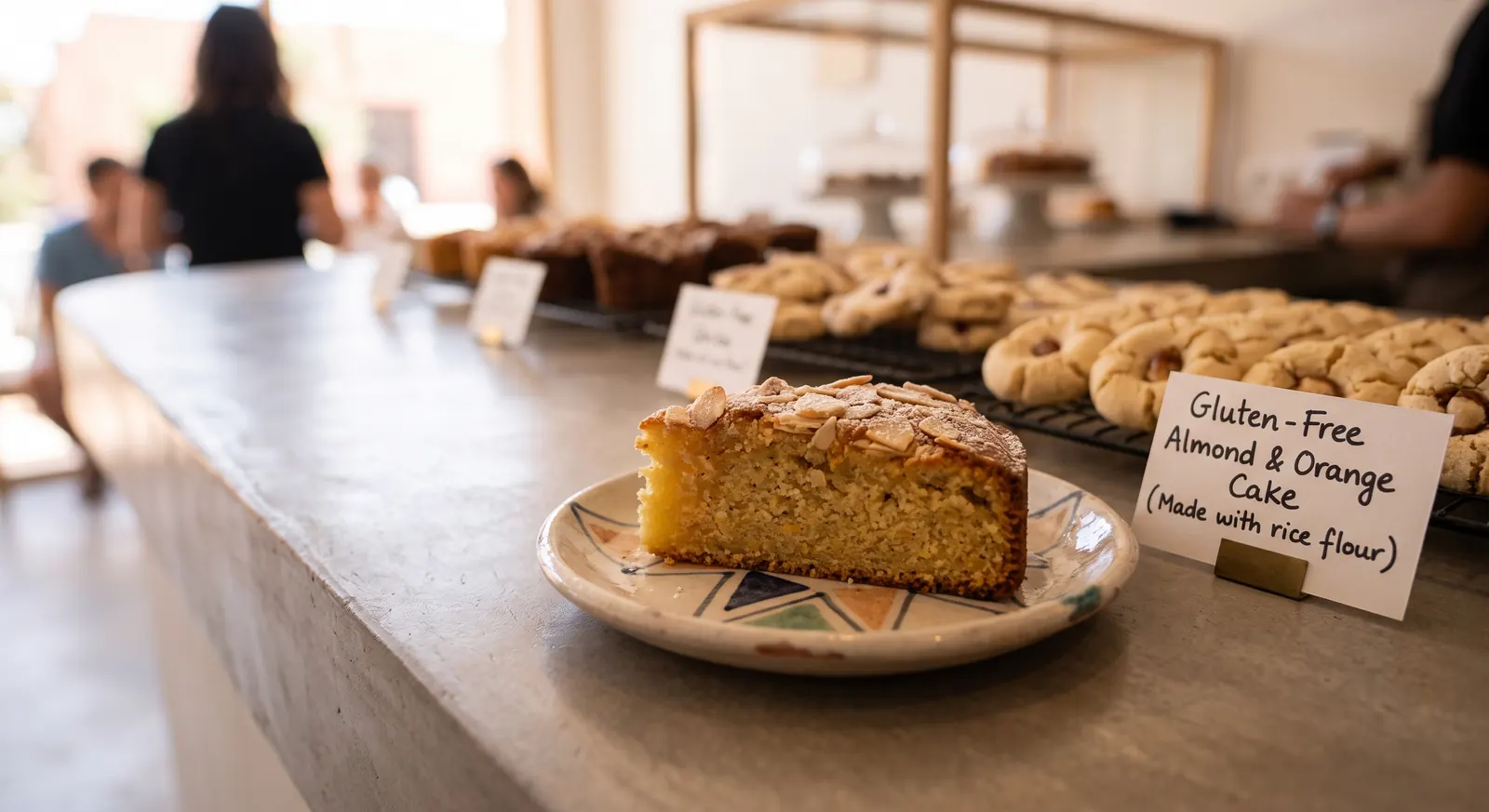
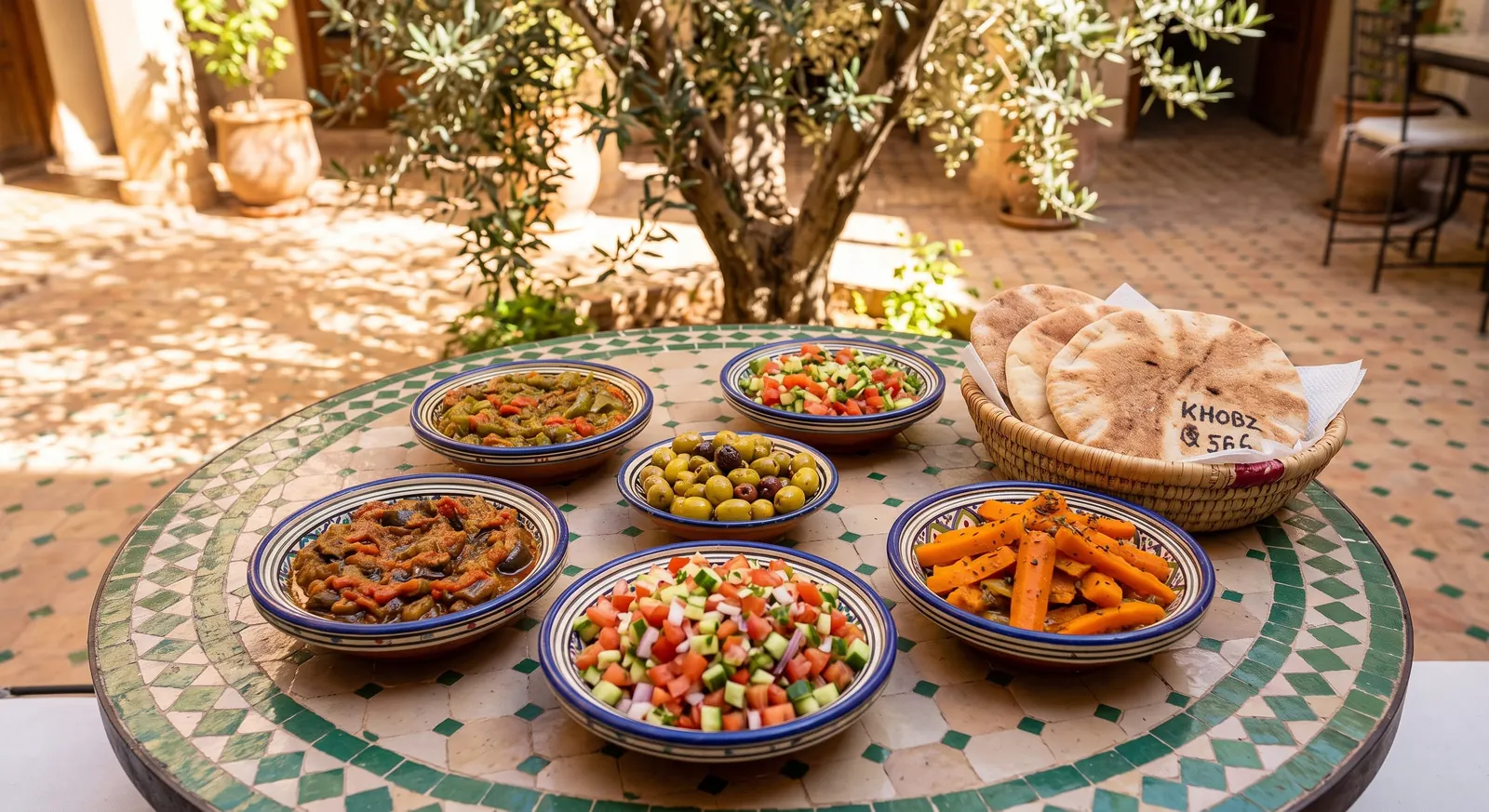
Find vegan and gluten-free food in Morocco, including Marrakech options, Moroccan dishes, celiac travel tips, allergies and what to order on a Morocco trip.
If you’re vegan or gluten-free, you might wonder whether traveling around Morocco will be difficult when it comes to food.
The good news is: you can absolutely enjoy Morocco while following a vegan or gluten-free diet.
Moroccan cuisine uses a lot of vegetables, legumes, olive oil, spices, fruits and nuts, so there are more options than you might expect. You just need to know what to ask for.
Vegan Food in Morocco
Morocco isn’t traditionally a vegan country, but many Moroccan dishes can easily be enjoyed without meat or dairy.
One of the easiest choices is a vegetable tagine, usually prepared with potatoes, carrots, zucchini, tomatoes, onions and Moroccan spices. Moroccan salads are another great option. You can try zaalouk, made with eggplant and tomatoes, or taktouka, made with peppers and tomatoes.
You can also find bissara, a simple soup made from fava beans, as well as lentils, chickpeas, olives and plenty of fresh fruit.
Just remember that some dishes may contain butter, dairy or animal stock, so it’s always best to explain clearly that you’re vegan.
What About Couscous?
Couscous is one of the foods most travelers want to try in Morocco.
If you’re vegan, vegetable couscous can be a great choice.
But if you’re gluten-free, there’s an important difference: traditional Moroccan couscous is made from wheat semolina, so it contains gluten.
You can ask for vegetables with rice instead, or choose a tagine.
Is Morocco Gluten-Free Friendly?
It is possible to travel gluten-free in Morocco, but you’ll need to be a little more careful.
Bread is served with almost every meal, and wheat is used in many Moroccan foods. Traditional couscous, Moroccan bread, briouats and pastilla are not gluten-free.
Even harira, the famous Moroccan soup, can contain flour or pasta depending on how it is prepared.
On the other hand, many tagines, Moroccan salads, grilled meats, vegetables, olives, nuts and fresh fruits can naturally be gluten-free.
If you have celiac disease or a serious allergy, it’s important to explain your requirements clearly and ask about ingredients and preparation to reduce the risk of cross-contamination.
Eating in Marrakech, Casablanca, Fez and Rabat
If you’re visiting Morocco’s larger cities such as Marrakech, Casablanca, Fez or Rabat, you’ll generally have more choices.
There are many international restaurants, cafés and modern dining spots offering vegetarian, vegan and gluten-free options.
Many chefs in these restaurants are also accustomed to welcoming international travelers with food allergies and can adapt dishes or pay particular attention to ingredients and preparation.
For serious allergies, it’s still important to communicate your requirements clearly and confirm with the chef or restaurant before eating.
Be More Careful in Local Areas
Once you leave the big cities and travel through smaller villages, mountain areas and local communities, it’s worth being more careful if you have a serious food allergy.
Some small local restaurants or family-run places may not be familiar with how dangerous certain allergies can be. They may misunderstand what you mean by an allergy or simply focus on removing the ingredient you mentioned without understanding the risks of cross-contamination.
For example, if you say that you cannot eat a certain ingredient, someone might simply remove it from your plate without realizing that even a small amount or contact with another ingredient could cause a serious reaction.
This doesn’t mean you should avoid local food. Local food is one of the best parts of traveling around Morocco. It simply means that travelers with serious allergies should take extra care and make sure their requirements are properly understood.
Having someone local who understands your situation can make a big difference, especially when communicating with restaurants, riads, desert camps or local cooks.
Traveling Around Morocco With Dietary Requirements
When we organize private trips around Morocco, we recommend telling us about any dietary requirements before your trip.
This gives us time to communicate with your riad, restaurants and desert camp in advance, so your meals can be planned around your needs.
Whether you’re exploring the streets of Marrakech, having lunch in the Atlas Mountains or spending a night under the stars in the Sahara, your dietary requirements shouldn’t stop you from experiencing Moroccan food and hospitality.
Morocco has much more to offer than just couscous and tagine — and with a little preparation, you can enjoy it safely and confidently.
How to Order Vegan Food in Morocco More Clearly
Finding vegan food in Morocco becomes easier when you explain what you do not eat rather than relying only on the word “vegan.” In some local restaurants, staff may understand vegetarian but interpret it as “no meat” while still using butter, milk, eggs or a meat-based stock. If your diet is strict, clearly explain that you do not eat meat, chicken, fish, eggs, milk or butter.
A vegetable tagine is often a strong starting point, but recipes vary from kitchen to kitchen. Moroccan salads such as zaalouk and taktouka are frequently plant-based, while lentils, chickpeas, beans, olives, fruit and nuts can make simple meals much easier. In Marrakech, vegan travelers also have the advantage of a large restaurant scene with both Moroccan and international options.
Gluten-Free Travel in Morocco and Cross-Contamination
Gluten-free travel in Morocco requires more attention because bread and wheat products are deeply integrated into everyday meals. Even a dish that looks naturally gluten-free may be served with bread, prepared on a shared surface or cooked with an ingredient you did not expect. This distinction is especially important for travelers with celiac disease, for whom “a little flour” is not simply a preference issue.
If you have celiac disease or a serious allergy, carry a translated allergy card and explain that cross-contamination matters. In a private tour, tell your travel company before arrival so restaurants, riads and desert camps can be contacted in advance.
Vegan and Gluten-Free Options on a Morocco Road Trip
Traveling between Marrakech, the Atlas Mountains, Ouarzazate, Dades and the Sahara does not mean you have to live on snacks. With advance notice, many accommodations can prepare vegetable tagines, rice, salads, lentils, fruit and other simple meals. The key is communication, particularly in smaller towns where specialist dietary terminology may be unfamiliar.
Frequently Asked Questions About Vegan and Gluten-Free Morocco Travel
Is Moroccan tagine vegan? Some vegetable tagines are vegan, but recipes vary. Ask whether butter, meat stock or other animal ingredients are used.
Is couscous gluten-free in Morocco? Traditional Moroccan couscous is made from wheat semolina and is not gluten-free.
Can I find vegan food in Marrakech? Yes. Marrakech has many Moroccan and international restaurants, and vegan options are increasingly easy to find.
Is Morocco suitable for travelers with celiac disease? It is possible to travel in Morocco with celiac disease, but careful communication and attention to cross-contamination are important.
What Moroccan foods are naturally gluten-free? Depending on preparation, many tagines, salads, grilled foods, vegetables, olives, fruit, nuts and rice-based dishes can be gluten-free. Always confirm ingredients.
Should I tell my Morocco tour company about food allergies? Yes. Advance notice gives the team time to contact accommodations, cooks and restaurants before you arrive.
Continue planning
Related Morocco travel advice
Read next
More Morocco Travel Guides
View All Guides →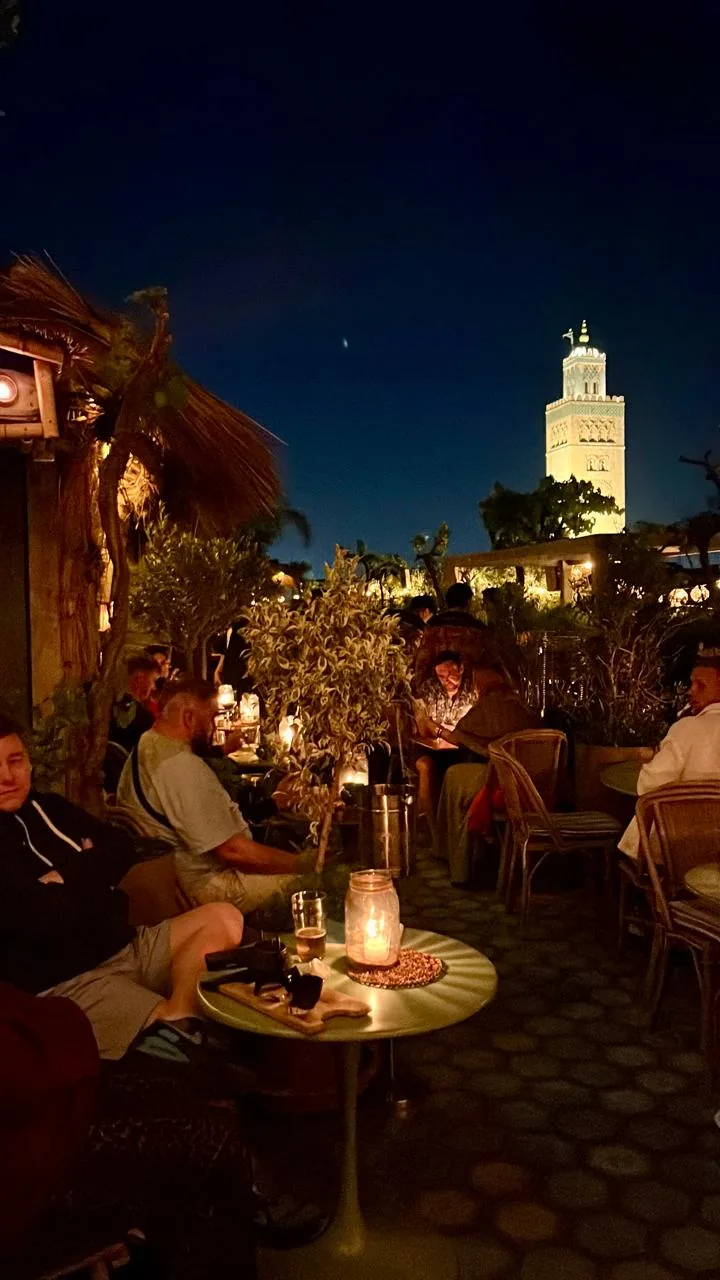
Marrakech Best Of: Our Local Picks
Our favorite rooftops, restaurants, cafés and riads in Marrakech — handpicked by Mouha Travel.
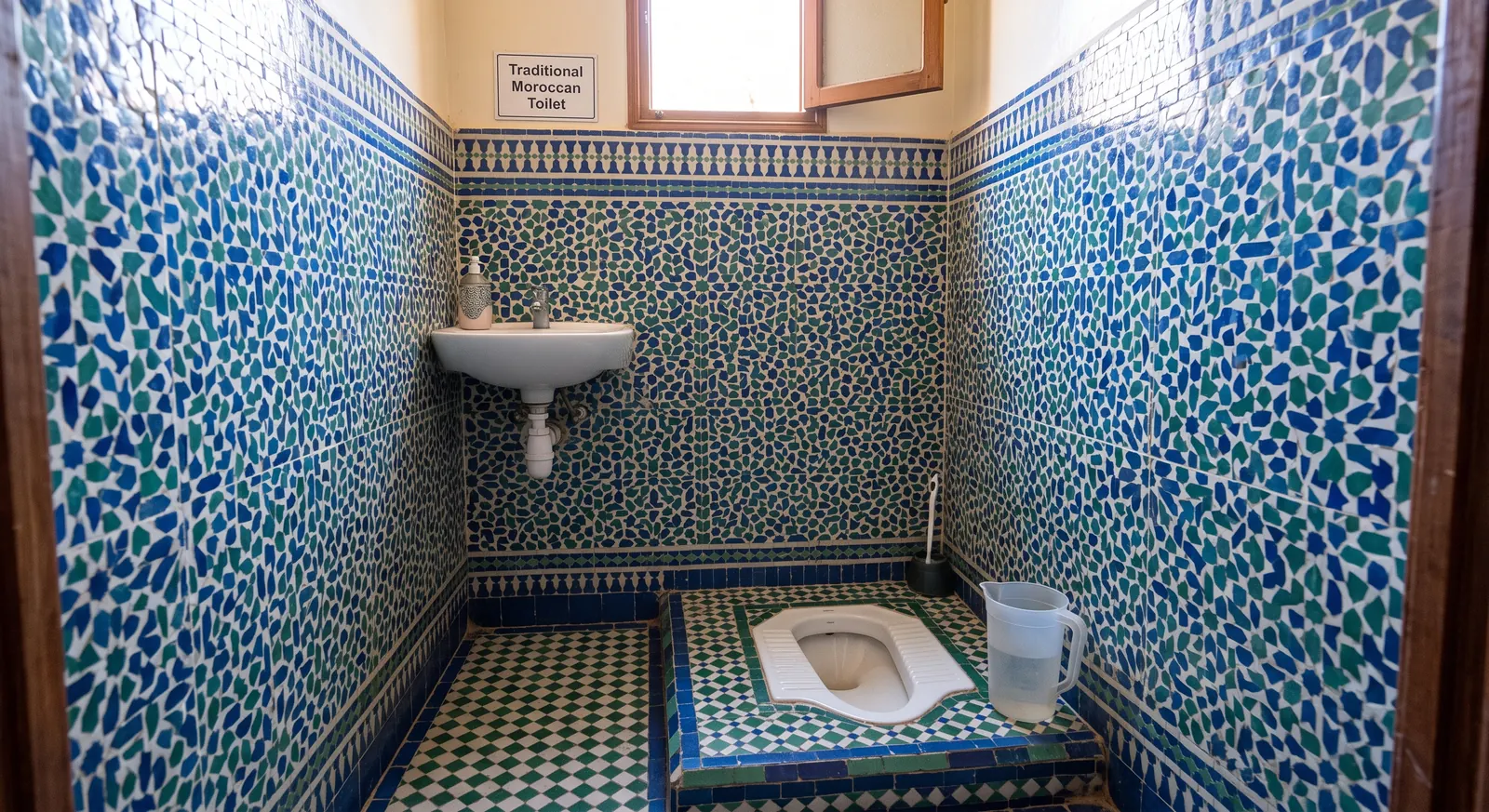
Bathrooms in Morocco: What Travelers Should Know Before Visiting Marrakech and Beyond
Wondering what bathrooms are like in Morocco? Learn about toilets in Marrakech, squat toilets, toilet paper, road-trip stops and Sahara desert camp bathrooms.
Things That Are Not Rude in Morocco — But Western Travelers Sometimes Think They Are
Learn Morocco etiquette before your trip: saying no, bargaining in souks, tipping, refusing food, personal questions and everyday Moroccan social customs.