
Where Is the Sahara Desert in Morocco?
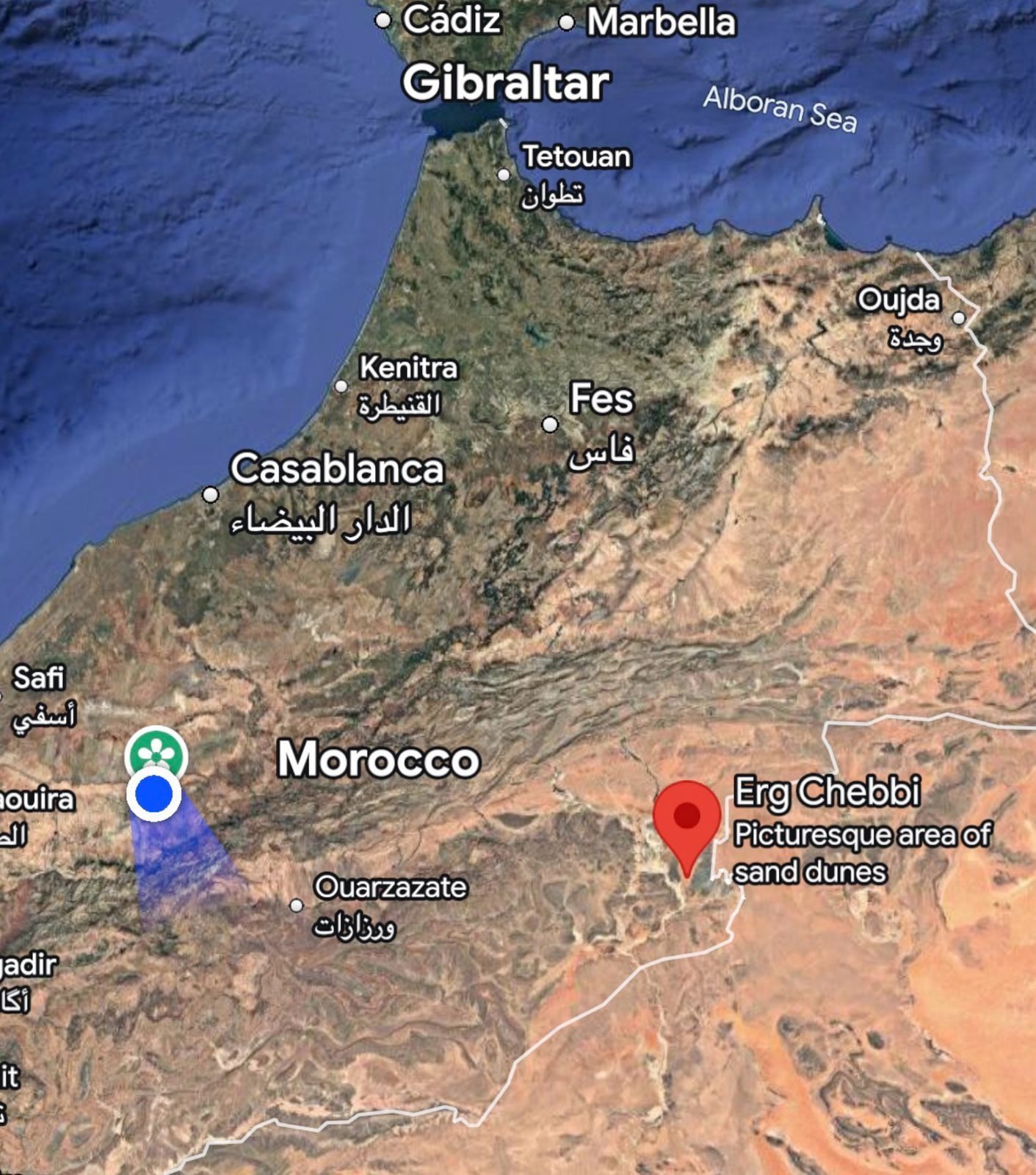
The Sahara covers a huge part of North Africa, crossing several countries. In Morocco, the desert begins in the country’s southeast and extends toward the border with Algeria.
For travelers, the most famous gateway to the Moroccan Sahara is Merzouga, a small village beside the spectacular dunes of Erg Chebbi.
There are also other desert regions worth considering, particularly Zagora and the Draa Valley.
This is important when planning a trip because “the Sahara Desert in Morocco” does not refer to one single location.
The main desert destinations are:
- Merzouga and Erg Chebbi — the classic large golden-dune experience
- Zagora and the Draa Valley — a different desert landscape combined with one of Morocco’s great oasis valleys
- Erg Chigaga — a more remote desert experience reached from the Zagora region
- Agafay Desert — a rocky desert landscape much closer to Marrakech, but technically not the Sahara
If your dream is to see large golden sand dunes and spend the night in a traditional or luxury desert camp, Merzouga is usually the destination to prioritize.
Merzouga and Erg Chebbi: Morocco’s Classic Sahara Experience
Merzouga is probably the place most people picture when they think about the Moroccan Sahara.
The village sits beside Erg Chebbi, a large area of Saharan sand dunes. The landscape changes dramatically as you approach: the rocky desert gradually gives way to waves of orange and golden sand.
The dunes are particularly beautiful around sunrise and sunset, when the changing light creates completely different colors and shadows across the landscape.
The region also has much more to offer than dunes. Around Merzouga you can find palm groves, desert villages, seasonal wetlands, traditional music and cultural experiences, as well as activities such as camel trekking, sandboarding, hiking and 4×4 excursions.
For a first-time visitor who wants the iconic Moroccan Sahara experience, Merzouga is generally the strongest choice.
Zagora vs. Merzouga: Which Sahara Desert Should You Visit?
This is one of the most common questions travelers ask.
The answer depends on what you want from your trip.
Merzouga
Choose Merzouga if you want:
- Large golden sand dunes
- The classic Sahara photographs
- A camel trek through the dunes
- A desert camp surrounded by sand
- Beautiful sunrise and sunset views
- More time to explore the desert
- A traditional Sahara experience
Zagora
Zagora offers a different experience.
The landscape around Zagora is more closely connected with the Draa Valley, one of Morocco’s great oasis regions. Instead of focusing entirely on huge sand dunes, a trip here can combine desert landscapes with palm groves, kasbahs, villages and the historic caravan routes of southern Morocco.
So which is better?
For a traveler visiting Morocco for the first time and specifically dreaming about the Sahara Desert, I would generally recommend Merzouga and Erg Chebbi.
Zagora can be an excellent option when time is limited or when the traveler particularly wants to explore the Draa Valley and southern Morocco.
Can You Visit the Sahara Desert From Marrakech?
Yes.
Marrakech is one of the main starting points for Sahara Desert trips.
However, there is an important detail that travelers should understand:
Merzouga is far from Marrakech.
A Sahara trip from Marrakech is therefore not a simple day trip. Reaching the dunes requires crossing the High Atlas Mountains and traveling through southern Morocco.
That is actually one of the reasons a Sahara tour can be so rewarding.
The road becomes part of the experience.
Instead of spending several hours simply driving through empty roads, a well-planned itinerary can take you through mountain landscapes, traditional villages, ancient kasbahs, valleys and spectacular gorges before you reach the desert.
How Do You Get to the Sahara Desert?
The best route depends on where you start.
From Marrakech

The classic route toward Merzouga takes you across the High Atlas Mountains and through the landscapes of southern Morocco.
A typical journey can include:
Marrakech → High Atlas Mountains → Aït Ben Haddou → Ouarzazate → Dades Valley → Todra Gorge → Merzouga
This is why we recommend allowing several days rather than trying to rush to the desert and back.
From Fes

Fes is another popular starting point.
The route takes you through the Middle Atlas and toward Errachidia, Erfoud and Merzouga.
For travelers visiting both northern and southern Morocco, combining Fes and Merzouga can be particularly convenient because the route naturally connects the imperial city with the desert.
From Casablanca
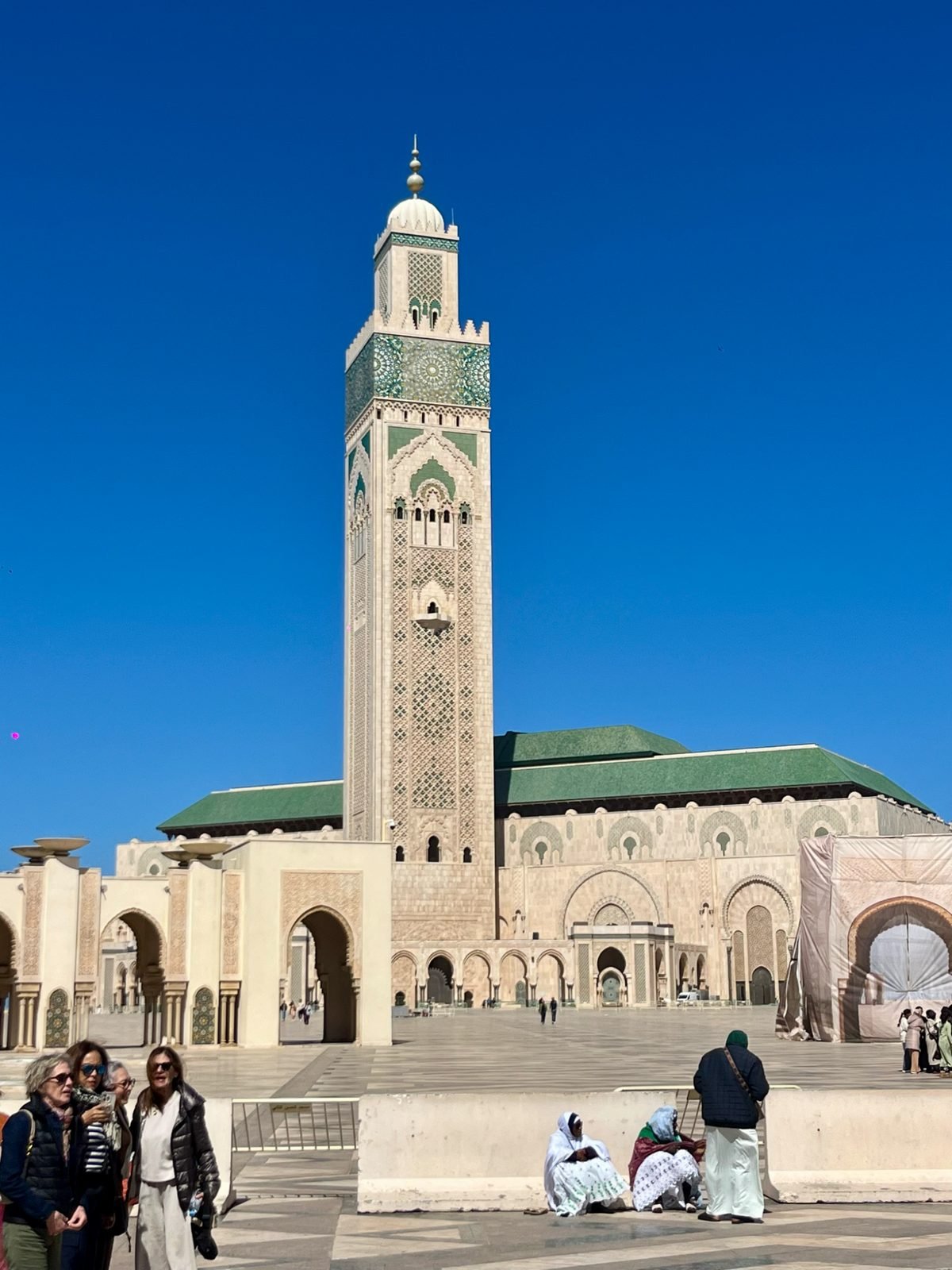
Travelers arriving in Casablanca can also reach the Sahara, but it usually makes more sense to incorporate the desert into a longer Morocco itinerary rather than traveling directly there and immediately returning.
For example:
Casablanca → Marrakech → Atlas Mountains → Sahara → Fes
can create a much more complete journey through Morocco.
How Many Days Do You Need in the Sahara?
This depends on where you start and what you want to experience.
For travelers starting in Marrakech, 3 days and 2 nights is a common minimum for a classic Merzouga experience.
But there is an important distinction.
A 3-Day Sahara Tour
A three-day itinerary can work well if your schedule is limited.
It normally includes:
- Day 1: Marrakech → Aït Ben Haddou → Dades Valley
- Day 2: Dades Valley → Todra Gorge → Merzouga → camel trek → desert camp
- Day 3: Sunrise → return journey toward Marrakech
It gives you the major highlights, but the driving days are long.
A 4-Day Sahara Itinerary
If you have an extra day, the experience becomes more relaxed.
You can spend more time around the desert, include additional cultural stops, or break up the driving.
Longer Itineraries
If you have 5 days or more, the Sahara can become part of a much larger southern Morocco journey including:
- Marrakech
- Aït Ben Haddou
- Ouarzazate
- Dades Valley
- Todra Gorge
- Merzouga
- Rissani
- Draa Valley
- Zagora
Our recommendation: if your priority is seeing the Sahara but your overall Morocco trip is limited, 3 days can work. If you have more flexibility, 4 days or longer allows you to enjoy the journey rather than feeling that you are constantly driving.
What Is a Morocco Sahara Desert Tour Actually Like?
A good Sahara tour is much more than arriving at the dunes.
If you travel from Marrakech toward Merzouga, the landscape changes dramatically throughout the journey.
You begin among the red buildings and palm groves of Marrakech before climbing into the High Atlas Mountains.
From there, the scenery changes again as you enter the valleys and kasbahs of southern Morocco.
You may visit Aït Ben Haddou, drive through the Valley of Roses, explore the Dades Valley and walk through the dramatic Todra Gorge before continuing toward Merzouga.
Then, almost suddenly, the landscape becomes much more open.
The mountains and valleys give way to the desert.
And finally, the first dunes of Erg Chebbi appear.
That moment is part of the experience.
What to See on the Way to the Sahara
One of the biggest mistakes travelers make is thinking of the road between Marrakech and Merzouga as something they simply need to endure.
It isn’t.
The journey passes through some of the most interesting landscapes in Morocco.
The High Atlas Mountains
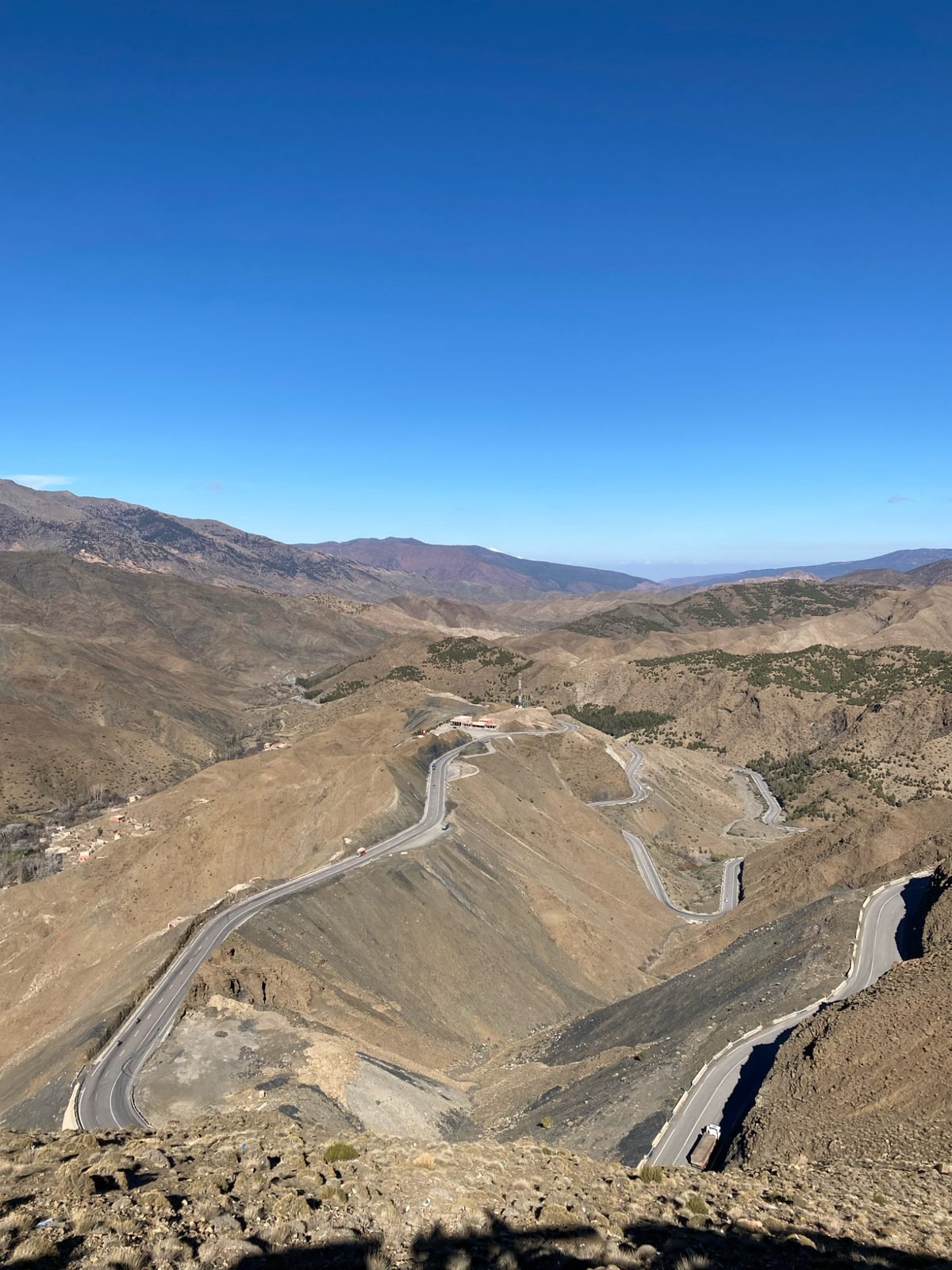
Leaving Marrakech, the road climbs through the High Atlas.
The scenery changes from the flat plains around Marrakech to mountain villages, valleys and dramatic peaks.
Aït Ben Haddou

This ancient fortified village is one of Morocco’s most famous kasbahs and an important stop on the southern route.
Its earth-colored architecture has appeared in numerous film and television productions.
Ouarzazate
Known as a gateway to the desert and an important center for film production in Morocco, Ouarzazate is a natural stopping point between the Atlas Mountains and the desert.
Dades Valley

The Dades Valley combines dramatic rock formations with oases, villages and traditional architecture.
Todra Gorge
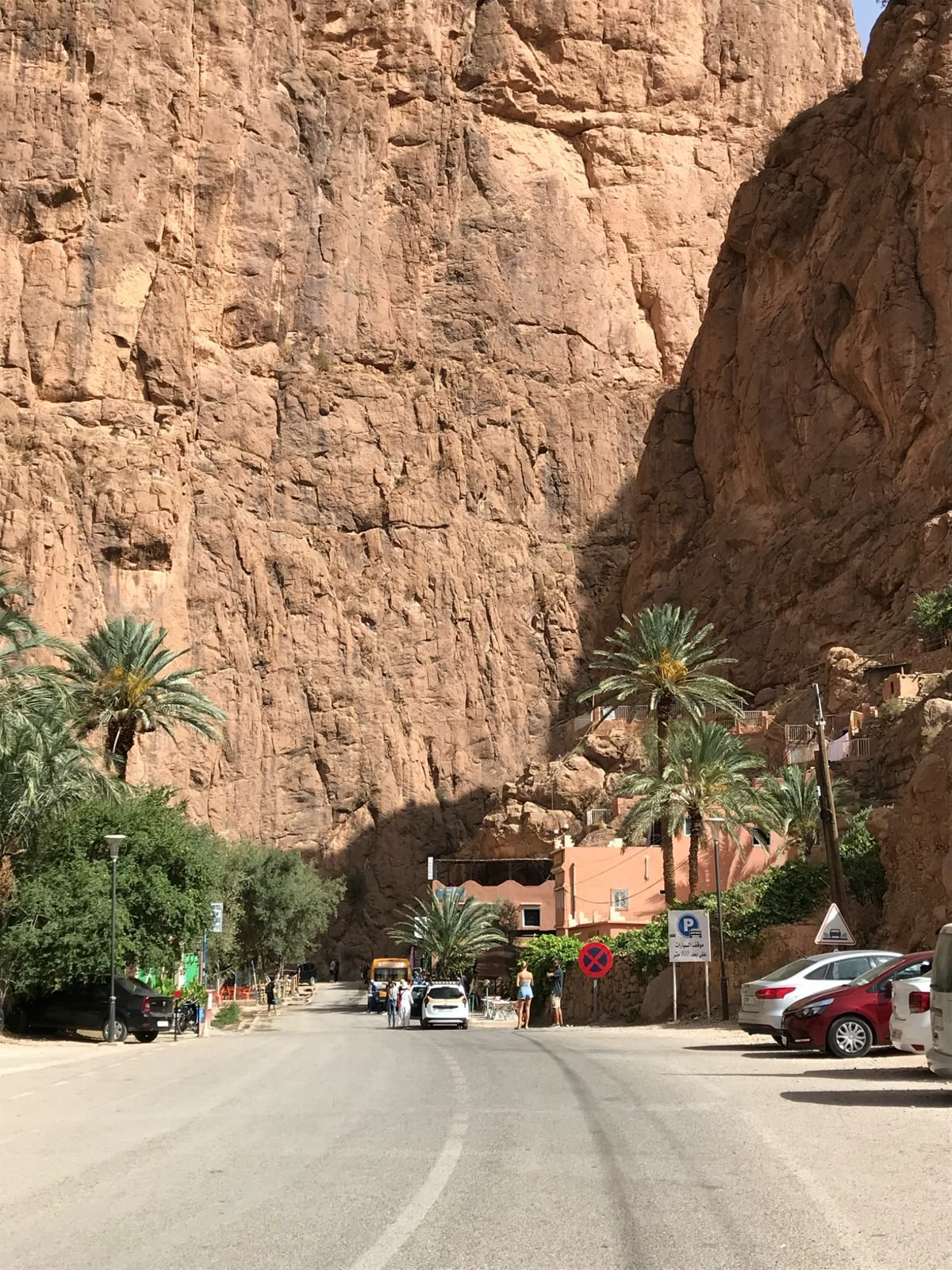
Near Tinghir, the Todra Gorge cuts dramatically through the surrounding mountains.
For travelers who enjoy landscapes and photography, it is one of the highlights of the route.
The Road to Merzouga

After the mountains and valleys, the landscape becomes increasingly arid.
Palm groves and desert towns appear along the way before the dunes of Erg Chebbi finally come into view.
This combination of landscapes is one of the reasons the journey to Merzouga deserves to be part of the itinerary, rather than treated simply as transportation.
Camel Trekking in the Sahara
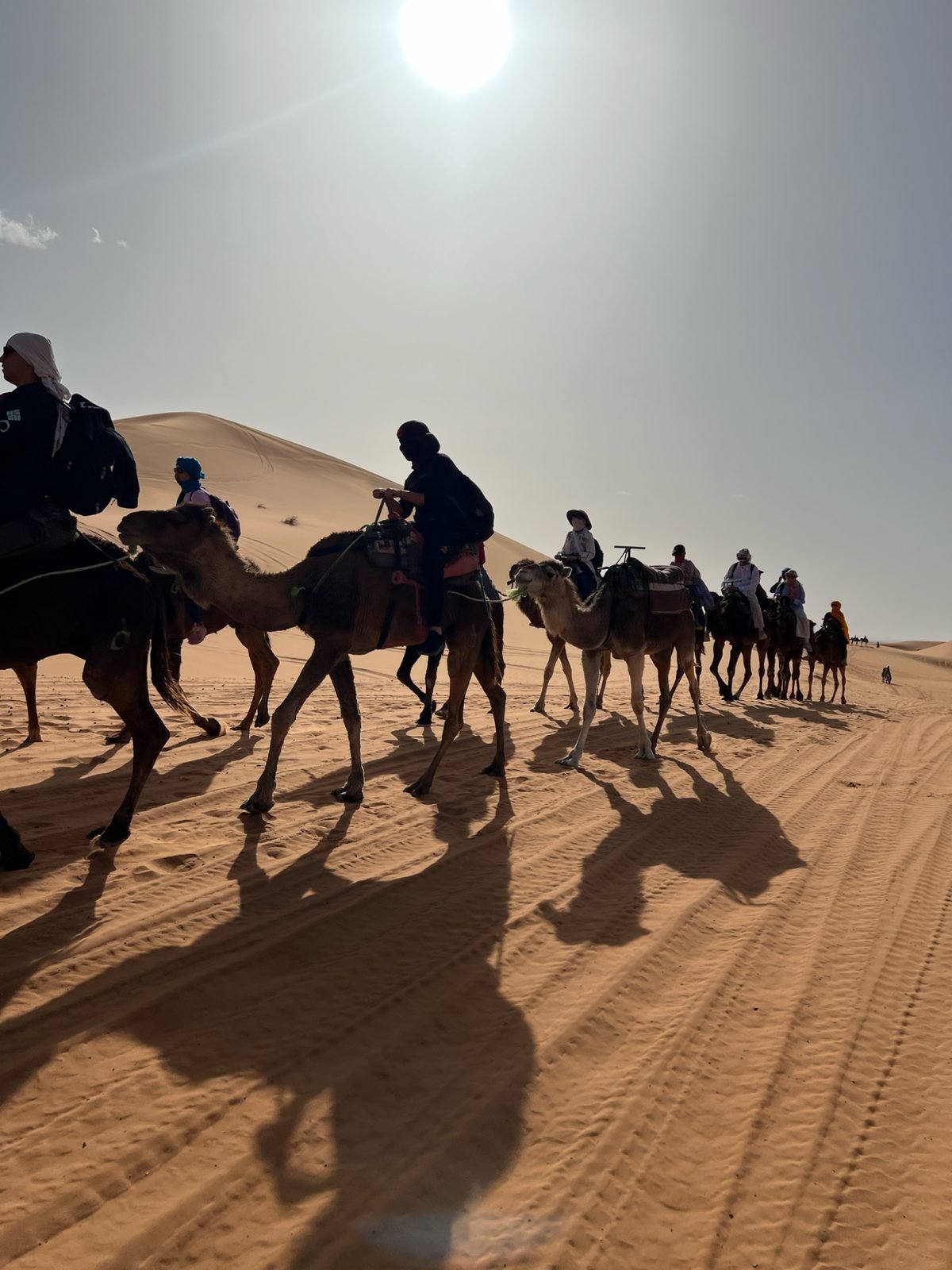
For many travelers, riding a camel into the dunes at sunset is the moment they have been waiting for.
Camel trekking is one of the traditional ways to experience the desert and remains one of the most popular activities around Merzouga.
A typical experience begins in the late afternoon.
You meet the camel handlers near the edge of the dunes, climb onto your camel and begin traveling into Erg Chebbi.
As the sun gets lower, the color of the sand changes.
Eventually, you reach your desert camp.
After dinner and an evening around the fire, you can spend the night beneath the desert sky.
Do You Have to Ride a Camel?
No.
If you are uncomfortable on a camel, have mobility concerns, or simply don’t enjoy riding animals, there are other ways to reach the camp, depending on the camp and itinerary.
A 4×4 transfer can often be arranged.
The important thing is that the Sahara experience should be enjoyable rather than something you feel obligated to do.
What Is a Sahara Desert Camp Like?

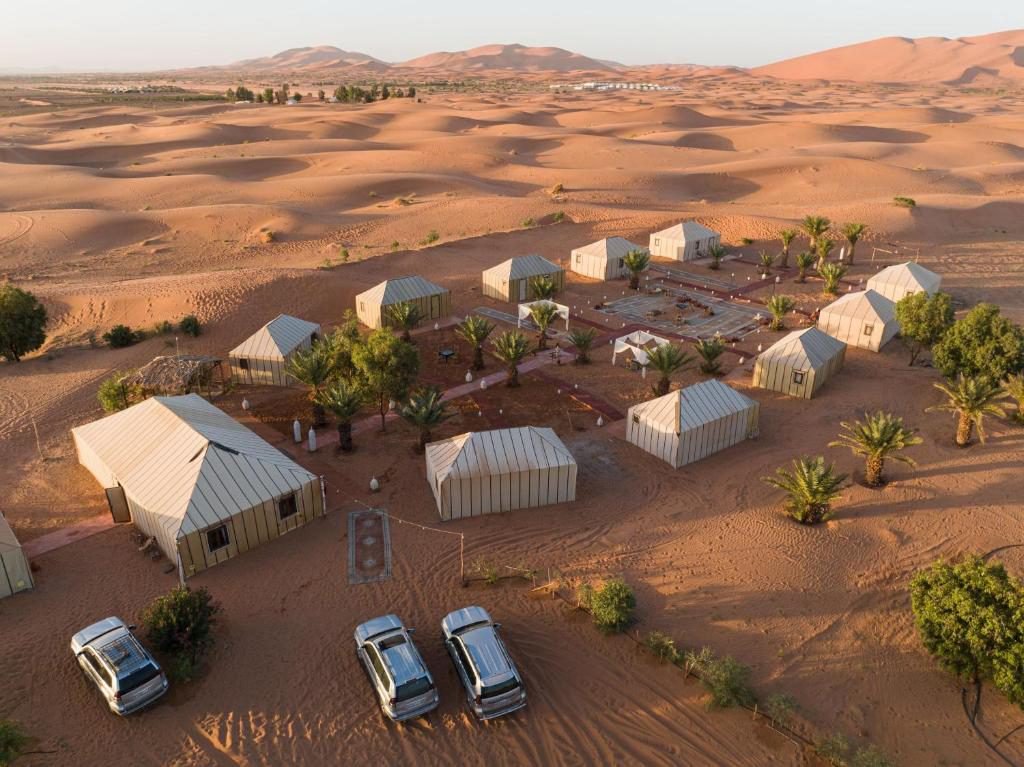
A desert camp can range from very simple accommodation to a surprisingly comfortable luxury experience.
The exact facilities depend on the camp.
Standard Desert Camps
These generally offer:
- Private or shared tents
- Beds
- Dinner
- Breakfast
- Traditional music
- Shared bathroom facilities
Luxury Desert Camps
Luxury camps can offer:
- Larger private tents
- Comfortable beds
- Private bathrooms
- Hot showers
- Better insulation
- More spacious interiors
- More personalized service
If comfort matters to you, don’t simply book the cheapest Sahara tour.
Ask exactly what type of camp is included.
The word “luxury” is used very differently by different tour operators.
What Happens at a Sahara Desert Camp?
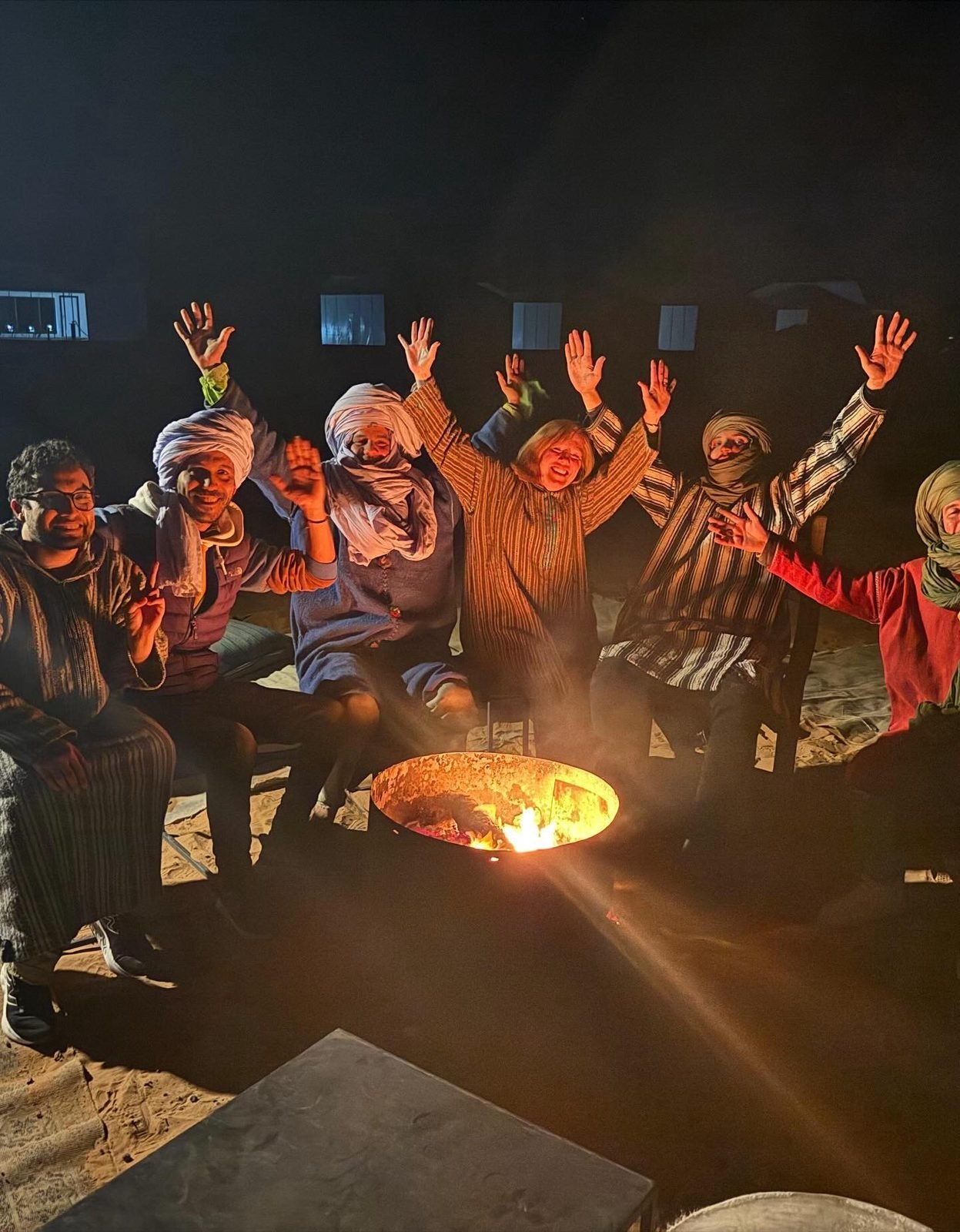
After arriving at camp, there is normally time to relax and watch the sunset.
Dinner is usually served in the evening, followed by traditional music around a campfire.
The atmosphere is one of the biggest attractions.
There are no city lights surrounding you.
No traffic.
No buildings.
Just the dunes and the night sky.
The next morning, many travelers wake up early to watch the sunrise before breakfast and beginning the journey back.
The Best Time to Visit the Morocco Sahara Desert
The Sahara can be visited throughout the year, but some months are much more comfortable than others.
Spring — March to May
Spring is one of the best periods.
Temperatures are generally more comfortable for exploring during the day, while the desert still feels pleasantly cool in the evening.
Summer — June to August
Summer can be extremely hot.
Daytime temperatures in the desert can become uncomfortable, particularly in July and August.
If summer is the only time you can travel, a desert trip is still possible, but your itinerary should be planned carefully around the heat.
Autumn — September to November
Autumn is another excellent period.
The extreme summer heat begins to disappear, making outdoor activities much more comfortable.
Winter — December to February
Winter days can be pleasant, but desert nights can become surprisingly cold.
This is particularly important if you are camping.
Don’t pack for the Sahara based only on its daytime temperatures.
What Should You Pack for the Sahara Desert?
You don’t need a huge amount of equipment.
But a few things make a big difference.
Essential Items
- Comfortable walking shoes
- Light, breathable clothing
- A warm layer for the evening
- Sunglasses
- Sunscreen
- Hat or cap
- Reusable water bottle
- Small backpack
- Phone or camera
- Power bank
- Personal toiletries
For Winter
Bring warmer clothing.
Desert temperatures can drop significantly after sunset.
For Summer
Prioritize:
- Lightweight clothing
- Sun protection
- Plenty of water
- Sunglasses
- A hat
- Breathable fabrics
And remember that the desert is dusty. Avoid bringing your most delicate clothing or expensive shoes.
How Much Does a Sahara Desert Tour Cost?
There isn’t one standard price for a Sahara Desert tour.
The price depends on several factors:
- Number of days
- Private or group tour
- Vehicle type
- Number of travelers
- Hotel category
- Desert camp category
- Private guide
- Meals
- Activities
- Route
- Starting city
A private Sahara journey will naturally cost more than joining a large group.
Likewise, a private luxury camp with private transportation and carefully selected hotels will cost more than a basic shared tour.
Instead of choosing a tour based only on the lowest price, compare what is actually included.
A cheap Sahara tour can become expensive if important elements are excluded or if the accommodation is significantly below your expectations.
Private vs. Group Sahara Desert Tours
This is one of the most important decisions when booking.
Group Tours
Group tours are usually the more affordable option.
They can be a good choice for solo travelers or people who want to meet other travelers.
However, you normally have less flexibility.
The departure time, stops and pace are determined by the group itinerary.
Private Tours
A private tour gives you much more control.
You can usually:
- Choose your departure time
- Spend longer at places you enjoy
- Stop for photographs
- Adjust the itinerary
- Choose your accommodation
- Travel with your own group
- Ask your driver or guide to adapt the journey
For couples, families and groups of friends, a private Sahara trip can be particularly worthwhile because the experience can be designed around the travelers rather than around a fixed group schedule.
Is the Sahara Desert Safe?
For most visitors traveling with a reputable local operator, the main Sahara tourist routes are well established.
As with any destination, however, sensible precautions are important.
Stay hydrated, protect yourself from the sun, follow your guide’s instructions and avoid wandering alone into unfamiliar desert areas.
If you are traveling independently, make sure someone knows your plans and don’t underestimate the distances involved.
For travelers coming from the United States, the Sahara is not something that requires a completely different approach to the rest of Morocco. The same basic travel principles apply: use reputable transportation, protect your belongings and follow sensible local travel advice.
If you’re planning your first trip to Morocco from the US, our Morocco Travel Guide for American Travelers: Everything You Need to Know Before You Go covers everything from practical travel advice to transportation, money and other things worth knowing before your trip.
Is the Sahara Suitable for Families and Older Travelers?
Yes.
A Sahara experience does not have to mean strenuous hiking through the dunes.
Families can enjoy:
- Camel rides
- Desert camps
- Sunset
- Stargazing
- Sandboarding
- 4×4 excursions
- Cultural experiences
Older travelers can also enjoy the desert, particularly when traveling privately and choosing comfortable accommodation.
If walking or riding a camel is difficult, transportation by 4×4 can often be arranged.
The key is choosing an itinerary that matches your fitness level and comfort rather than assuming every Sahara tour is the same.
What Is the Sahara Like at Night?
The desert changes completely after sunset.
During the day, the dunes are bright and golden.
At night, the landscape becomes dark and quiet.
Far away from major cities, the lack of artificial light makes the stars much more visible.
For many travelers, sitting outside the camp after dinner and simply looking at the night sky becomes one of the most memorable parts of the entire trip.
You don’t need a complicated activity.
Sometimes the best part of the Sahara is simply being there.
Sahara Desert for Travelers Coming From the United States
If you’re traveling from the United States, the Sahara is best understood as one part of a larger Morocco itinerary, rather than a destination you need to visit separately.
For example, a first Morocco trip could combine:
Marrakech → Atlas Mountains → Sahara Desert → Fes → Casablanca
Or:
Marrakech → Aït Ben Haddou → Dades → Merzouga → Fes
The right itinerary depends on how much time you have and what you want to see.
If you’re flying a long distance from the US, it is usually worth spending enough time in Morocco to experience more than just Marrakech and the Sahara.
If you want help organizing the entire journey, explore our Morocco tours from the USA.
Example: 3-Day Marrakech to Sahara Itinerary (Click here)
Here’s what a classic private journey can look like.
Day 1 — Marrakech to Dades Valley
Leave Marrakech in the morning and cross the High Atlas Mountains.
Visit Aït Ben Haddou and continue through Ouarzazate toward the Dades Valley.
Spend the night in the Dades region.
Day 2 — Dades Valley to Merzouga
Explore the dramatic landscapes around the Dades Valley and Todra Gorge.
Continue through the changing landscapes of southeastern Morocco toward Merzouga.
Arrive in the afternoon and begin your camel trek into Erg Chebbi.
Watch the sunset from the dunes before arriving at your desert camp.
Enjoy dinner, traditional music and a night beneath the stars.
Day 3 — Merzouga to Marrakech
Wake early for sunrise over the dunes.
Return from the desert and have breakfast.
Begin the long journey back toward Marrakech.
Depending on your exact itinerary, additional stops can be included along the route.
Planning Your Sahara Desert Experience
The best Sahara trip isn’t necessarily the longest or the most expensive.
It’s the one that fits the way you want to travel.
Some travelers want a comfortable private journey with carefully chosen hotels and a luxury desert camp. Others prefer a simpler adventure with more time outdoors. Some want to photograph the dunes, while others care more about meeting local people and experiencing Amazigh and Saharan culture.
That’s why it’s worth planning the Sahara as part of your complete Morocco itinerary, rather than simply booking the cheapest desert excursion available.
If you’re coming from the United States, start by deciding how much time you have in Morocco, which cities you want to visit, and whether you prefer a private or shared journey. From there, the Sahara route can be built around your priorities.
The desert is not just a place you visit. The journey there is part of the experience.
And when the road finally reaches the dunes of Erg Chebbi, you understand why the Sahara remains one of the most unforgettable experiences in Morocco.
Plan Your Morocco Sahara Desert Journey
Planning a trip to Morocco from the United States?
Mouha Travel creates private Morocco journeys that combine Marrakech, the Atlas Mountains, the Sahara Desert, historic cities and the Atlantic coast around your dates, interests and travel style.