
7. What Is the Sahara Desert Really Like?
For many travelers, the Sahara is the reason they come to Morocco.
But there is a common misunderstanding: the Sahara experience is not simply being dropped in the middle of nowhere with nothing around you.
The major tourist desert areas have established camps, access roads, local communities and tourism infrastructure.
The experience can range from basic desert camping to highly comfortable private camps with private bathrooms and other premium facilities.
Where is the Sahara in Morocco?
The two best-known desert regions for travelers are:
Erg Chebbi
Located near Merzouga in southeastern Morocco, Erg Chebbi is famous for its large golden dunes.
This is the classic Moroccan Sahara experience many travelers imagine.
Erg Chigaga
Located farther west, Erg Chigaga offers a more remote desert experience and generally requires more effort to reach.
It can appeal to travelers looking for a quieter and less developed desert atmosphere.
8. Is the Sahara Really in the Middle of Nowhere?
In a sense, yes—you are traveling far from major cities.
But not in the way many first-time travelers imagine.
Around the main desert tourism areas, you will find:
- Desert camps
- Local villages
- Roads and 4×4 access
- Restaurants and accommodation
- Electricity solutions
- Local guides and drivers
- Mobile coverage in some areas
The level of connectivity and comfort depends heavily on where you stay.
That is why you should ask about the specific camp, rather than assuming every desert camp offers the same facilities.
9. Do Sahara Camps Have Bathrooms and Showers?
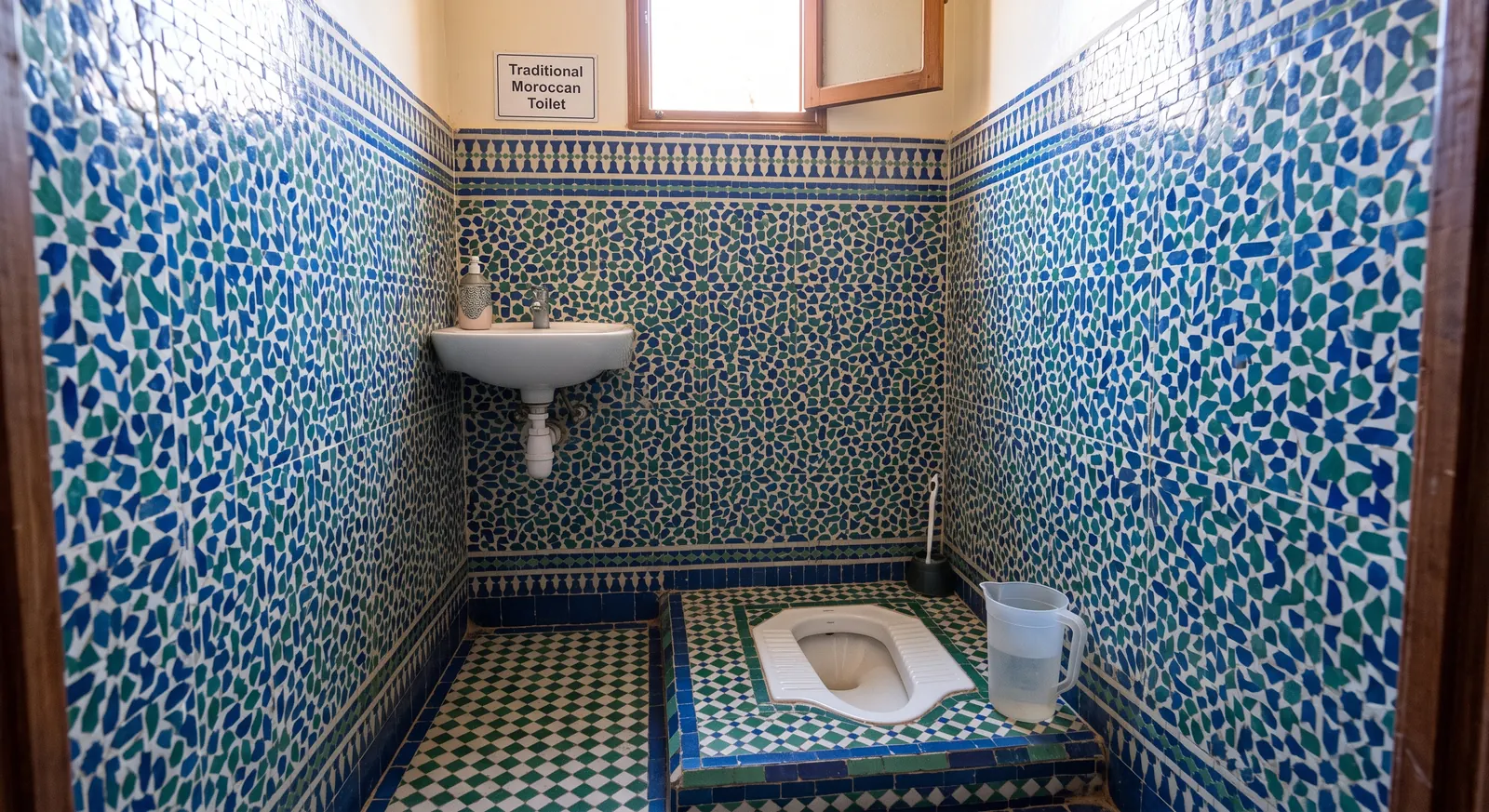
Many comfortable and luxury desert camps have private bathrooms with toilets and showers.
However, standards vary significantly. A basic desert camp is not the same as a luxury camp.
If you care about comfort, ask before booking:
- Is the bathroom private?
- Is there a hot shower?
- Is the toilet inside the tent?
- Is electricity available?
- Can I charge my phone?
- Is Wi-Fi available?
- Is there heating or air conditioning?
- How is the camp accessed?
At Mouha Travel, we recommend confirming the exact camp and amenities before your trip rather than making generic promises about “luxury desert camping.”
10. Is There Wi-Fi in the Sahara?
Sometimes.
Some premium camps provide Wi-Fi, while others rely on mobile networks or have limited connectivity.
Do not book a desert camp assuming that Wi-Fi will work exactly like it does in a hotel in Marrakech.
For many travelers, that is actually part of the attraction. The Sahara is one of the places where you can put the phone away, watch the sunset, have dinner under the stars and wake up to an enormous open sky.
If staying connected is important to you, ask about connectivity before booking.
11. Can You Charge Your Phone in the Sahara?
Most established camps have some form of electricity, often using solar power or generators.
But again, the exact setup varies.
Bring:
- A power bank
- Charging cables
- A universal adapter
- Your phone fully charged before entering the desert
A power bank is particularly useful during long driving days.
12. Is There Air Conditioning in Sahara Camps?
This depends on the camp and the season.
Some high-end camps offer air conditioning or other climate-control systems, while many traditional or standard tents do not.
This is especially important if you are traveling during the hottest months.
If air conditioning is important to you, do not simply search for “luxury Sahara camp.” Ask the operator to confirm the exact cooling system in your tent.
13. Is the Sahara Worth the Long Drive?
For many travelers, absolutely.
But you should understand what you are signing up for.
The Sahara is far from Marrakech. Reaching Erg Chebbi involves a long journey across southern Morocco.
The reward is not only the dunes. The journey itself includes:
- High Atlas scenery
- Berber/Amazigh villages
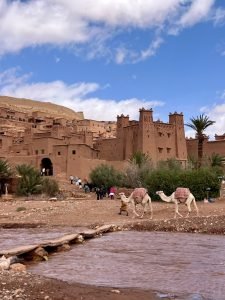
- Ait Ben Haddou
- Ouarzazate
- Dades Valley
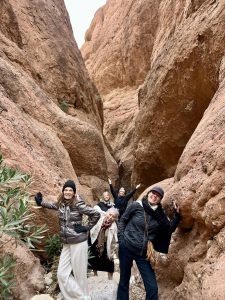
- Todra Gorge
- Southern landscapes
- Changing geology
- Desert towns
- The dunes themselves
This is why we generally prefer a 4-day Sahara itinerary when travelers have enough time.
A three-day trip can work, especially for travelers with limited time, but the driving can feel intense.
If you have four or five days available, you can create a much more comfortable experience.
14. Sahara vs Agafay Desert: Which Should You Choose?
This is an important distinction.
Agafay is not the Sahara Desert.
Agafay is a rocky desert landscape close to Marrakech. It is excellent for:
- Sunset
- Camel rides
- Quad biking
- Buggy rides
- Desert dinners
- Pool experiences
- Overnight camps
- Short getaways
The Sahara, particularly Erg Chebbi or Erg Chigaga, offers the classic large sand-dune experience.
Choose Agafay if:
You have only one free day or evening and want a desert-style experience close to Marrakech.
Choose the Sahara if:
You want enormous dunes, a deeper desert journey, camel trekking, remote landscapes and the full southern Morocco experience.
15. Should You Rent a Car or Hire a Private Driver?
Both are possible. But they create very different experiences.
Renting a car
A rental car gives you independence and can work well for experienced travelers who are comfortable driving abroad.
You need to be comfortable with:
- Mountain roads
- Traffic
- Navigation
- Parking
- Different driving styles
- Long distances
- Rural roads
- Managing your own itinerary
Hiring a private driver
A private driver gives you more flexibility without making you responsible for the road.
You can:
- Relax during long drives
- Stop for photographs
- Change the pace
- Ask your driver about local life
- Reach remote areas more easily
- Avoid parking stress
- Focus on the experience
For travelers visiting Morocco for the first time, especially families, couples and travelers who want comfort, a private driver can make a major difference.
16. Should You Take a Group Tour or a Private Morocco Tour?
Group tours can be a good choice for travelers who prioritize price and enjoy traveling with others.
Private tours are better suited to travelers who value:
- Flexibility
- Privacy
- Comfort
- Personalized pacing
- Better accommodation choices
- Private transportation
- Local experiences
- More control over the itinerary
A private itinerary does not have to mean luxury.
It simply means the trip is designed around you, rather than around a fixed group schedule.
17. Money in Morocco: Can You Use U.S. Dollars?
The official currency is the Moroccan dirham (MAD).
U.S. dollars are useful for exchanging, but they are not the normal currency for everyday purchases.
You should expect to use Moroccan dirhams for:
- Small restaurants
- Cafés
- Taxis
- Markets
- Tips
- Small shops
- Local services
Morocco’s currency is also effectively closed to export, so avoid leaving the country with a large amount of dirhams.
The U.S. State Department notes that ATMs accept U.S.-issued bank cards and that many large establishments accept credit cards, while smaller businesses may require cash. (Travel.state.gov)
Do credit cards work in Morocco?
Yes, particularly in:
- Hotels
- Larger restaurants
- Modern shops
- Major tourist businesses
But you should always carry some cash. Morocco is a country where having cash can make your day easier.
Can I use American dollars?
You may find tourist businesses that accept dollars or euros, but it is generally better to pay in dirhams.
You will usually get a clearer price and avoid unfavorable exchange rates.
Should I tip in Morocco?
Tipping is common in Morocco. You may tip:
- Guides
- Drivers
- Hotel staff
- Porters
- Restaurant staff
- Local activity providers
The amount depends on the service and situation. There is no single mandatory percentage that applies everywhere.
18. Internet, SIM Cards and eSIMs in Morocco
Morocco has good mobile connectivity in major cities and many tourist areas.
Marrakech, Casablanca, Fes and other major destinations are generally well connected.
Connectivity can become weaker in remote mountain and desert areas.
You have several options:
- Moroccan SIM card
- eSIM
- International roaming
- Hotel Wi-Fi
- Camp Wi-Fi where available
If your phone supports eSIM, setting one up before leaving the United States can be convenient.
19. What Electrical Plugs Are Used in Morocco?
Morocco generally uses European-style Type C and Type E plugs.
The standard voltage is around 220–230V.
American travelers should bring a suitable travel adapter.
Check whether your devices support 220–240V before plugging them in. Most modern phone and laptop chargers are designed for a wide voltage range, but it is worth checking.
20. What Should Americans Wear in Morocco?
Morocco is not a place where you need to completely change your wardrobe.
However, modest and respectful clothing is generally appreciated, particularly in traditional neighborhoods and rural areas.
For everyday travel, consider:
- Lightweight trousers
- Long skirts
- Loose shirts
- T-shirts
- Comfortable walking shoes
- A light scarf
- Layers for cooler evenings
In Marrakech and other tourist areas, you will see a wide range of clothing.
For religious sites, rural communities and more conservative areas, dress more modestly.
Comfort matters too. You will probably walk much more than you expect.
21. Moroccan Culture: What Should Travelers Know?
Morocco has a rich mixture of Arab, Amazigh, African, Mediterranean and European influences.
A few simple habits will make your experience smoother.
Greetings matter
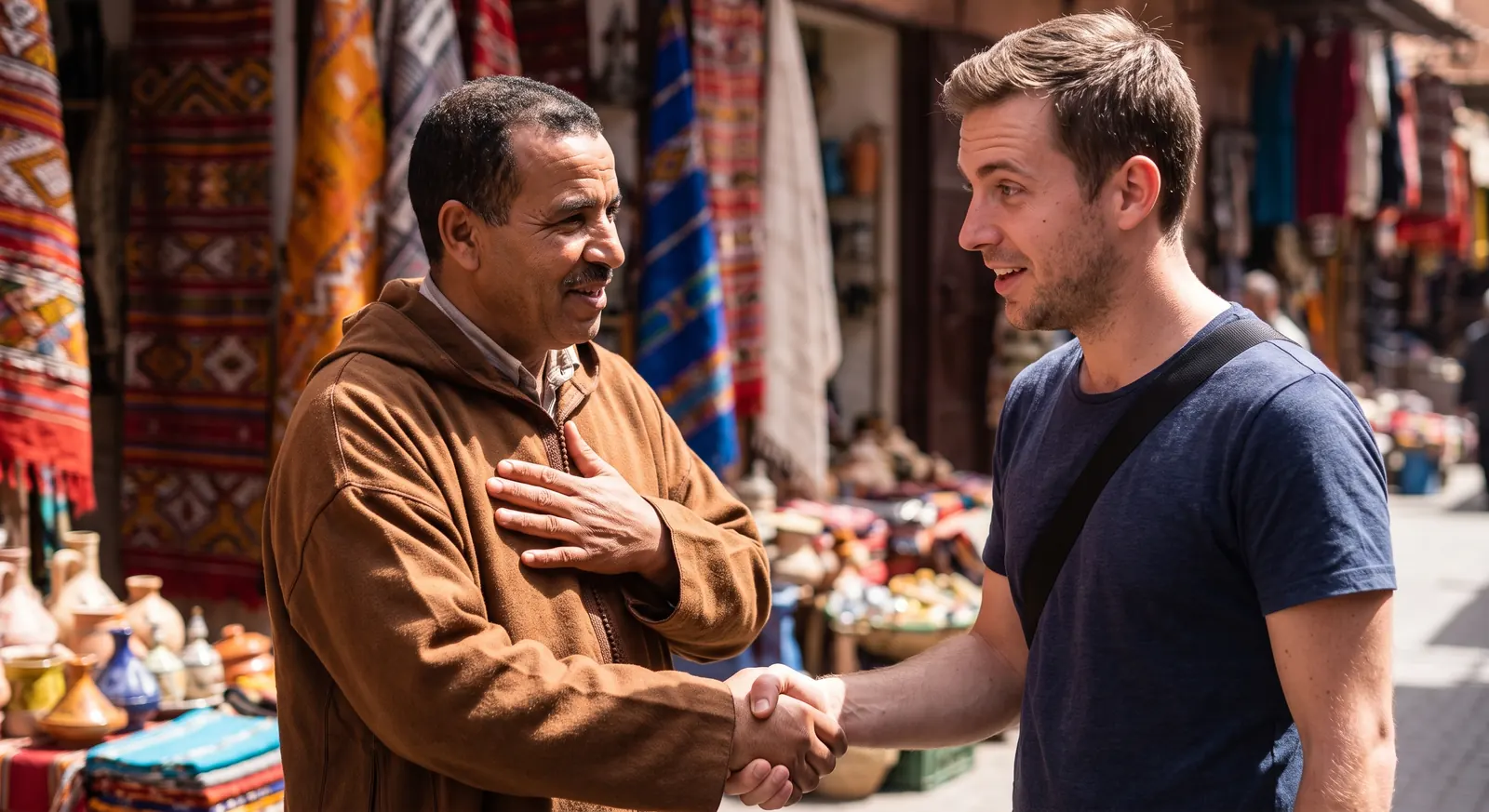
Moroccans often greet each other warmly. A simple “Salam alaykum” is appreciated.
Use your right hand
The right hand is traditionally preferred for eating and giving or receiving things.
Respect Ramadan
During Ramadan, daily life changes.
Restaurants may have different opening hours, people fast during daylight hours, and evenings can become particularly lively.
Traveling during Ramadan is absolutely possible, but it helps to understand the rhythm of the month.
Ask before photographing people
Many Moroccans are happy to be photographed, but it is polite to ask first.
22. What Is Moroccan Food Like?
Food is one of the best reasons to visit Morocco.
Expect dishes such as:
- Tagine
- Couscous
- Pastilla
- Harira
- Moroccan salads
- Grilled meats
- Fresh bread
- Mint tea
- Moroccan pastries
- Fresh fruit
Do not limit yourself to tourist restaurants. Some of the best experiences come from eating where local people eat.
A Moroccan cooking class is also a great way to understand the ingredients, techniques and traditions behind the food.
23. Can Americans Drink Alcohol in Morocco?
Alcohol is available in Morocco, particularly in licensed hotels, restaurants, bars and tourist establishments.
However, Morocco is a Muslim-majority country and alcohol is not part of everyday public life in the same way it is in many parts of the United States.
Drink responsibly and respect local laws and customs.
24. Can You Drink Tap Water in Morocco?
Water quality and personal tolerance can vary.
Many visitors choose bottled or filtered water, particularly during their first days.
For sensitive travelers, bottled water is the simplest option.
Also remember to stay hydrated when traveling through hot areas or spending long days outdoors.
25. What Is the Best Time to Visit Morocco?
Morocco can be visited throughout the year, but the best season depends on what you want to do.
Spring: March–May
One of the most comfortable periods for many travelers. Good for:
- Marrakech
- Mountains
- Road trips
- Desert
- Cities
Summer: June–August
Summer can be very hot, particularly in Marrakech, the interior and desert regions.
The coast can be much more comfortable.
If you travel in summer, plan outdoor activities around the cooler parts of the day.
Autumn: September–November
Another excellent season.
Temperatures become more comfortable and the country works well for road trips and desert journeys.
Winter: December–February
Winter can be surprisingly diverse.
Marrakech can be pleasant during the day, while evenings can be cold.
The Sahara can be cold at night, particularly in December and January.
Mountain areas can be much colder and may experience snow.
26. What Should You Pack for Morocco?
Your packing list should change depending on your itinerary and season.
Essentials
- Passport
- Travel insurance information
- Comfortable walking shoes
- Lightweight clothing
- Warm layer
- Sunglasses
- Sunscreen
- Hat
- Reusable water bottle
- Phone
- Power bank
- Universal adapter
- Basic medications
- Small day bag
For the Sahara
Add:
- Warm layers
- Comfortable closed shoes
- Sunglasses
- Sunscreen
- Lip balm
- Head covering or scarf
- Power bank
- Small overnight bag
Do not bring your entire suitcase into the desert. A small overnight bag is much easier.
27. What Are the Most Common Mistakes First-Time Travelers Make?
Trying to see too much
Morocco is larger and more diverse than it looks.
Do not try to visit Marrakech, Fes, Chefchaouen, Casablanca, Essaouira and the Sahara in five days.
Underestimating driving time
A route may look short on Google Maps but still take hours because of mountains, roads, traffic and stops.
Booking the cheapest Sahara tour
The cheapest option is not always the best value.
Ask what is included and what kind of camp, vehicle, guide and accommodation you are actually receiving.
Expecting every desert camp to be the same
They are not. Ask about bathrooms, showers, electricity, Wi-Fi and temperature control.
Spending the entire trip in Marrakech
Marrakech is fantastic, but Morocco becomes much more interesting when you leave the city.
Treating Morocco like Europe
Morocco has modern hotels, restaurants and infrastructure, but it also has different cultural expectations and rhythms.
The best trips happen when you adapt rather than expecting everything to work exactly as it does at home.
28. Example Morocco Itineraries for American Travelers
7-Day Morocco Itinerary
- Day 1: Arrive in Marrakech
- Day 2: Marrakech guided tour
- Day 3: Marrakech → Atlas Mountains → Ait Ben Haddou
- Day 4: Ait Ben Haddou → Dades Valley
- Day 5: Dades → Sahara Desert
- Day 6: Sahara → Marrakech
- Day 7: Departure
This is a fast-paced itinerary, but it gives first-time travelers a taste of several sides of Morocco.
10-Day Morocco Itinerary
- Day 1: Marrakech
- Day 2: Marrakech
- Day 3: Atlas Mountains
- Day 4: Ait Ben Haddou / Ouarzazate
- Day 5: Dades Valley
- Day 6: Sahara Desert
- Day 7: Sahara / southern Morocco
- Day 8: Fes
- Day 9: Fes
- Day 10: Departure or Casablanca
The exact route should be adjusted around your flights.
14-Day Morocco Itinerary
With two weeks, you can slow down and create a much more complete trip.
A possible route:
Marrakech → Atlas Mountains → Ait Ben Haddou → Dades → Sahara → Fes → Chefchaouen → Rabat → Casablanca → Essaouira → Marrakech
You do not have to visit every destination. The best itinerary is the one that matches your interests.
29. Is Morocco Good for Couples and Honeymoons?
Absolutely.
Morocco works particularly well for couples who want a combination of:
- Beautiful riads
- Private experiences
- Romantic dinners
- Desert camps
- Sunset camel rides
- Spa and hammam experiences
- Mountains
- Beaches
- Cultural experiences
- Boutique hotels
A private itinerary also makes it easier to slow down.
Instead of constantly changing hotels, you can spend longer in the places you enjoy most.
30. Is Morocco Good for Families?
Yes. Families can combine:
- Marrakech
- Cooking classes
- Camel rides
- Atlas Mountains
- Desert camps
- Essaouira
- Cultural experiences
For families with children, avoid creating an itinerary with long driving days back-to-back. Build in time to rest.
Private transportation is particularly useful because the schedule can be adapted around the family.
31. How Much Does a Trip to Morocco Cost?
There is no single answer because Morocco can be experienced at very different price levels.
Your total cost depends on:
- Flights
- Accommodation
- Number of travelers
- Private vs group transportation
- Guide services
- Desert camp category
- Restaurants
- Activities
- Season
- Trip length
A budget traveler can travel very differently from a couple staying in luxury riads and private desert camps.
For travelers who value comfort, privacy and authentic experiences, a private trip can offer much more flexibility than a fixed group itinerary.
The important thing is to compare what is included, not just the headline price.
32. Should You Book a Private Morocco Tour?
If you want to experience Morocco without spending your vacation organizing every detail, a private tour can make sense.
A well-designed private journey should not simply mean putting you in a car with a driver.
It should mean someone understands:
- What you want to see
- How quickly you like to travel
- What level of comfort you expect
- What kind of accommodation you prefer
- What food and experiences interest you
- How much time you want in each destination
- Which long drives are worth doing
- Which places can be skipped
At Mouha Travel, we build private Morocco journeys around the traveler rather than forcing every traveler into the same itinerary.
You can start with a classic Morocco route or create something completely custom.
33. Frequently Asked Questions About Traveling to Morocco from the USA
Is Morocco in Africa?
Yes. Morocco is located in North Africa, along the Atlantic Ocean and Mediterranean Sea.
Is Morocco safe for American tourists?
Morocco is a major tourism destination, but travelers should use normal precautions and stay aware of official travel guidance. As of September 2026, the U.S. State Department advises Americans to exercise increased caution because of terrorism. Petty theft is also a concern in crowded tourist areas. (Travel.state.gov)
Do Americans need a visa for Morocco?
No. U.S. citizens currently do not need a tourist visa for stays of 90 days or less. (Travel.state.gov)
How long should an American spend in Morocco?
Seven to ten days is a good starting point. Ten to fourteen days allows a more relaxed trip with additional destinations.
Is one week enough for Morocco?
Yes, if you choose your route carefully. A seven-day trip should focus on a limited number of destinations rather than trying to see the whole country.
How far is the Sahara from Marrakech?
The main Sahara areas are several hours from Marrakech by road. The journey is long enough that the Sahara should normally be part of a multi-day itinerary.
Is a 3-day Sahara tour enough?
It can be enough if you have limited time, but expect long driving days. Four days generally gives you more breathing room.
Is the Sahara actually worth it?
For travelers who want dramatic landscapes, large dunes, desert sunsets and a different side of Morocco, the Sahara is often one of the highlights of the entire trip.
Is Agafay the Sahara?
No. Agafay is a rocky desert landscape near Marrakech. The Sahara’s famous sand-dune regions, such as Erg Chebbi, are much farther southeast.
Do Sahara camps have private bathrooms?
Many premium camps do, but facilities vary. Always confirm the exact camp and accommodation category before booking.
Is there Wi-Fi in the Sahara?
Some camps offer Wi-Fi, but connectivity varies and should not be assumed.
Can I charge my phone in the Sahara?
Most established camps have some electricity, but bringing a power bank is strongly recommended.
Is there air conditioning in Sahara camps?
Some premium camps offer air conditioning or other cooling systems, but not all camps do. Confirm before booking, especially in summer.
Can I use U.S. dollars in Morocco?
You can exchange U.S. dollars for Moroccan dirhams, but everyday purchases are normally made in Moroccan dirhams.
Can I use credit cards in Morocco?
Yes, particularly in hotels and larger businesses. Cash remains important for smaller purchases and local services. (Travel.state.gov)
Do I need a SIM card in Morocco?
You can use roaming, an eSIM or a Moroccan SIM card. An eSIM can be particularly convenient if your phone supports it.
Should I rent a car in Morocco?
You can, but a private driver is often more comfortable for travelers who want to focus on the experience rather than navigation and long-distance driving.
What should I wear in Morocco?
Comfortable, breathable and reasonably modest clothing works well. Bring layers because temperatures can change considerably between cities, mountains and desert.
What is the best month to visit Morocco?
There is no single perfect month. Spring and autumn are generally comfortable for broad itineraries, while summer and winter each have their own advantages and challenges.
Is Morocco good for a first trip to Africa?
Yes. Morocco offers a strong tourism infrastructure while still providing a distinctly North African cultural experience.
34. The Best Way to Plan Your First Morocco Trip
If this is your first trip, don’t start by trying to book every hotel and activity separately.
Start with three questions:
- How many days do I have?
- What do I most want to experience?
- What level of comfort do I want?
From there, build the route. For example:
- 7 days: Marrakech + Atlas Mountains + Ait Ben Haddou + Sahara
- 10 days: Marrakech + mountains + Sahara + Fes
- 14 days: Marrakech + mountains + Sahara + Fes + north + coast
And if the Sahara is your priority, build the itinerary around it rather than trying to squeeze it into the final two days.
Plan Your Morocco Journey
Morocco is much more than a checklist of famous places.
It is the contrast between Marrakech and the mountains, the Atlantic coast and the desert, ancient medinas and modern cafés, Amazigh villages and imperial cities, busy souks and quiet desert nights.
The best Morocco trip is not necessarily the one that visits the most places.
It is the one that gives you enough time to actually experience them.
At Mouha Travel, we design private Morocco journeys around your interests, schedule and preferred level of comfort—from Marrakech city experiences and Atlas Mountain adventures to multi-day journeys through southern Morocco and private Sahara desert camps.
Tell us when you are coming, how many days you have, and what you want to experience.
We’ll help you build Morocco your way.