
Southern Morocco Itinerary: Discover a Different Side of Morocco

When people think about travelling through Morocco, they often imagine the colourful souks of Marrakech, the blue streets of Chefchaouen or a camel ride across the Sahara Desert. But there is another Morocco waiting to be discovered in the south.
It is a Morocco of ancient kasbahs, quiet palm groves, remote Berber villages, spectacular mountain roads and landscapes that change dramatically as you travel. It is also a region where you can take your time, spend longer in one place and experience a more personal connection with the country.
A journey through southern Morocco is not simply about reaching the Sahara. It is about everything you discover along the way. If you are looking for a southern Morocco itinerary that combines culture, nature, authentic villages and the desert, here is a route worth considering.
Marrakech → Telouet → Ounila Valley → Aït Ben Haddou → Ouarzazate → Fint Oasis → Agdz → Nkob → Aït Bab n’Ali → Dades Valley → Todgha Gorges → Merzouga → Fes or Marrakech
- Marrakech to Ouarzazate via Telouet & the Ounila Valley
- Fint Oasis and the road to Agdz
- Nkob, Aït Bab n’Ali & lesser-known mountain roads
- The Dades Valley and Todgha Gorges
- The Sahara beyond the camel ride
- Continue to Fes or return to Marrakech
- Can this itinerary become a yoga retreat?
- How many days do you need?
1. From Marrakech to Ouarzazate through Telouet and the Ounila Valley
Route: Marrakech → Tizi n’Tichka → Telouet → Ounila Valley → Aït Ben Haddou → Ouarzazate
The journey begins in Marrakech, heading south across the High Atlas Mountains through the Tizi n’Tichka pass. Instead of following only the main road to Ouarzazate, take the alternative route through Telouet and the Ounila Valley. This is one of the most interesting ways to discover the region.
Telouet is home to a historic kasbah that reflects the influence and history of the Glaoui family. From there, the road continues through the Ounila Valley, passing traditional villages, agricultural terraces and striking red and ochre landscapes.
One of the highlights is Aït Ben Haddou, the famous fortified village and UNESCO World Heritage Site. Its earthen architecture and impressive position above the surrounding landscape make it one of the most memorable stops in southern Morocco.
Overnight: Ouarzazate.

2. Fint Oasis and the Road towards Agdz
Route: Ouarzazate → Fint Oasis → Aït Saoun → Agdz → Tamnougalt
South of Ouarzazate, the landscape begins to change. One particularly beautiful place to discover is Fint Oasis, a small oasis surrounded by rocky hills. Its palm trees, traditional houses and peaceful atmosphere offer a completely different experience from the busy cities. It is an ideal place to enjoy lunch and spend some time away from the main tourist routes.
From Fint, continue through Aït Saoun towards Agdz, following a beautiful road through increasingly desert-like landscapes. Agdz marks the beginning of the Draa Valley, a region famous for its extensive palm groves, traditional villages and historic kasbahs.
One place worth visiting is Tamnougalt, an ancient settlement with impressive earthen architecture and a fascinating history. The surrounding oasis offers a wonderful opportunity to slow down and appreciate the relationship between local communities and their environment.
3. Nkob, Aït Bab n’Ali and the Lesser-Known Mountain Roads
Route: Agdz → Nkob → Aït Bab n’Ali → Tizi n’Tazazert → Dades region
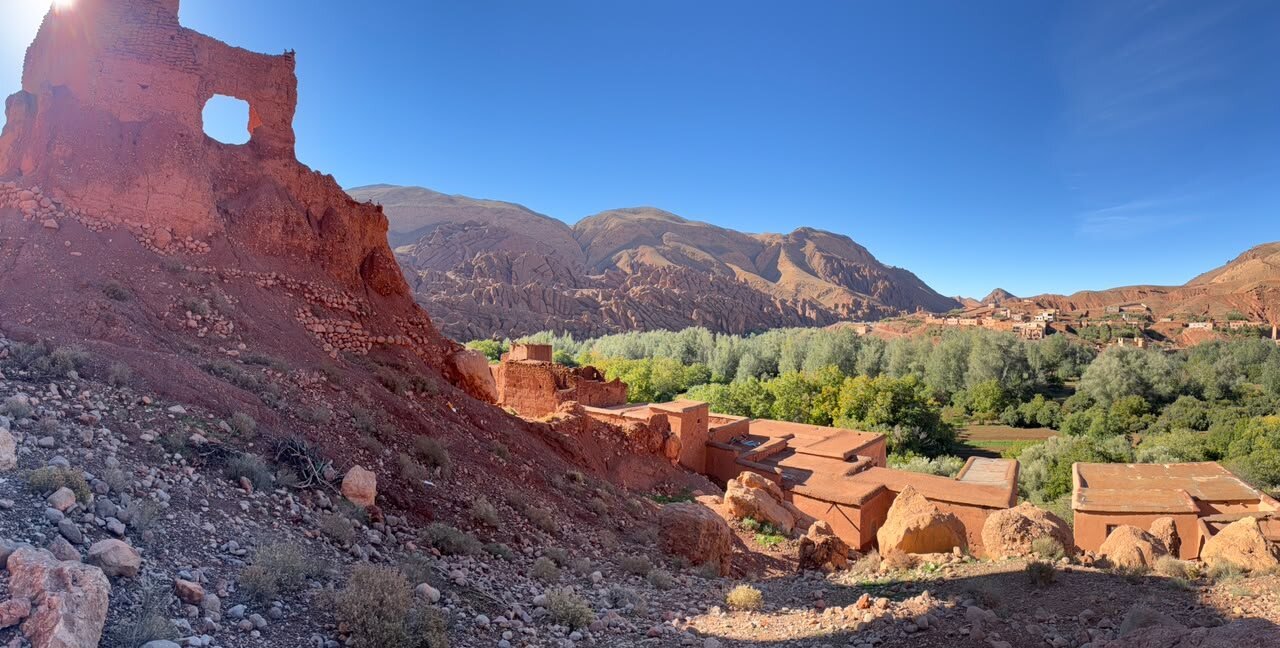
Leaving Agdz, continue towards Nkob. Often overlooked by travellers rushing between Marrakech and the Sahara, Nkob is one of the most interesting stops in this part of Morocco. The village is known for its traditional kasbahs, palm groves and peaceful atmosphere. It is also a wonderful place to discover local hospitality and the culture of the region.
From Nkob, the journey can continue towards Aït Bab n’Ali, where unusual rock formations rise dramatically from the surrounding landscape. The route then climbs towards Tizi n’Tazazert, a mountain pass offering a completely different perspective of southern Morocco.
Eventually, arrive in the Dades region, known for its spectacular valleys and geological formations.
4. Exploring the Dades Valley and Todgha Gorges
The Dades Valley is one of the most rewarding regions to explore in southern Morocco. Its landscape combines traditional villages, agricultural terraces, dramatic cliffs and unusual rock formations.
Among the highlights are the famous Tisdrin road and the Monkey Fingers rock formations, where erosion has shaped the rocks into fascinating natural structures. Travellers who enjoy walking can also discover gentle trails around the valley and its villages.
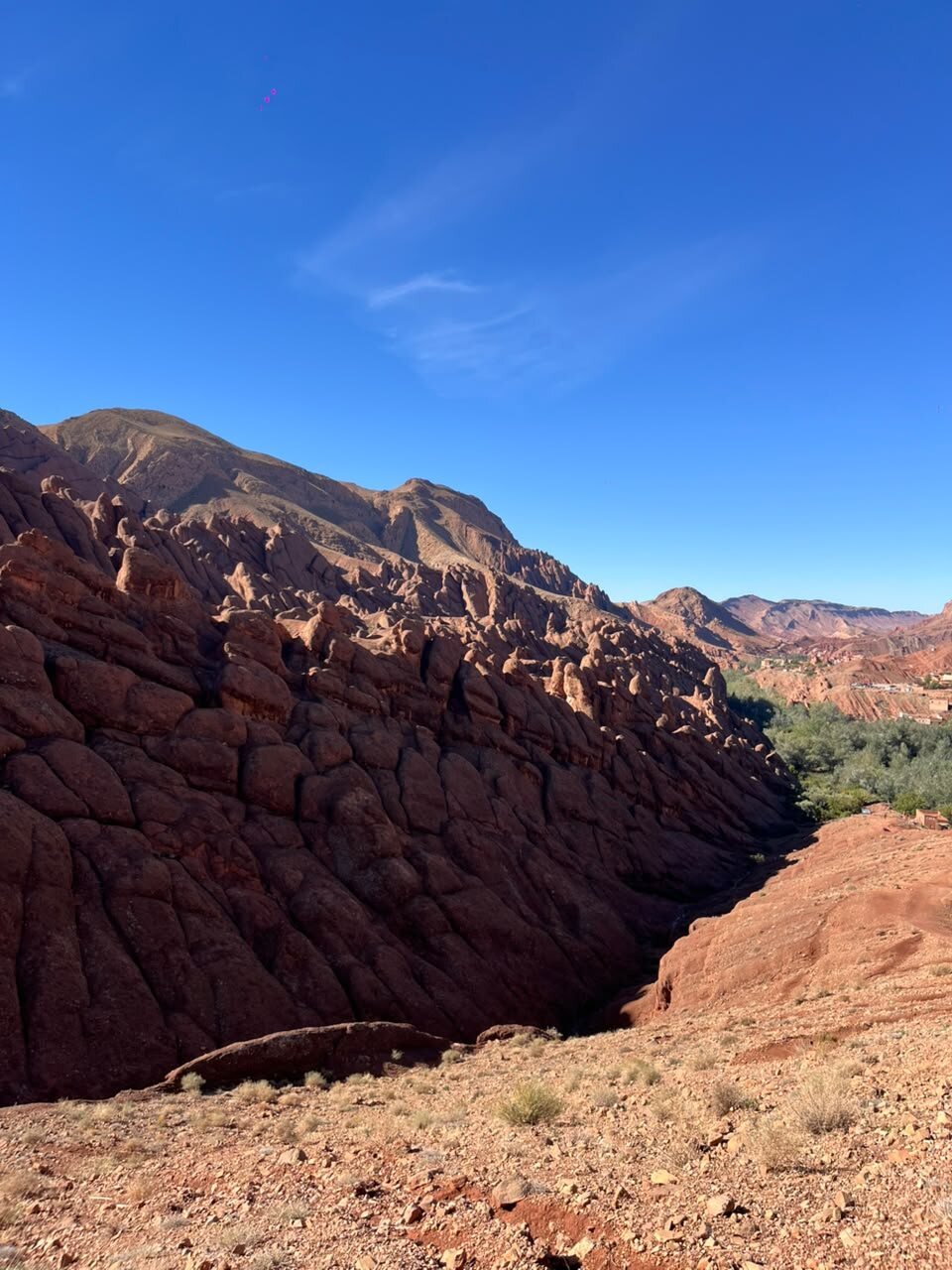
Continue towards Todgha Gorges, near Tinghir. Here, enormous canyon walls rise above a narrow valley, creating one of the most impressive natural sights in the region. The area is ideal for a walk, photography or simply enjoying the contrast between the green oasis and the surrounding rocky mountains.
From Todgha, continue towards Merzouga and the Sahara Desert.
5. Discovering the Sahara Desert beyond the Camel Ride
For many travellers, the Sahara is the highlight of a Morocco trip. But the desert deserves more than a short visit and a quick camel ride.
Spend time exploring the surroundings of Merzouga, discover the local culture, enjoy the changing colours of the dunes and experience the atmosphere of the desert at different times of the day. You can enjoy a camel ride, visit nearby villages, discover the desert by 4x4 or simply relax at your camp.
For travellers seeking a slower experience, the Sahara can also become a place to disconnect. Imagine starting the morning with a yoga session, watching the sunrise over the dunes and enjoying a quiet breakfast before spending the rest of the day at your own pace.

6. Continue to Fes or Return to Marrakech
After discovering the Sahara, there are two main ways to continue your journey.
Option 1: Continue to Fes
Travelling north towards Fes offers an opportunity to discover another part of Morocco. The route can be planned through Erfoud and Midelt, depending on the time available and the stops you wish to include.
Option 2: Return to Marrakech via Nkob
We recommend spending another night in Nkob to break up the journey, then continuing through the Draa Valley, Agdz and Ouarzazate before crossing the High Atlas Mountains.
A direct drive from Merzouga to Marrakech is possible, but it makes for a long day on the road. Read more in our guide to the best routes between Marrakech, Fes and the Sahara.
7. Can This Itinerary Become a Yoga Retreat?
Absolutely. In fact, southern Morocco offers a wonderful setting for a yoga and wellness journey. The combination of peaceful oases, mountain landscapes, traditional villages and the open Sahara creates opportunities to disconnect from everyday routines and reconnect with nature.
Rather than rushing from one destination to another, a yoga retreat version of this itinerary can include:
- Morning yoga and meditation
- Longer stays in peaceful riads and nature-inspired accommodation
- Gentle hikes and walks through valleys and palm groves
- Traditional Moroccan cooking and local food experiences
- Time for reading, reflection and relaxation
- Special yoga sessions in suitable outdoor locations
The itinerary can be extended to allow more time in Agdz, the Dades Valley and the Sahara. For this type of experience, we recommend allowing approximately 9 to 12 days, depending on the group and the preferred pace.
8. How Many Days Do You Need for Southern Morocco?
The ideal duration depends on what you want to experience.
There is no single fixed itinerary. The route can be adjusted according to your interests, available time, accommodation preferences and activities. Not sure when to go? See the best time to visit Morocco, month by month.
Experience Southern Morocco with a Local Perspective
At Mouha Travel, we believe the most memorable journeys are often found away from the usual routes. We organise private journeys across Morocco, connecting travellers with local places, landscapes and experiences that make the country special.
Whether you are planning a cultural adventure, a photography journey, a private holiday or a yoga retreat, we can adapt this southern Morocco itinerary to your needs.
Frequently asked questions
How many days do you need for southern Morocco?
A shorter discovery journey can cover the main route in approximately 6 to 7 days, while a more relaxed experience benefits from 8 to 10 days or more. For a dedicated yoga retreat, 9 to 12 days is a better starting point.
What is the best route from Marrakech to Ouarzazate?
Instead of following only the main road, take the alternative route through Telouet and the Ounila Valley after crossing the Tizi n’Tichka pass, then visit Aït Ben Haddou before reaching Ouarzazate.
Is Nkob worth visiting?
Yes. Often overlooked by travellers rushing between Marrakech and the Sahara, Nkob is known for its traditional kasbahs, palm groves, peaceful atmosphere and local hospitality.
Can I drive from Merzouga to Marrakech in one day?
It is possible, but it makes for a long day on the road. We recommend spending another night in Nkob and continuing through the Draa Valley, Agdz and Ouarzazate.
Can this itinerary become a yoga retreat?
Yes. A yoga retreat version can include morning yoga and meditation, longer stays in peaceful riads, gentle walks through valleys and palm groves, local food experiences and time to relax, with more time in Agdz, the Dades Valley and the Sahara.
Explore southern Morocco at your own pace
Contact Mouha Travel to start planning your journey from the High Atlas to the Sahara.